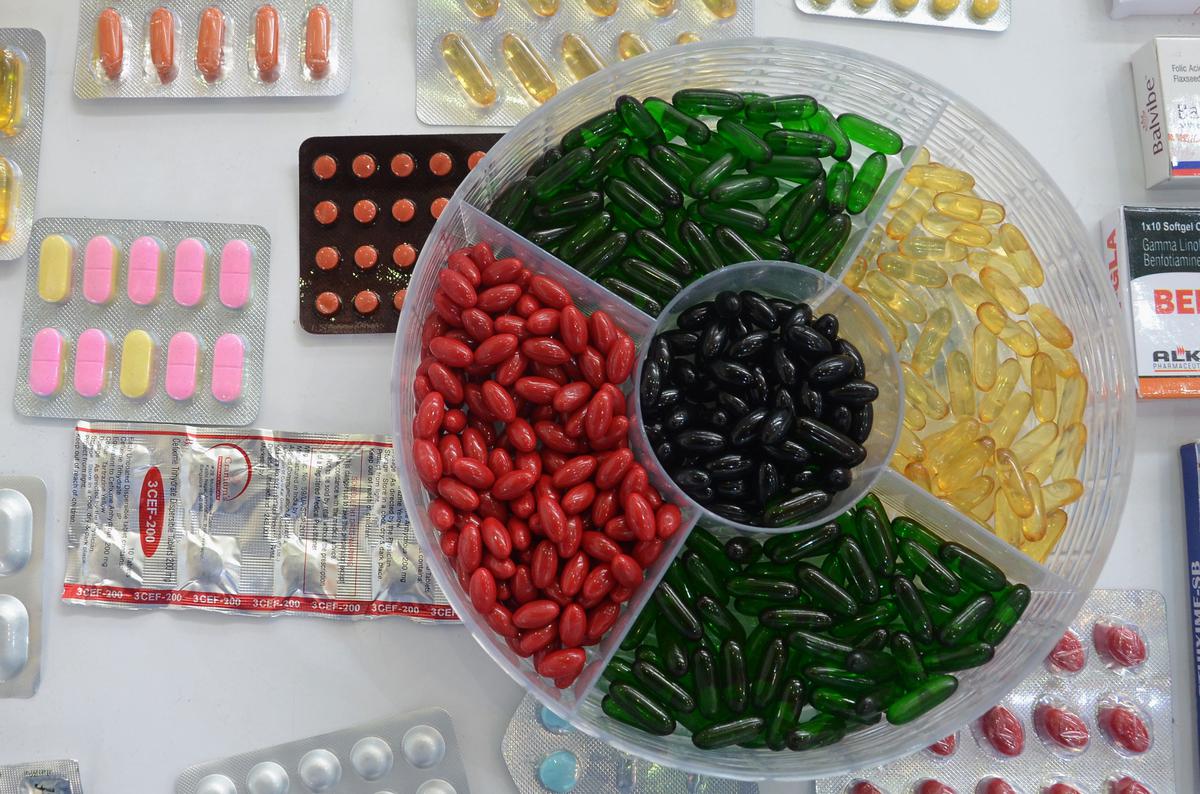
Pharma exports rise by 4.22% to $14.57 billion during April-October in current fiscal
The Hindu
USA, Canada and Mexico (NAFTA countries), Europe and Africa account for 67.5% (nearly $5 billion) of the total exports.
Pharmaceutical exports from India registered a growth of 4.22% to reach $14.57 billion during the April-October period despite a negative trend last month, according to a senior official of an export promotion body under Government of India.
Udaya Bhaskar, Director General of Pharmaceuticals Export Promotion Council of India (Pharmexcil) which is an organisation under the Ministry of Commerce, said he was hopeful of ending the current fiscal at around $27 billion as against $24.62 billion during the last financial year.
"There was a dip (-0.32%) in July and (-5.45%) and there was 8.47% positive growth in September. I am optimistic that it will be revived in the coming months and may touch USD 27 billion at the end of the fiscal," Mr. Bhaskar told PTI.
During the same period last fiscal, the exports fetched $13.98 billion.
USA, Canada and Mexico (NAFTA countries), Europe and Africa account for 67.5% (nearly $5 billion) of the total exports.
"Our exports in the category of vaccines are in a very bad shape. Despite the above and Russia-Ukraine war factors, we are on a positive side," he further said.
In October, exports fell by 5.45% to $1.95 billion.


Erran Berger, the Vice President of Product Engineering at LinkedIn, thinks the former type of division of labour is rapidly disappearing

India mandates oil and gas firms to share import and export data to mitigate consumer shortages amid rising global prices.

HDFC Bank's chairman Atanu Chakraborty resigns over ethical concerns; Keki Mistry appointed interim chairman for three months.

Stock markets continue to rise for the third day as Sensex and Nifty gain nearly 1%, fueled by IT stocks.

Indian-flagged vessels in the Strait of Hormuz carry 2 lakh MT LNG and 16.7 lakh MT crude, amidst geopolitical tensions.

Equity analysts downgrade earnings forecasts for oil marketing companies, citing rising costs and market pressures for fiscal 2027.

Plastic product prices may surge by 50-60% in April due to rising polymer costs amid ongoing geopolitical tensions.

Centre offers 10% more LPG to States that accelerate piped gas rollout amid ongoing supply challenges and increased consumer demand.

Indian-flagged vessels in the Strait of Hormuz carry 2 lakh MT LNG and 16.7 lakh MT crude, amidst geopolitical tensions.

Stock markets continue to rise for the third day as Sensex and Nifty gain nearly 1%, fueled by IT stocks.

Rising oil prices and LPG shortages are driving India's shift to electric cooking, offering cost-effective and energy-efficient alternatives.

The rupee fell to a record low of 92.63 against the dollar, while equities surged with Sensex up 633.29 points.

Alibaba is sharpening its artificial intelligence strategy by focusing on agents that connect the many businesses under its sprawling corporate umbrella.