Patronage from government needed for keeping folk arts alive Premium
The Hindu
Founder Badri Kurmarao urges government to protect folk arts, highlighting historical significance and importance of preserving cultural heritage.
VIZIANAGARAM
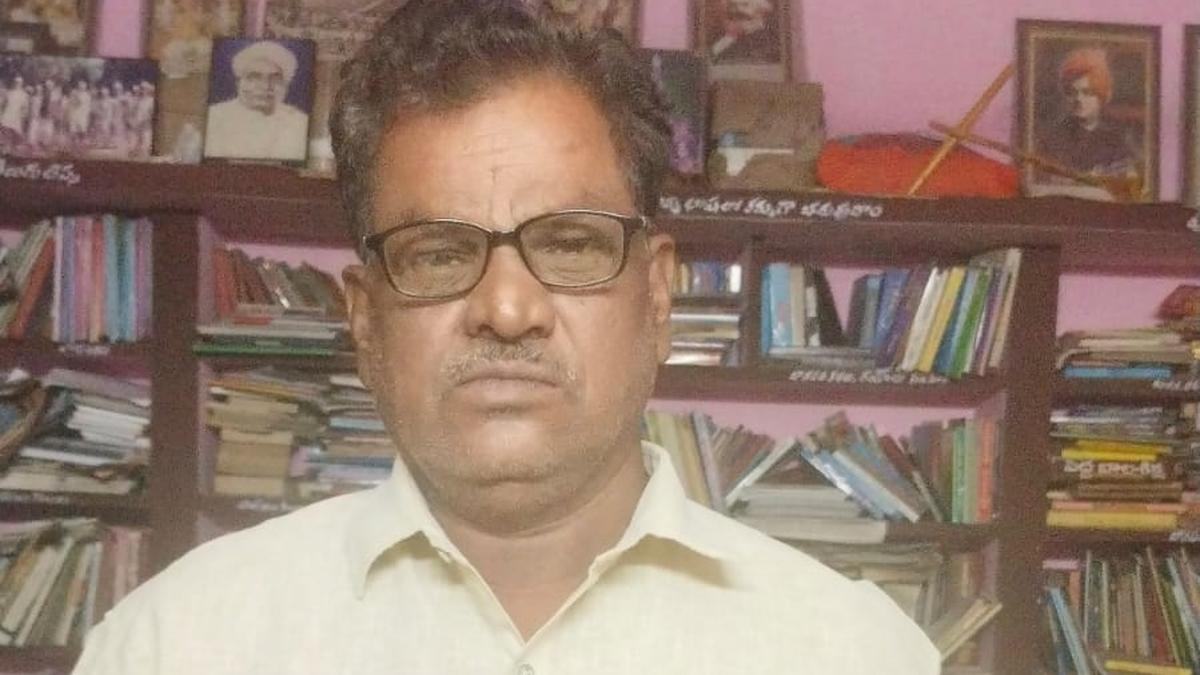
Gidugu Ramamurthy Telugu Bhasha and Janapada Kalapeetham founder and a retired government teacher Badri Kurmarao has requested the government to launch a special initiative to protect folk arts, which, he says, used to get royal patronage. He also urged the government to allow each major temple to adopt at least one folk art form so that artistes would be able to perform frequently and pass on their skill to the next generation.
According to Badri Kurma Rao, the kingdoms of Kakatiya, Reddirajas, Hampi Vizianagaram, the princely states of Venkatagiri, Vizianagaram, Bobbili and others used folk art forms to disseminate knowledge of epics and propagate their achievements through various forms of dances and songs.
During the Bhakti movement, folk artiste played a key role for centuries. Almost all major temples used to arrange Burrakatha, Harikatha and other spiritual activities on their premises. Now, however, most temples have ceased their support to folk artistes. The Department of Culture also used to take the services of folk artiste to promote government welfare schemes.
This apart, the Telugu film industry supported folk artistes for almost five decades and folk songs were featured in movies.
Veteran artiste Mikkilineni Radhakrishna Murthy made many producers and directors incorporate folk dances in their movies. He collected information on many of the vanishing folk art forms and published a book Teluguvari Janapada Kalarupalu with the support of Potti Sreeramulu Telugu University in Hyderabad. Telugu Akademi has also contributed to preserving folk literature and published Telugu Janapada Geya Sahityam, authored by writer and researcher Birudaraju Ramaraju.
Mr. Kurma Rao, who published the book Pillalu Raasina Kalingaseema Janapada Kathalu a few years ago, observed that written literature was not available for many folk songs in Vizianagaram and Srikakulam districts. He had to collect data from parents, teachers and students for the publication of the book.


Private organizations in Yadgir provide drinking water at temporary charitable houses to combat summer heat and dehydration.

BJP slams govt. approach to Musi rejuvenation project

Officials in Perambalur reach out to senior citizens and disabled voters to facilitate home voting for upcoming Assembly polls.

Three men were killed in a road mishap after their mini truck crashed into a stationary truck near Medahalli in east Bengaluru on Saturday night, police said.

Minister Satish Jarkiholi asserts confidence in retaining Davangere and Bagalkot seats in upcoming bypolls amid addressing internal discontent.

Southern Railways warns that stone pelting on trains is a serious crime, punishable with up to life imprisonment.

Women SHGs under the Indira Mahila Shakti initiative earned ₹3.09 crore profit by operating 565 income-generating units during the recent Medaram Sammakka-Saralamma Maha Jatara in Mulugu district.

Rotary Club of Mangalore Central and Rotract Club of Mangalore City presented Rotary’s 23rd Vandana Award to environment conservationist Radhakrishna Nair at a function in the city on Saturday.

Salem hotels face closure due to cylinder shortages; owners urge action against black market sales impacting operations.

B.PAC donates 20 electric autorickshaws to women and transgender drivers, promoting inclusive livelihoods in Bengaluru.

In an exclusive interview, DMK MLA Ezhilan discusses Tamil Nadu's 2026 elections, party structure, and local governance challenges.

Yakshagana Kalaranga of Udupi handed over its 91st house built in the series of its free houses, to a beneficiary student of its Vidyaposhak Scheme at Japti in Kundapur taluk of Udupi district on Saturday.

Sunil Ambekar of RSS emphasizes national unity, defending road prayer restrictions and promoting awareness of shared ancestry in India.