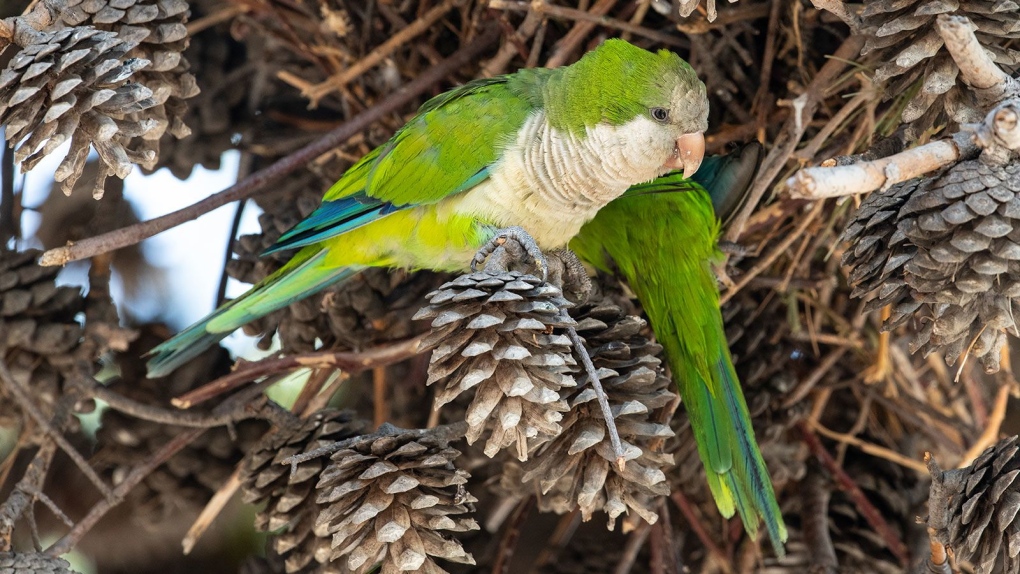
'Parrot fever' outbreak in Europe has led to deaths of five people
CTV
A deadly outbreak of psittacosis, a bacterial infection also known as parrot fever, has affected people living in several European countries, the World Health Organization said Tuesday.
A deadly outbreak of psittacosis, a bacterial infection also known as parrot fever, has affected people living in several European countries, the World Health Organization said Tuesday.
The outbreak was initially noted in 2023 and has continued through the start of this year. The deaths of five people have been reported.
Parrot fever is caused by bacteria in the Chlamydia family that is found in a variety of wild and pet birds and poultry. Infected birds don’t always seem sick, but they shed the bacteria when they breathe or poop.
Humans commonly catch parrot fever by breathing in the dust from an infected bird’s secretions, according to the U.S. Centers for Disease Control and Prevention. People can also get sick if a bird bites them or through beak-to-mouth contact. The disease is not spread through eating infected animals.
Human-to-human transmission is possible but rare, studies show. In most of the recent cases, people had been exposed to domesticated or wild birds that were infected, WHO said.
Most people who get parrot fever have a mild illness that begins five to 14 days after exposure to a sick bird and can include a headache, muscle pain, a dry cough, fever and chills. Antibiotics can treat the infection, and it’s rarely fatal for humans.
Austria, which typically sees two cases of this disease each year, reported 14 confirmed cases in 2023 and four more this year, as of March 4. The cases are unrelated, and none of the individuals reported traveling abroad or coming into contact with wild birds.


Hawaii suffered its worst flooding in more than 20 years as heavy rains fell on soil already saturated by downpours from a winter storm a week ago, officials said Friday while warning that still more rain was expected during the weekend.

While Canada is well known for its accomplishments in space — including building the robotic arms used on the Space Shuttle and the International Space Station — the country still has no ability to launch its own satellites. This week, Ottawa committed nearly a quarter‑billion dollars towards changing that.

March is Liver Health Month, and while many people think about alcohol and diet when it comes to liver health, a growing risk factor is chronic hepatitis B.

It’s an enduring stereotype that Canadians are unfailingly nice, quick to apologize even when they have done nothing wrong. But an online urban legend claims the opposite of Canada’s soldiers, painting a picture of troops so brazen in their brutality that international laws were rewritten to rein them in.

Friday marks the first official day of spring in the northern hemisphere, but it will still feel like winter this weekend for many Canadians, as snow, sleet, rain and sub-zero temperatures are forecast across the country.

A social media post from the U.S. Food and Drug Administration this week shows a big-eyed macaque staring out from behind bars.

Young people in southeast England and beyond are lining up for the meningitis B vaccine after an outbreak killed two people, sparking supply warnings from pharmacies and raising broader questions about the best public health response to the disease.

Many wage earners are engaging in “microshifting,” a flexible scheduling approach that involves tackling job duties in short, productive bursts instead of a single nine-to-five stretch.

Tyson Atleo, a hereditary leader of the Ahousaht First Nation, says the creation of three new forestry areas to be managed by his community and two others on the west coast of Vancouver Island marks the realization of a long-standing promise.

As artificial intelligence continues to reshape industries worldwide, Canadian universities are emerging as key players – not only in developing technology but in teaching students how to use it responsibly.

Switching up your exercise routine does more than fight boredom. Engaging in varied forms of movement may significantly boost your longevity, according to research.

A seven-bedroom, five-bathroom home in Ottawa’s Rothwell Heights neighbourhood is currently the most expensive home on the market in the capital.

David Suzuki, the geneticist-turned-environmentalist, who is days away from his 90th birthday, reflected on his legacy as he prepared to release his latest book, “Lessons from a Lifetime,” which compiles photos and stories from his life, as well as testimonials written by those he inspired.