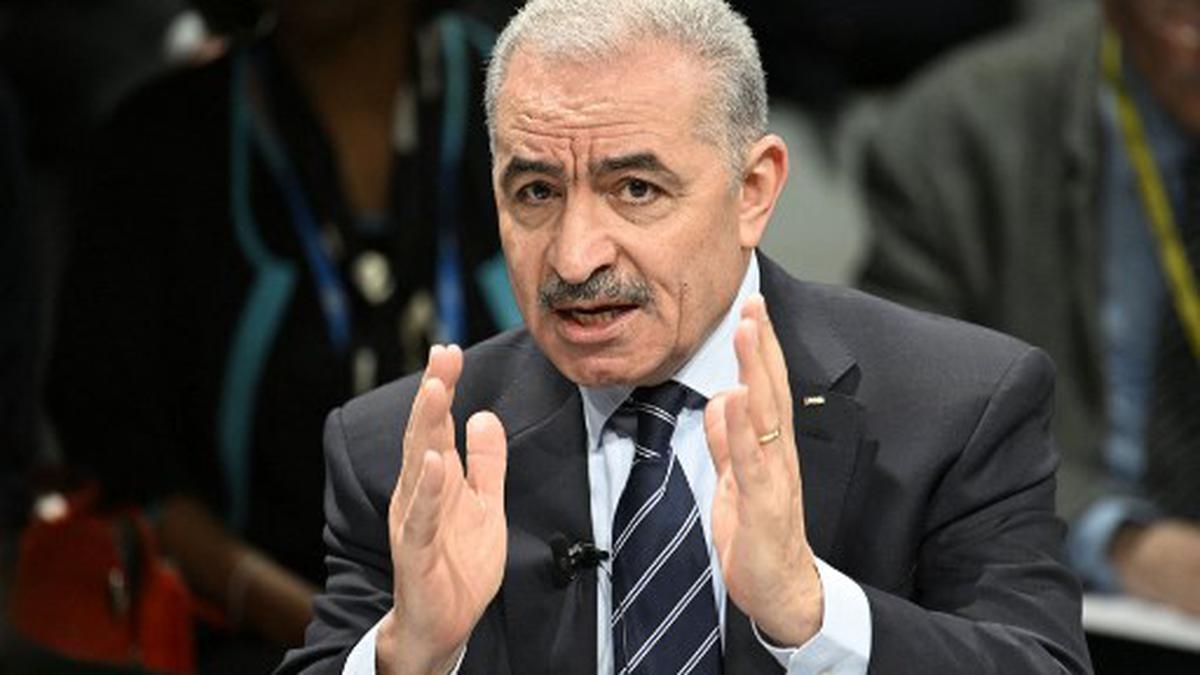
Palestine prepares to accept the ‘new reality’ in Gaza Strip with a fresh government
The Hindu
Palestinian Authority's government resigns amid U.S. reform push, facing legitimacy and relations challenges, amid Israel-Hamas war.
The Palestinian Authority (PA)’s Prime Minister Mohammad Shtayyeh announced his government's resignation on Monday, seen as the first step in a reform process urged by the United States as part of its latest ambitious plans to resolve the Israeli-Palestinian conflict.
But it will do little to address the authority's longstanding lack of legitimacy among its own people or its strained relations with Israel. Both pose major obstacles to U.S. plans calling for the PA, which administers parts of the Israeli-occupied West Bank, to govern postwar Gaza ahead of eventual statehood.
That's assuming that the war in Gaza ends with the defeat of the Hamas militant group — an Israeli and U.S. goal that seems elusive nearly five months into the gruelling war that has killed almost 30,000 Palestinians and pushed the territory to the brink of famine.
Also Read | Islamist leadership | The men who run Hamas
Here's a look at the government shakeup and what it means for the Israel-Hamas war.
The PA was created in the early 1990s through interim peace agreements signed between Israel and the Palestine Liberation Organization, then led by Yasser Arafat.
It was granted limited autonomy in parts of the West Bank and Gaza ahead of what the Palestinians hoped would be full statehood in both territories as well as east Jerusalem, lands that Israel captured in the 1967 Mideast war.


U.S. Intelligence warns that India-Pakistan relations pose nuclear conflict risks, despite recent de-escalation efforts by President Trump.

U.S. eases sanctions on Venezuela's oil, allowing sales to boost global supply amid rising prices during the Iran conflict.

U.S. considers troop deployments as Iran war escalates, evaluating options to secure oil passage and strengthen military operations.

Pakistan and Afghanistan agree to a temporary ceasefire for Eid celebrations amid escalating conflict and recent deadly strikes.

Iran threatens retaliation against Gulf energy facilities following U.S.-Israel strikes, escalating tensions in the region.

Iran arrests over 100 alleged monarchist and spy networks amid ongoing conflict, as authorities intensify crackdowns across the nation.

Indonesia arrests four military officers linked to an acid attack on activist Andrie Yunus, sparking calls for an independent investigation.

Sri Lanka's Minister Bimal Rathnayake announces support for Indian refugees, urging political sensitivity from Tamil Nadu and India.

Trump temporarily waives maritime law to lower energy costs amid rising gasoline prices from the Iran-Israel conflict.

Gideon Levy discusses Israel's militarism, the Palestinian question, and the challenges of achieving peace in West Asia.

Israel claims to have killed another top Iranian official as Iran's missile attacks near Tel Aviv leave two dead.

Test your knowledge with our daily quiz on significant events that occurred on March 18.

Iran's Foreign Minister asserts nuclear doctrine remains unchanged and advocates for a new protocol for the Strait of Hormuz post-war.