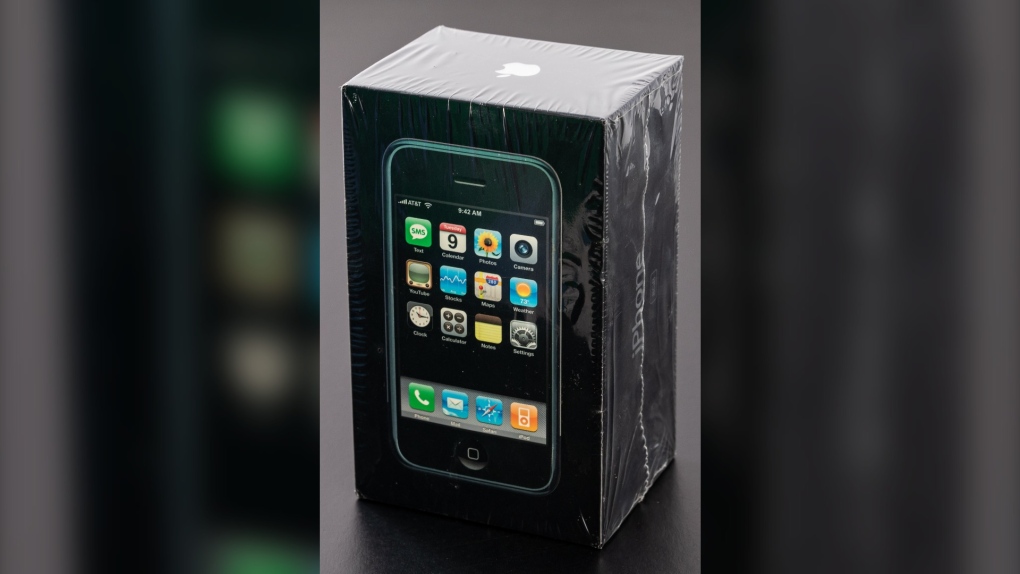
Original factory-sealed iPhone sells for over US$63K at auction
CTV
With its cultural significance demanding value, a factory-sealed, first-generation original Apple iPhone from 2007 has been sold for US$63,356.40 on an online bidding website.
Old technology nostalgia can come at a shocking price, especially when a particular artefact changed the way humans communicate. With its cultural significance demanding value, a factory-sealed, first-generation original Apple iPhone from 2007 has been sold for US$63,356.40 on an online bidding website.
This is a far reach from the first iPhone’s original retail cost, which stood between US$400 and $600 when it was released on June 29, 2007, five months after Steve Jobs, wearing his signature black turtleneck, first introduced the product at the MacWorld San Francisco convention.
Kate Green, the seller of this mint-condition iPhone, was gifted the device in 2007, but never unboxed it because she was already using a functional phone.
The online auction, hosted by a site called LCG Auctions, kicked off with a starting bid of US$2,500, which quickly escalated with 27 subsequent bids before it closed on Feb. 19. The offers are part of a larger trend amongst high-end collectors, who see the factory-sealed original iPhone as a blue-chip asset. Last year, the same factory-sealed products were purchased for US$35,414 in August and US$39,339 in October.
Considered a notable leap from previous smartphone installments, the original iPhone included 4/8 gigabytes of storage, a 2-megapixel camera (in stark contrast to the 12-megapixel dual cameras of recent iPhones), and an innovative touch screen.
In 2007, Time Magazine named the first iPhone Invention of the Year.
According to a description under the LCG Auction listing: “There’s little doubt that interest in culturally relevant collectibles is rapidly increasing, and despite the impressive sales numbers, many believe the space is still in its infancy.”


Hawaii suffered its worst flooding in more than 20 years as heavy rains fell on soil already saturated by downpours from a winter storm a week ago, officials said Friday while warning that still more rain was expected during the weekend.

While Canada is well known for its accomplishments in space — including building the robotic arms used on the Space Shuttle and the International Space Station — the country still has no ability to launch its own satellites. This week, Ottawa committed nearly a quarter‑billion dollars towards changing that.

March is Liver Health Month, and while many people think about alcohol and diet when it comes to liver health, a growing risk factor is chronic hepatitis B.

It’s an enduring stereotype that Canadians are unfailingly nice, quick to apologize even when they have done nothing wrong. But an online urban legend claims the opposite of Canada’s soldiers, painting a picture of troops so brazen in their brutality that international laws were rewritten to rein them in.

Friday marks the first official day of spring in the northern hemisphere, but it will still feel like winter this weekend for many Canadians, as snow, sleet, rain and sub-zero temperatures are forecast across the country.

A social media post from the U.S. Food and Drug Administration this week shows a big-eyed macaque staring out from behind bars.

Young people in southeast England and beyond are lining up for the meningitis B vaccine after an outbreak killed two people, sparking supply warnings from pharmacies and raising broader questions about the best public health response to the disease.

Many wage earners are engaging in “microshifting,” a flexible scheduling approach that involves tackling job duties in short, productive bursts instead of a single nine-to-five stretch.

Tyson Atleo, a hereditary leader of the Ahousaht First Nation, says the creation of three new forestry areas to be managed by his community and two others on the west coast of Vancouver Island marks the realization of a long-standing promise.

As artificial intelligence continues to reshape industries worldwide, Canadian universities are emerging as key players – not only in developing technology but in teaching students how to use it responsibly.

Switching up your exercise routine does more than fight boredom. Engaging in varied forms of movement may significantly boost your longevity, according to research.

A seven-bedroom, five-bathroom home in Ottawa’s Rothwell Heights neighbourhood is currently the most expensive home on the market in the capital.

David Suzuki, the geneticist-turned-environmentalist, who is days away from his 90th birthday, reflected on his legacy as he prepared to release his latest book, “Lessons from a Lifetime,” which compiles photos and stories from his life, as well as testimonials written by those he inspired.