Opposition slams governments over RBI’s withdrawal of ₹2000 notes
The Hindu
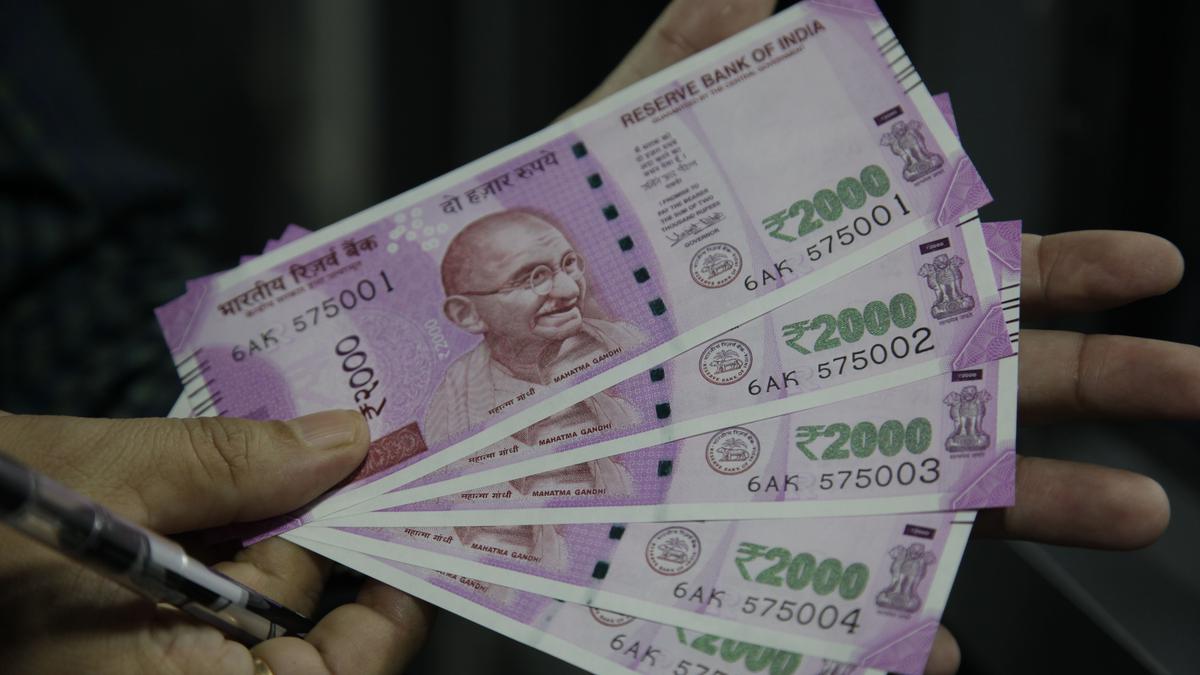
Opposition leaders across the political spectrum argued that the Reserve Bank of India’s (RBI) decision to withdraw ₹2000 notes from circulation proves their point that the November 2016 Demonetisation was a ‘failed exercise’.
Opposition leaders across the political spectrum argued that the Reserve Bank of India’s (RBI) decision to withdraw ₹2000 notes from circulation proves their point that the November 2016 Demonetisation was a ‘failed exercise’.
Former Finance Minister P. Chidambaram took to Twitter to argue that demonetisation has come full circle.
“A few weeks after Demonetisation, the government/RBI were forced to re-introduce the ₹500 note. I shall not be surprised if the government/RBI re-introduced the ₹1000 note as well, Mr. Chidamabaram said on Twitter.
The official handle of the All India Trinamool Congress (AITC) tweeted,”@BJP4India demonetised ₹500 & ₹1000 notes in 2016, disrupting the lives of Indians everywhere! They claimed that the introduction of ₹2000 note would curb the flow of black money”.
“7 years later, they are withdrawing it from circulation. Yet another MODINOMIC masterstroke?” asked the AITC.
Tagging his Rajya Sabha speech of 2016 in which he had strongly opposed the note ban, CPI (M) General Secretary Sitaram Yechury tweeted, “RBI’s reversal of Modi demonetisation is a vindication of what we said in 2016”.
Aam Aadmi Party (AAP) and Delhi government Minister Saurabh Bharadwaj said that he hoped that the latest decision is taken by experts.


Government mandates airlines to allocate 60% of seats free, enhancing passenger rights and convenience across Indian aviation.

Microsoft is weighing legal action against Amazon and OpenAI over a $50 billion deal, the Financial Times reported

Stock markets rally with Sensex and Nifty gaining, despite HDFC Bank and others lagging behind amid falling crude prices.

OpenAI has signed a new deal to sell access to its AI models to U.S. defence and government agencies through Amazon’s cloud unit for classified and unclassified work, the ChatGPT maker said

Samsung Electronics said on Wednesday that it expects to start volume production of Tesla’s chips

The Trump administration said in a Tuesday court filing that the Pentagon’s blacklisting of Anthropic was justified and lawful

Mastercard Move aims to simplify cross-border payments for SMEs and students in India, enhancing efficiency and reducing costs.

SBI raises ₹6,051 crore through 10-year bonds, attracting strong investor demand with a 7.05% coupon rate.

In February, as per government data, domestic LPG production was slightly more than 1 million tonne.

Union Government urges States and UTs to expedite approval of gas pipeline projects to promote piped natural gas usage.

Parliamentary panel criticizes Ministry of Planning and Niti Aayog for persistent underutilization and poor financial management practices.

LPG consumption in India dropped 17.7% in March due to war-related supply disruptions, impacting household cooking gas availability.

LPG eKYC is required only for unauthenticated customers, clarifies the Ministry of Petroleum and Natural Gas.