On the unrest in the Balochistan region
The Hindu
Balochistan protests highlight human rights violations, resource exploitation, and government failures, sparking clashes and economic hardships in the region.
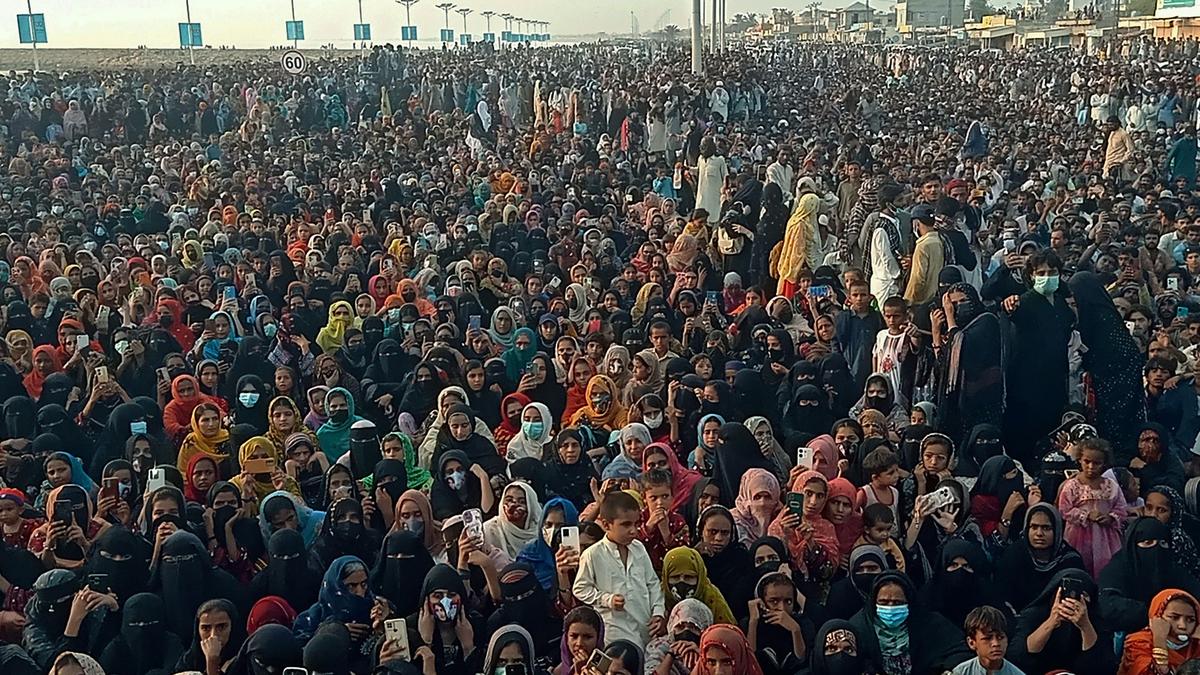
In the past few weeks, Balochistan, in Pakistan, has witnessed large-scale protests. Balochistan is a region with a distinct cultural and historical identity that is now divided between three countries mainly Pakistan, Iran and Afghanistan. The Baloch Yakjehti Committee (BYC) had called for a ‘Baloch Raaji Muchi’ (Baloch National Gathering) in the Gwadar port city to highlight human rights violations, resource exploitation, and the government’s inability to provide basic amenities to people in the province. Consequently, there were clashes between the protestors and the security forces, resulting in fatalities and detentions. The security forces’ crackdown and blockade of major thoroughfares in many towns and cities, such as Gwadar, Hub, Mastung and Quetta, resulted in a sharp increase in the prices of necessities such as food, medicine, and petrol.
While there were reports that the BYC called off protests in Gwadar after negotiations with the government, previous experiences suggest that more protests may resume soon. For instance, last December, protesting custodial killings and fake encounters, the Baloch protestors marched from Turbat to Islamabad, where they were subjected to a violent crackdown by the police. Subsequently, the protests continued in various parts of the Balochistan.
In a country with many restrictions on women’s rights, the demonstrations in Balochistan have witnessed a proactive participation from women, which indicates a deep resentment of the violent tactics of security forces. Women like Mahrang Baloch, who lost her father to custodial killings, are leading the protests.
The recent protests constitute an important episode in Balochistan’s long history of political turmoil. In 1947, the Khan of Kalat announced the formation of an independent state in Balochistan. After sustained coercive tactics by Pakistan’s leadership, the Khan of Kalat signed the instrument of accession in 1948. Interestingly, at the time of Pakistan’s independence, Gwadar was part of the Sultanate of Oman. After prolonged negotiations with Oman, Pakistan was able to purchase Gwadar in 1958. This history of independence, resistance, and incorporation of territories through coercion continues to define Balochistan’s political trajectory.
Additionally, in 1955, various provinces and ethnic areas in West Pakistan were subsumed into a single province under the One Unit scheme. The scheme resulted in considerable centralisation of power and negated the basic principles of federalism. After much opposition, it was abolished in 1970 leading to the emergence of provincial assemblies, including in Balochistan. However, this did not usher in an era of genuine federalism. The provincial governments were routinely dismissed, and Islamabad continued to have a significant say in the governance of the province. The lack of provincial autonomy aggravated the discontent in Balochistan, which often became the site of multiple insurgencies and protests.
The economic neglect of Balochistan also contributed to the disgruntlement in the region. Balochistan, accounting for 44% of the country’s landmass — with significant mineral resources, such as copper, gold, coal, and natural gas — continues to be one of the most backward regions in Pakistan. The exploitation of these resources has not resulted in substantive economic benefits for the local population. According to the 2018-19 UNDP report, Balochistan accounted for 4.5% of Pakistan’s GDP, 14% of the national road network, and 4% of its national electricity consumption. Despite being a mineral-rich region with a long coastline, poor economic indicators have fuelled the disappointment in Balochistan against Islamabad’s policies. The region’s performance is less than satisfactory even with respect to child, youth, and labour development indicators.
There is considerable resentment in Balochistan with the government’s counter-insurgency strategy. The security forces, as a part of their counter-insurgency operations, reportedly resort to enforced disappearances, which implies that the whereabouts of individuals detained/abducted by government officials are unknown. Quite often, enforced disappearances have ended in extra-judicial killings and fake encounters. The government-constituted Commission of Inquiry on Enforced Disappearances recorded approximately 2,752 cases. On the other hand, civil society groups such as the Voice of Baloch Missing Persons contend that there were over 7,000 cases of disappearances between 2002 and 2024. Various human rights organisations have also highlighted the phenomena of enforced disappearances of the Baloch people. However, security forces’ attempts to use enforced disappearances to subdue Baloch nationalist sentiment have failed spectacularly. Instead, enforced disappearances have deepened discontent in Balochistan, which will also have an impact on the broader region.


Tencent launched a tool on Sunday to integrate its WeChat messaging platform with the OpenClaw agent

An Air Canada flight collided with a Port Authority vehicle at LaGuardia Airport, causing significant damage and police response.

Saudi Arabia and the UAE face missile attacks, with casualties reported and air defenses engaged amid escalating regional tensions.

Slovenia's parliamentary election results show a tight race between liberals and populists, signaling potential political instability ahead.

IEA chief warns of a potential energy crisis worse than the 1970s, with 11 million barrels lost daily amid regional conflicts.

Cuba begins restoring power after a nationwide grid collapse, affecting thousands amid an ongoing energy crisis and blackouts.

The Hindu LIVE updates on March 23 2026 on Iran-Israel war. Iran faces deadline of US President Donald Trump warning to open Strait of Hormuz

Brazil's Lula condemns renewed colonialism and U.S. interference in developing nations at a summit in Colombia.

Saudi Arabia expels Iranian military staff amid escalating tensions and ongoing missile attacks during the U.S.-Israeli war on Iran.

Russia claims control of Potapivka village in Ukraine's Sumy region amid ongoing military efforts to establish a buffer zone.

Iranian missile strikes on Israeli towns cause widespread damage and injuries, marking a significant escalation in the ongoing conflict.

As Gor makes first trip as U.S. Special envoy to South Asia, Delhi watches strategic signals closely
Sergio Gor's inaugural trip as U.S. Special Envoy to South Asia signals strategic U.S. engagement amid regional tensions.

Slovenians vote in a tight election between liberal and populist candidates, impacting the country's future domestic and foreign policies.