New START’s expiry risks pushing the world to unchecked nuclear rivalry Premium
The Hindu
The expiry of New START jeopardizes global nuclear stability, leaving the U.S. and Russia without binding arms control measures.
On February 5, the New Strategic Arms Reduction Treaty (New START) officially expired, marking the end of the last remaining bilateral agreement constraining the nuclear arsenals of the U.S. and Russia. The New START treaty emerged from a period of diplomatic reset between Washington and Moscow in the late 2000s. Its predecessor, START I, was signed in 1991 and expired in December 2009. While the 2002 Moscow Treaty was still in effect, it lacked the rigorous verification and monitoring mechanisms typically of the START era.
Negotiations for a successor began in earnest in April 2009 after a meeting between then U.S. President Barack Obama and his Russian counterpart Dmitry Medvedev in London. The drafting process involved several rounds of talks in Geneva and Moscow. In April 2010, the two leaders signed the treaty in Prague and, after a contentious ratification process in the U.S. Senate and approval by the Russian Federal Assembly, entered into force on February 5, 2011.
New START set up verifiable limits on the strategic offensive arms of both nations and mandated that both parties reach these limits within seven years (by February 5, 2018) and maintain them thereafter. It capped the number of deployed strategic warheads to 1,550 and imposed similar limits on the numbers of heavy bombers, ICBMs, and SLBMs, allowed 18 on-site inspections a year, prohibited each party from interfering with the other’s National Technical Means (e.g. satellites), mandated data exchange, and setup a bilateral commission to resolve issues.
However, throughout its existence, New START faced several hurdles that eventually contributed to its demise. Perhaps foremost: Russia often argued that U.S. missile defence systems undermined the strategic balance, suggesting that if one side could neutralise the other’s retaliatory strike, the ‘mutually assured destruction’ dynamic would be broken. Conversely, the U.S. expressed concerns over conventional prompt global strike capabilities, where precise conventional warheads are placed on ballistic missiles — systems that New START counted under its nuclear limits.
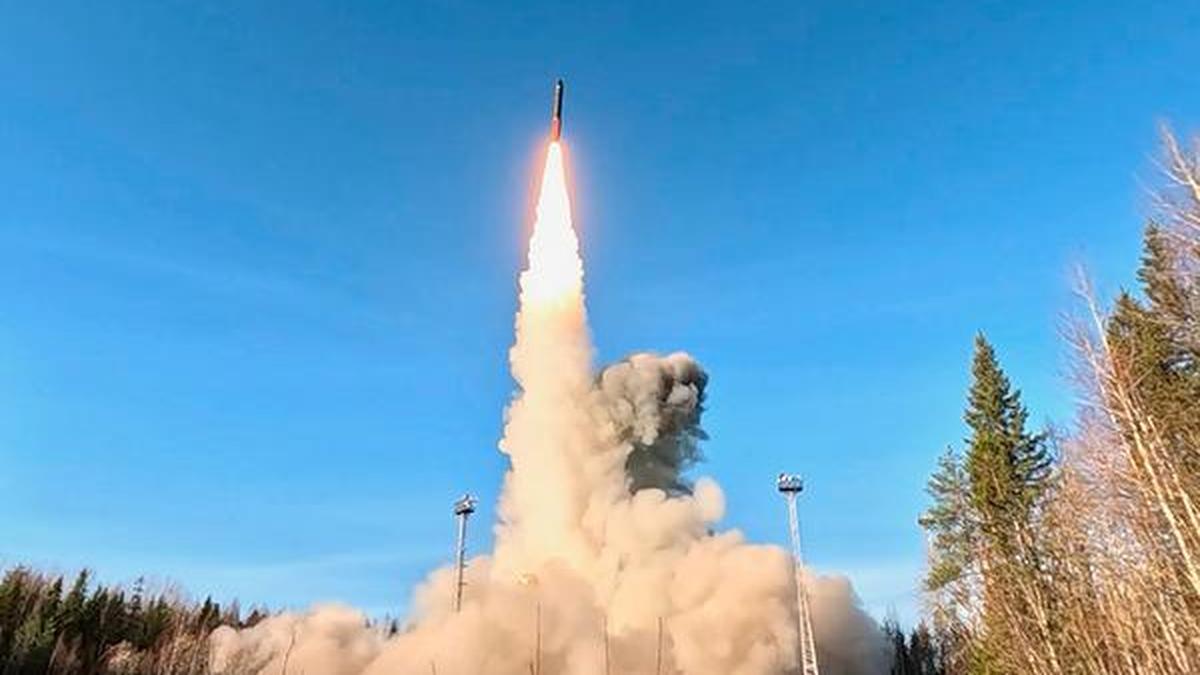
In the latter half of the treaty’s life, Russia also unveiled several novel strategic systems, including the Sarmat heavy ICBM and the Avangard hypersonic glide vehicle. While the U.S. successfully argued that these should be counted under New START, other systems like the nuclear-powered underwater drone Poseidon and nuclear-powered cruise missile Burevestnik remained outside the treaty’s technical definitions, creating friction.
The treaty was originally set to expire in 2021. Just days before the deadline, the Biden administration and the Kremlin agreed to a one-time, five-year extension, moving the expiration date to February 5, 2026. But in February 2023, after the conflict in Ukraine escalated and undermined bilateral relations, President Vladimir Putin said he was suspending Russia’s participation in New START because, Moscow said, the U.S. was seeking a “strategic defeat” of Russia and that western aid to Ukraine made on-site inspections in Russia impossible. The U.S. soon followed by withholding its own data and notifications.


Trump accuses Iran of weaponising AI for disinformation, citing misleading claims about military successes and public support rallies.

Myanmar's Parliament convenes under military control, following a controversial election that reinforces the Army's grip on power.

Trump urges allies to secure the Strait of Hormuz, but Japan and Australia refuse to send naval support amid rising tensions.

AI-created videos circulating on Elon Musk's X depict American soldiers captured by Iran, an Israeli city in ruins, and US embassies ablaze; a surge of lifelike deepfakes despite a policy crackdown to curb wartime disinformation.

Explore the implications of "no quarter" in warfare, its legal prohibitions, and recent controversial remarks by U.S. officials.

Iran-Israel war: Follow live updates from The HIndu on the West Asia conflict on Marh 16, 2026

Trump warns NATO's future is at risk if allies don't assist in opening the Strait of Hormuz amid rising oil prices.

Nilufer Koc critiques U.S. colonial mindset on Kurdish issues, emphasizing the need for Kurdish rights in Iran's future political landscape.

Taiwan reports a resurgence of Chinese military flights, with 26 aircraft detected near the island after a recent decline.

Israel's Foreign Minister dismisses reports of imminent Lebanon talks, reaffirming alignment with the U.S. in the Iran conflict.

Sri Lanka implements a QR code system to ration fuel sales amid global supply challenges, limiting weekly quotas for vehicles.

Iran's Foreign Minister claims war with the U.S. and Israel will end only when assurances against future attacks are guaranteed.

Jaishankar's Brussels visit aims to strengthen India-EU ties post Free Trade Agreement, focusing on strategic partnership and regional issues.