New patient targets for family doctors could hurt P.E.I.'s reputation, says national college
CBC
The College of Family Physicians of Canada is raising concerns over new targets for family doctors on P.E.I. and calling on all parties to work together to find a solution.
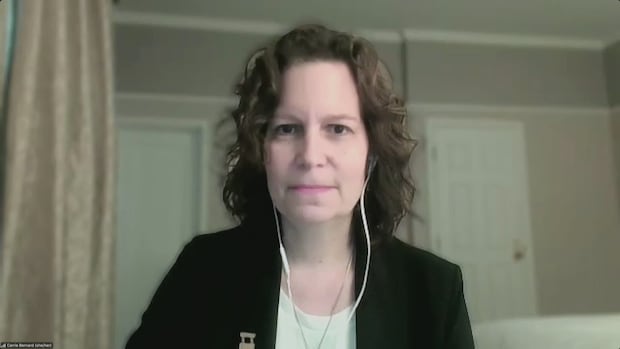
"I'm feeling pretty sad. There seems to have been a significant breakdown in trust and in the relationship, and that's really hard, when people stop being able to trust one another," college president Dr. Carrie Bernard told CBC News: Compass host Louise Martin.
Last week, the Medical Society of Prince Edward Island announced plans for legal action against Health P.E.I., citing what it says is a breach of its agreement with the province.
The society said the new targets for how many patients each doctor needs to accept are not what it agreed to when it signed a new physician services agreement with the province last year.
Bernard said that agreement, which made P.E.I. the first province to officially recognize family medicine as a specialty, a move that includes higher pay, was celebrated across the country.
But she said the recent policy development undermines that progress and can make physicians feel not valued and respected by the system in which they play a foundational role.
Health P.E.I.'s new operational guide includes key performance indicators, or KPIs, that include a requirement that each family doctor will see 24 patients a day, based on an average appointment being 15 minutes long.
It also says each full-time family doctor should have a minimum of 1,600 patients on the books, or panel size, which Bernard calls an "arbitrary number."
Penalties can be imposed if the minimum isn't met.
On Monday, P.E.I. Health Minister Mark McLane told CBC News that the targets are intended to help the government collect information and evaluate how the new physician services agreement is working.
He also pointed out that Health P.E.I. was giving doctors and their association six weeks to provide feedback on the new guidelines, and said there will be no punitive measures during the first year of the agreement.
Bernard agreed that accountability matters.
"I don't think any family physician thinks they should not be accountable. We expect the accountabilities, however, to be informed by the professionals who are actually providing the care," she said.
"This just sort of came out of nowhere, without consultation and discussion and collaboration and negotiation."


Health Minister John Dornan said Woodstock-based eVisitNB will continue to provide virtual health-care services to New Brunswickers for another 90 days after March 31.

The head of Canada's largest airline has been summoned to Ottawa to explain why he spoke only in English when he offered his condolences to the families of those killed or hurt in the collision between a plane and a fire truck at a New York City airport on Sunday.

Manitoba is bucking a national trend by promising to slash its deficit, while boosting health care spending by nearly $1 billion and delivering modest affordability measures, including a PST cut that will save you money next time you buy a soda and bag of chips.

Premier Scott Moe has said there are no "cancellations or delays" to school projects as a result of the provincial budget introduced last week.

An 18-year-old man has been charged with second-degree murder in a deadly daytime shooting on a highway south of Edmonton.

More than a month after the deadly mass shooting in Tumbler Ridge, stories of bravery during the tragedy are being shared.

Just over six months after the University of Prince Edward Island's medical program began, the dean of the faculty says things are “going wonderfully.”

One person has been found dead after a large fire gutted a home in Mississauga on Monday night, officials say.

The Northwest Territories government says it has found elevated levels of lead in drinking water at the Chief Jimmy Bruneau school in Behchokǫ̀.

Public Safety Minister Gary Anandasangaree faced pointed questions Tuesday about why the federal government has deported one Iranian official, despite longstanding concerns about how the regime operates in Canada and abroad.

An RCMP-led corruption investigation is underway and search warrants were executed on a number of properties including the homes of former mayor Jyoti Gondek, former councillor Sean Chu and sitting councillor Andre Chabot.

Toronto police say they are creating a counter-terrorism unit and a specialized task force that will see officers with semi-automatic rifles stationed at key locations in the city.

ATCO Ltd. says it's taking a 40 per cent ownership stake in the company building the Grays Bay Road and Port project.