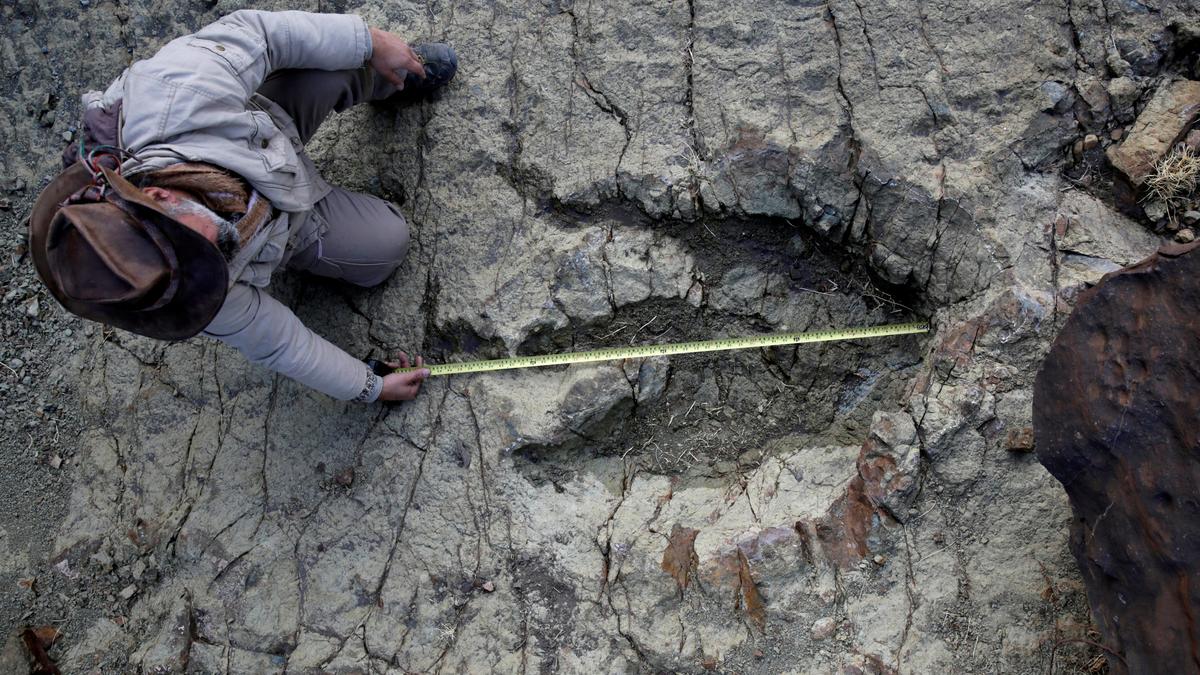
New AI method helps identify which dinosaur made which footprints
The Hindu
A new AI method helps identify dinosaur footprints by analyzing key traits, enhancing accuracy in paleontological studies.
Footprints are among the most common kind of dinosaur fossils. Sometimes scientists find a single, lonely footprint. Sometimes they come across a chaotic jumble of tracks resembling a dance floor, sort of a dinosaur discotheque. But identifying which dinosaur left which track has been notoriously difficult.
Researchers have now developed a method harnessing artificial intelligence (AI) to assist in pinpointing the type of dinosaur responsible for the tracks, based on eight traits of a given footprint.
“This is important because it provides an objective way to classify and compare tracks, reducing reliance on subjective human interpretation,” said physicist Gregor Hartmann of the Helmholtz-Zentrum Berlin research centre in Germany, lead author of the research published in the scientific journal Proceedings of the National Academy of Sciences.
Dinosaurs left behind numerous kinds of fossilised remains, including bones, teeth and claws, impressions of their skin, faeces and vomit, undigested remains in their stomach, eggshells and the remnants of nests. But footprints often are more abundant and can tell scientists a lot, including the type of environment a dinosaur inhabited and, when other tracks are present, the types of animals that shared an ecosystem.
The new method was honed with an analysis by the algorithm of 1,974 footprint silhouettes spanning 150 million years of dinosaur history, with the AI discerning eight features that explained variance in the shapes of these tracks.
These features included: overall load and shape, reflecting the foot’s ground contact area; the position of loading; the spread of the toes; how the toes attach to the foot; heel position; the load from the heel; the relative emphasis of toes versus heel; and shape discrepancy between left and right sides of the track.


NASA revamps its Artemis lunar program to address delays and ensure a Moon landing by 2028.