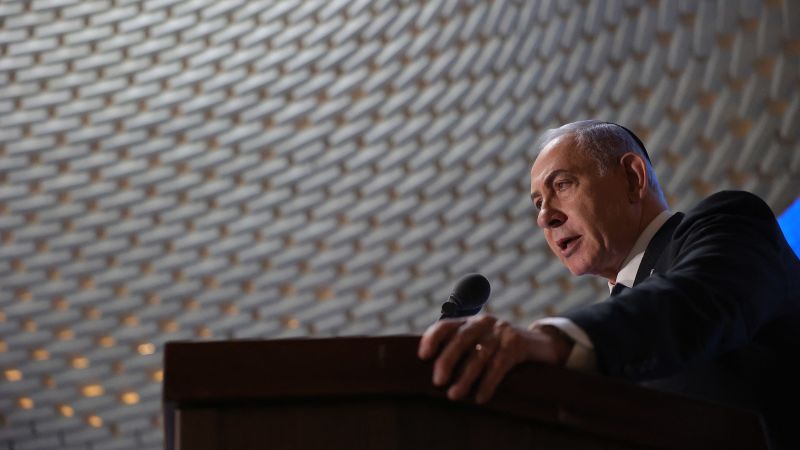
Netanyahu’s visit to the US could be crucial to a ceasefire deal. But does he want one?
CNN
Netanyahu will land in Washington on Monday to far less fanfare than he would have expected just a day earlier after Biden’s decision to drop out of the presidential race. But as ceasefire negotiations stretch into their third week, Netanyahu’s visit will still be critical to the prospects of a ceasefire in Gaza.
Israeli Prime Minister Benjamin Netanyahu will land in Washington on Monday to far less fanfare than he would have expected just a day earlier. His highly-anticipated visit – chock-full of meetings with top US officials and a prized address to Congress – will now undoubtedly be overshadowed by US President Joe Biden’s stunning decision to drop out of the presidential race. But as detailed ceasefire negotiations aimed at turning a framework agreement into a final deal stretch into their third week, Netanyahu’s visit will still be critical to the prospects of a ceasefire in Gaza. Senior US officials say a deal is within reach, but the prospects of a deal may hinge on the answer to one key question: Does Netanyahu actually want a deal? The conventional wisdom in Israeli media, politics and on the streets of Tel Aviv would tell you that the answer to that question is no – that Netanyahu has much more to gain by prolonging the war and much more to lose by ending it. The war has allowed Netanyahu to delay his share of accountability for the failures leading up to the October 7 attacks, rebuffing calls for new elections with stiff wartime resolve. His party’s prospects in the next election have actually improved in recent months. And the right-wing coalition partners keeping him in power have threatened to bolt if Netanyahu cuts a deal that ends the war. Even Biden has said “there is every reason” for people to believe Netanyahu is prolonging the war in Gaza in order to stay in power.


The Biden administration was all in on EVs. The Trump administration pulled the plug, ahem, on government support. How is the US car industry dealing with the whiplash.

For the Persian Gulf’s oil-rich and mostly cosseted residents, Iran’s pummeling has been as unexpected as it has been terrifying. Many expats have beaten a retreat home, as Iran launched missile and drone salvos, tearing up airports, apartment blocks and oil terminals.

An explosion struck overnight at a Jewish school in Amsterdam in what the city’s mayor called a “targeted attack against the Jewish community.”

A war waged by the world’s wealthiest nation is hitting the wallets of those who can least afford it
Every day, Shakil Khan weaves his bike through the relentless traffic of Dhaka, delivering items and ferrying passengers across the city. However, these days he’s waiting hours in long queues at gas pumps to fill his bike within a government cap on fuel purchases.

Twenty-one people, including a 60-year-old British tourist, have been charged under the United Arab Emirates’ cybercrime laws for filming and sharing videos of Iranian missile and drone attacks, according to an organization that provides legal assistance to those arrested in the UAE.

When Chinese warplanes suddenly stopped flying near Taiwan for nearly two weeks, the silence was both striking and deeply puzzling.

Specks of orange light streak across the night sky, an unnerving spectacle that’s become more common as Iran increasingly outfits some of its ballistic missiles with cluster munitions.

A day later than its manager originally proclaimed, the United States punched its ticket to the quarterfinals of the World Baseball Classic.

Iran might be outgunned and outspent by the US and Israel but it has one major advantage — its control over the Strait of Hormuz.

Russia President Vladimir Putin knows how to find opportunity in crisis, and the metastasizing Iran war is the latest case in point.

As strikes continue across the Middle East for a second week, US President Trump has given conflicting messages about how long the war will last, while Iran signals it’s prepared for a long fight.

For much of last year, Washington sought to starve Moscow’s war machine of cash, in part by removing one of its most loyal customers: India.

Two teenagers mistakenly left a knapsack containing marijuana and cash at a donation area outside a New Zealand charity shop then returned in a panic to retrieve the bag, police said Monday.