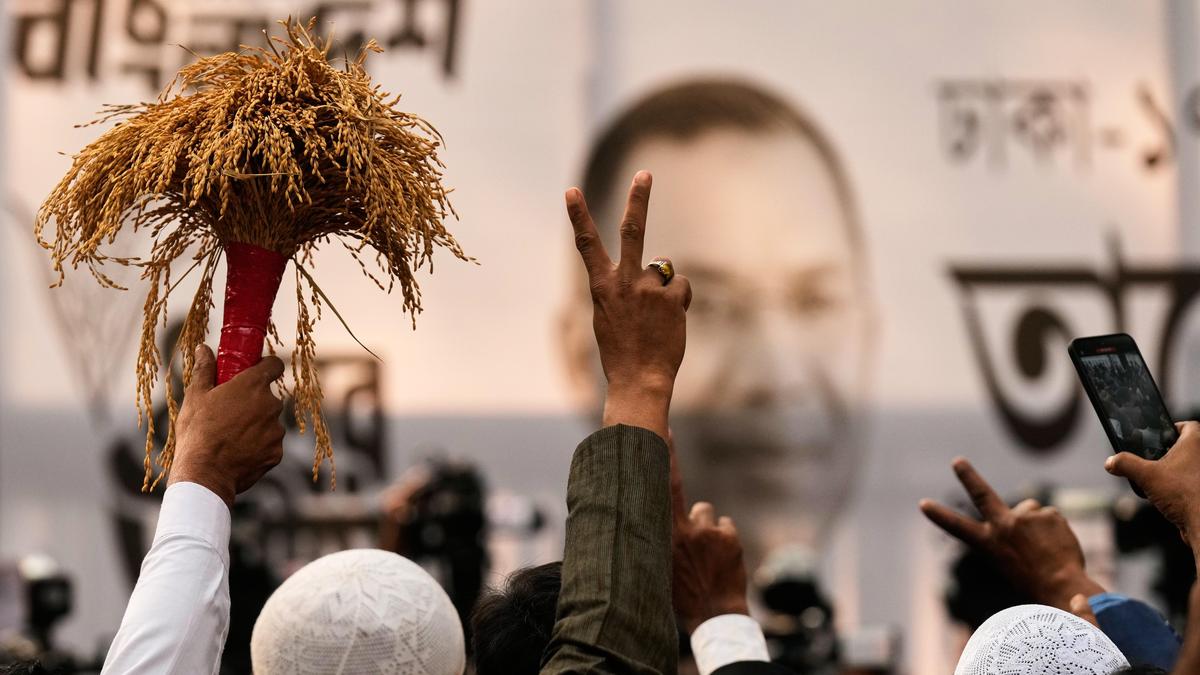
‘National interest’ will guide BNP on Ganga Water Treaty renewal: BNP chair’s foreign affairs adviser
The Hindu
BNP’s foreign affairs adviser emphasizes national interest in Ganga Water Treaty renewal and urges India to recognize Bangladesh's political shifts.
Bangladesh will take a decision on the renewal of the 1996 Ganga Water Treaty based on its “national interest”, according to Humaiun Kobir, foreign affairs adviser to Tarique Rahman, chairman of the Bangladesh Nationalist Party and Bangladesh’s Prime Minister-designate following the BNP’s landslide victory in this week’s election.
Speaking to The Hindu in an exclusive interview, Mr. Kobir urged India to “break from the past”, adding that communal incidents in India are a “matter of concern” for Bangladesh.
The Ganga Water Treaty, concluded in 1996, is due for renewal by December this year. Once a BNP government is formed, renewal of the treaty is expected to be one of the first items to be featured in bilateral talks. In the past, however, Bangladesh has often been told about the interest of the Indian states that are involved in riparian agreements, Mr. Kobir said. Explaining the approach of Mr. Rahman’s incoming government, he stressed: “We will move forward in a way so that it meets our national interest.”
Mr. Kobir added that the BNP leadership has urged the outgoing interim government of Prof. Mohammed Yunus “to leave some advice” regarding some issues, so they will have some idea of the negotiations that may have taken place during its tenure, between August 2024 and February 2026.
He explained that the political environment of Bangladesh has changed as a result of the 2024 uprising. As a result, “politics cannot be as usual”, he said, noting that all sides of Bangladeshi politics will come together on issues of national interest. “The biggest achievement of the uprising is that on issues of national interest we can all unite despite our differences,” he stressed.
Mr. Kobir raised the issue of communal tensions across the border. “The thing is, communal violence in India is a concern,” he said. “People of Bangladesh feel that India is becoming an intolerant society and a lot of far-right individuals are winning in elections through highly communal rhetoric,” he said, terming this as “disturbing”.


Iran warns of grave threats to its citizens from U.S. and Israeli strikes, asserting its refusal to submit to aggression.

Israeli military initiates limited ground operations against Hezbollah in Lebanon amid escalating violence and humanitarian crisis.

Sri Lanka introduces a four-day workweek for public sector to conserve fuel amid escalating energy crisis concerns.

EU and UN explore Black Sea initiative to reopen the Strait of Hormuz amid rising oil prices and regional tensions.

Russia fines Telegram $432,366 for not removing banned content amid accusations of hosting illegal material.

Shorts News:Watch: Smoke billows near Dubai airport after drone attack

West Asia conflict disrupts pharma air routes, threatening cancer drug supplies and forcing companies to find alternative shipping methods.

Trump accuses Iran of weaponising AI for disinformation, citing misleading claims about military successes and public support rallies.

Myanmar's Parliament convenes under military control, following a controversial election that reinforces the Army's grip on power.

Trump urges allies to secure the Strait of Hormuz, but Japan and Australia refuse to send naval support amid rising tensions.

AI-created videos circulating on Elon Musk's X depict American soldiers captured by Iran, an Israeli city in ruins, and US embassies ablaze; a surge of lifelike deepfakes despite a policy crackdown to curb wartime disinformation.

Explore the implications of "no quarter" in warfare, its legal prohibitions, and recent controversial remarks by U.S. officials.

Iran-Israel war: Follow live updates from The HIndu on the West Asia conflict on Marh 16, 2026