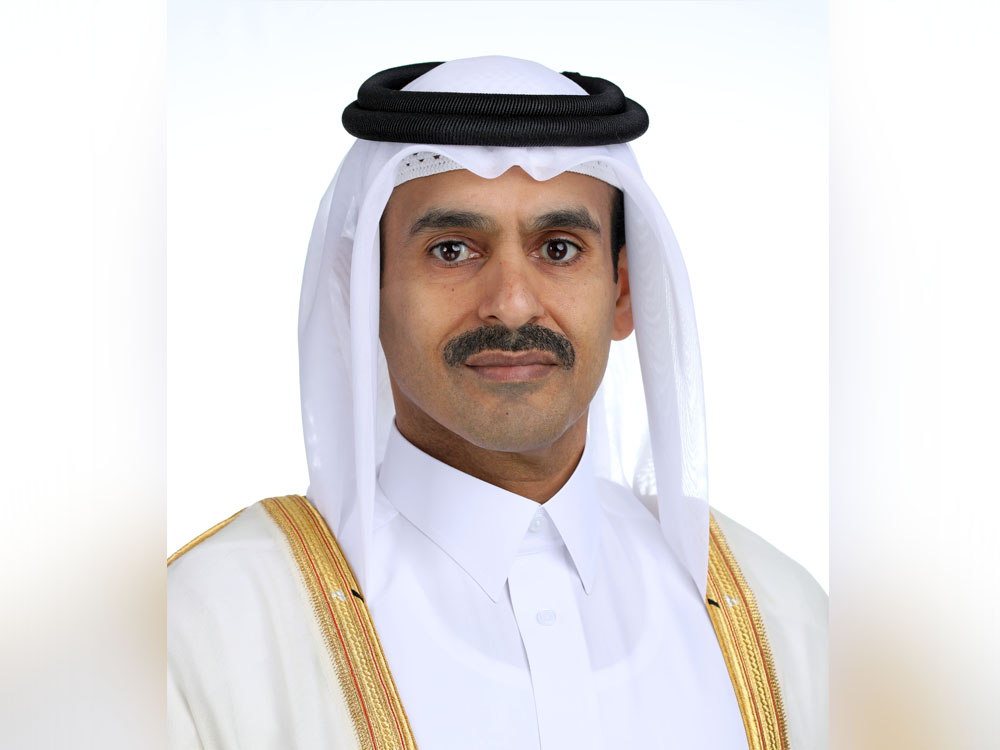
Missile attacks cause estimated loss of $20 billion in annual revenue, reduce Qatar’s LNG export capacity by 17%: Minister of State for Energy Affairs
The Peninsula
Doha: QatarEnergy expects the damage to its Ras Laffan Industrial City caused by missile strikes, which occurred on Wednesday, March18, 2026, and in t...
Doha: QatarEnergy expects the damage to its Ras Laffan Industrial City caused by missile strikes, which occurred on Wednesday, March 18, 2026, and in the early hours of Thursday, March 19, 2026, to cost about $20 billion a year in lost revenue and to take up to five years to repair, impacting supply to markets in Europe and Asia.
Providing an update on the damage to the facilities at Ras Laffan Industrial City, the Minister of State for Energy Affairs, the President and CEO of QatarEnergy, His Excellency Saad Sherida Al-Kaabi said “I am relieved to confirm that no one was injured by these unjustified and senseless attacks, which weren’t just an attack on the State of Qatar but attacks on global energy security and stability. This was an attack on all of us who stand for development and human progress that is sustained by a fair, reliable, and secure access to energy.”
The attacks damaged two liquefied natural gas (LNG) producing Trains 4 and 6 totaling 12.8 million tons per annum (MTPA) of production, representing approximately 17% of Qatar’s exports. Train 4 is a joint venture between QatarEnergy (66%) and ExxonMobil (34%), and Train 6 is a joint venture between QatarEnergy (70%) and ExxonMobil (30%).
His Excellency Minister Al-Kaabi said: “The damage sustained by the LNG facilities will take between three to five years to repair. The impact is on China, South Korea, Italy and Belgium. This means that we will be compelled to declare force majeure for up to five years on some long-term LNG contracts.”
The attacks also targeted the Pearl GTL (Gas-to-Liquids) facility, a production sharing agreement operated by Shell, that converts natural gas into high-quality cleaner burning drop-in fuels and produces base oils used to make premium engine oils and lubricants, and paraffins and waxes.


Doha, Qatar: HE Sheikh Saud bin Abdulrahman bin Hassan Al Thani, the Deputy Prime Minister Minister of State for Defense Affairs met in his office T...

New York: The Permanent Representative of the State of Qatar to the United Nations, HE Sheikha Alya Ahmed bin Saif Al Thani participated in the launch...

New York: The Permanent Representative of the State of Qatar to the United Nations, HE Sheikha Alya Ahmed bin Saif Al Thani participated in the launch...

Doha, Qatar: The AmirHH Sheikh Tamim bin Hamad Al Thani received Thursday a phone call from HM King Hamad bin Isa Al Khalifa of the Kingdom of Bahrain...

Doha, Qatar: The AmirHH Sheikh Tamim bin Hamad Al Thani received Thursday a phone call from HM King Hamad bin Isa Al Khalifa of the Kingdom of Bahrain...

Doha, Qatar: The Amir HH Sheikh Tamim bin Hamad Al Thani received a telephone call today from HE Narendra Modi, Prime Minister of the Republic of Indi...

Doha, Qatar: The Amir HH Sheikh Tamim bin Hamad Al Thani received a telephone call today from HE Narendra Modi, Prime Minister of the Republic of Indi...

Doha, Qatar:The Department of Meteorology has issued a warning for Thursday night, March 19, 2026, until 6amon Friday, forecasting thundery rain, stro...

Geneva: The World Trade Organization (WTO) warned Thursday that the conflict in the Middle East region poses a direct threat to global food security,...

Paris, France: The European Space Agency announced Thursday it has re established communication with a spacecraft that is part of its Proba 3 mission,...

Doha, Qatar: The Amir HH Sheikh Tamim bin Hamad Al Thani received a phone call today from HM King Abdullah II ibn Al Hussein of the sisterly Hashemite...

Doha, Qatar: The Amir HH Sheikh Tamim bin Hamad Al Thani received a phone call today from HM King Abdullah II ibn Al Hussein of the sisterly Hashemite...

Doha, Qatar: The Amir, HH Sheikh Tamim bin Hamad Al Thani, received a phone call Thursday from HE Keir Starmer, Prime Minister of the friendly United...