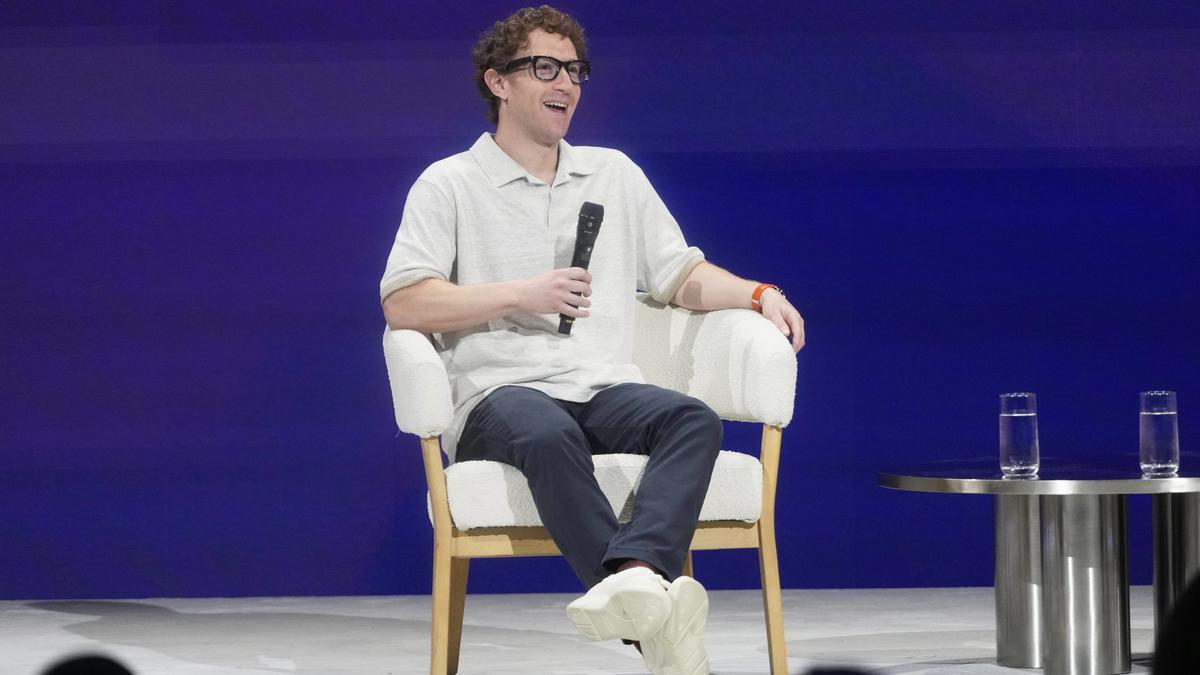
Meta introduces Llama application programming interface to attract AI developers
The Hindu
Meta Platforms announced an API in a bid to woo businesses to more easily build AI products using Llama.
Meta Platforms on Tuesday announced an application programming interface in a bid to woo businesses to more easily build AI products using its Llama artificial-intelligence models.
Llama API, which was unveiled during the company's first-ever AI developer conference, will help Meta go up against APIs offered by rival model makers including Microsoft-backed OpenAI, Alphabet's Google and emerging low-cost alternatives such as China's DeepSeek.
"You can now start using Llama with one line of code," chief product officer Chris Cox said during a keynote speech onstage. APIs allow software developers to customise and quickly integrate a piece of technology into their own products.
For OpenAI, APIs constitute the firm's primary source of revenue. Meta, which released the latest version of Llama earlier this month, did not share any pricing details for the API.
In a press release, it said the new API was available as a limited preview for select customers and would roll out broadly in weeks to months. The company also released a standalone AI assistant app earlier on Tuesday. It plans to test a paid subscription service of its AI chatbot in the second quarter, Reuters reported in February.
Meta releases its Llama models largely free-of-charge for use by developers, a strategy CEO Mark Zuckerberg previously stated will pay off in the form of innovative products, less dependence on would-be competitors and greater engagement on the company's core social networks.
"You have full agency over these custom models, you control them in a way that's not possible with other offers," Manohar Paluri, a vice president of AI, said at the conference. "Whatever model you customize is yours to take wherever you want, not locked on our servers." DeepSeek, which has also released partly open-source AI models, sparked a stock selloff in January amid concerns over the high costs of AI development needed by top U.S. firms.


GHMC intensifies action against property tax defaulters, seizing properties and offering a One Time Settlement scheme for payments.

CCB arrests three drug peddlers in Mangaluru, seizing ₹2.5 lakh worth of MDMA and other valuables.

TVK's 28 candidates in Puducherry include former BJP MLAs, a sitting Independent, and a retired police IG.

BRS submits notice on private member bill to Speaker

CPI-M accepts DMK's five-seat offer for Tamil Nadu Assembly elections, prioritizing INDIA bloc unity over seat demands.

Ricky Rai, son of former underworld operative Muthappa Rai, on Monday appeared before the Bengaluru Traffic Police for questioning in connection with a case involving a Lamborghini performing dangerous stunts at Anil Kumble Circle on March 21.

The Dispur election heats up as 'CongBJP' defections shape a high-stakes contest between veteran candidates from BJP and Congress.

Bengaluru's M. Chinnaswamy Stadium conducts readiness drill ahead of IPL 2026, ensuring upgrades and technical preparations are complete.

First-level randomisation of EVMs completed in Nagapattinam for upcoming elections, ensuring transparency and security.

A district-level committee in Krishnagiri has been formed to assess and verify seizure claims of goods and cash.

Minister Anam Ramanarayana Reddy pledges government support for local fishermen and farmers facing challenges in Andhra Pradesh.

MP M. Sribharat urges collective efforts to revive Visakhapatnam Steel Plant, highlighting key reforms for crucial recovery and growth.

141 candidates have filed nominations for Kozhikode's Assembly elections, with scrutiny on March 24 and campaigning intensifying.