Lessons from a high-profile Harvard exit Premium
The Hindu
The rise of right-wing populism across the globe entails solid structural change especially in academia
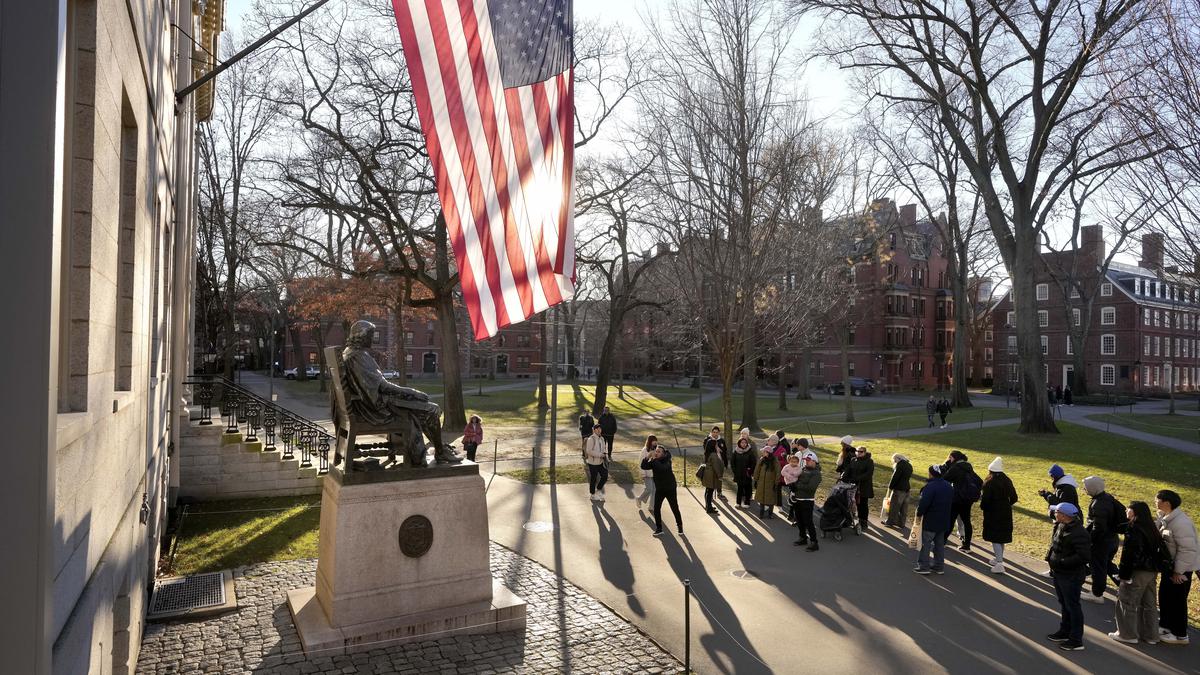
On January 2, when Harvard University’s first African-American President, Claudine Gay, stepped down from her post, the high-decibel euphoria from the conservative cabal in the United States was along expected lines. Emboldened right-wing activists such as Christopher Rufo claimed that it was they who had got her out. In his verbal onslaught, Republican Vivek Ramaswamy said what Ms. Gay had published in her whole career was what a distinguished American academic published in just a few years. Further, he attributed the policy of affirmative action as the reason for scholars like her to ascend to the coveted position. Her reluctance to immediately condemn the Hamas attack on Israel on October 7 and her subsequent confession before a Congressional committee caused controversy, eventually leading to her resignation. There was also the issue of alleged plagiarism.
When Ms. Gay was appointed as the 30th president of Harvard on July 1, 2023, it was widely believed that Harvard firmly believed in and adhered to the larger contours of diversity, equity and inclusion (DEI). The long cherished legacy of DEI is deeply embedded in modern consciousness not only in American academia but also the globe. It is not very difficult to foresee the consequences of any explicit racial slur against a student or a faculty member. The political ascendency of Donald Trump was, no doubt, a turning point as the conservatives stepped up their attack on the ethics of DEI and its political manifestation. Today, Hamas’s attack on Israel and Tel Aviv’s brutal response in Gaza perhaps effortlessly became a lame excuse for right-wing political pundits and social conservatives to strike at the celebrated values of DEI.
The rise of right-wing populism across the globe entails solid structural change especially in academia. In their epistemic fabric, an academician’s political persuasion or ideological commitment is no longer an individual’s sovereign choice but ought to be subservient to their edict since their illiberal nationalism is equated with virulent patriotism. Hence, disputing or critiquing right-wing populism may spell deeper trouble for academics. The hideous campaign against Ms. Gay is a perfect example of this trend.
Is the episode cause for alarm? Yes, to some extent. It has no doubt emboldened the conservative political class here in India. The right-wing politics in the U.S. has tacit endorsement from many scholars, whereas, here, the political right is deeply communal and deplorably divisive. Hence their didactic narratives on polity and society are either a harangue or quite pedestrian. Our academia have largely remained impervious to the nefarious designs of majoritarian communalists as the freedom struggle, with its solid secular orientation, shaped the post-colonial academic milieu.
The founding fathers of our republic pledged to establish the country as a nation of/for all. Their social privilege and affluence did not deter them from speaking up for subaltern communities and the underprivileged. Their tenacious commitment to have a level-playing ground for all sections resulted in the introduction of a reservation policy and several welfare measures. Our academic atmosphere since the formation of the republic is largely shaped by this spirit of DEI.
However, the insidious nature of right-wing populism sends out a distressing signal as its coercive tantrums may wreck the academic spirit over time. The hard-earned academic freedom and intellectual sovereign space must remain non-negotiable and cannot be in thrall of political parties. Today, when majoritarianism effortlessly becomes a text-book-like definition of patriotism, and caste hegemony camouflages itself into sacred antiquity, the task of academia is to resist this onslaught and preserve the spirit of DEI. Ms. Gay’s unceremonious exit seems to be an apt ingress for the cheerleaders of right-wing populism to ramp up their tirade against the spirit of DEI here too.
Celebrating private academic institutions and foreign university campuses is actually disguised contempt for the spirit of DEI. The silence in the draft University Grants Commission (Setting up and Operation of Campuses of Foreign Higher Educational Institutions in India) Regulations, 2023, on reservation in students’ admission and faculty appointment is not inadvertent. The desperation of social conservatives to establish caste-class exclusivism in academic campuses will see fruition if right-wing populism remains at the helm.


The government plans to amend the FCRA, introducing new regulations for NGO asset management and accountability for key functionaries.

The draft policy for “Responsible Digital Use Among Students”, released on Monday by the Department of Health and Family Welfare, has recommended that parents set structured routines with clear screen-time rules and prioritise privacy, safety, and open conversation with children on digital well-being.

Police Observer Sushant Kumar Saxena conducts surprise inspection at Shencottai police station, reviewing warrants and security arrangements ahead of elections.

Andhra Pradesh government to launch key projects in April, focusing on industrial growth and infrastructure development, says Nara Lokesh.

Lok Sabha refers the Corporate Laws (Amendment) Bill to a JPC amid opposition concerns over CSR provisions dilution.

SHG members in Kanniyakumari use snakes and ladders to raise election awareness and boost voter turnout.

Government accelerates consultations for early implementation of the Women’s Reservation Act to ensure women’s representation in 2029 elections.

CM A. Revanth Reddy distributes ₹1 crore insurance cheques to families of deceased Electricity department employees, enhancing financial security for workers.

The Bengaluru Traffic Police (BTP) registered 634 cases of drunk driving during a week-long special enforcement drive conducted across the city between March 16 and March 22.

GHMC intensifies action against property tax defaulters, seizing properties and offering a One Time Settlement scheme for payments.

CCB arrests three drug peddlers in Mangaluru, seizing ₹2.5 lakh worth of MDMA and other valuables.

TVK's 28 candidates in Puducherry include former BJP MLAs, a sitting Independent, and a retired police IG.

BRS submits notice on private member bill to Speaker