Kharg Island: The pearl of the Persian Gulf Premium
The Hindu
The Hindu profile on Kharg Island, Iran's vital oil hub, faces escalating conflict amid U.S.-Israel tensions, threatening global energy supply and prices.
A U.S. attack has “totally obliterated every military target” on Kharg Island, Iran’s crown jewel in the Persian Gulf, said President Donald Trump in a social media post on March 14. Trump described the attack as “one of the most powerful bombing raids in the history of the Middle East”. The attack came after Mr. Trump’s earlier warning to Iran not to shut the Strait of Hormuz, a critical maritime checkpoint connecting the Gulf with the Arabian Sea. The strait remains effectively closed.
As the U.S.–Israel war on Iran enters its second week, Kharg Island is now at the centre of the conflict. The tiny coral outpost in the Gulf sits at the centre of Iran’s oil export network. The attack on the island now raises the risk of choking Iran’s economic lifeline and triggering wider global disruptions.
Iran-Israel war LIVE updates
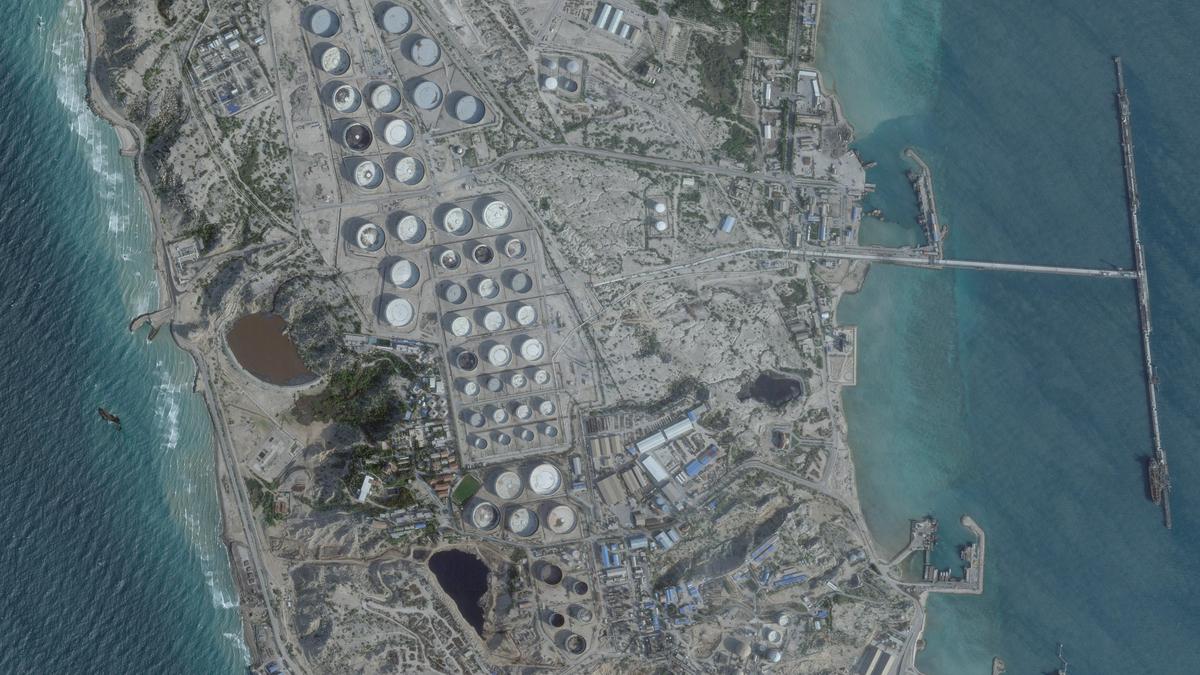
Kharg Island is no ordinary speck of land. Barely 8 km long and covering about 20 sq. km, it rises from the northern Persian Gulf as a small island, about 25–30 km off Iran’s mainland coast. It sits in the turquoise waters of the Gulf. The landscape is dominated not by nature but by industry: massive storage tanks, sprawling jetties and an airstrip cutting across the island. Super tankers dock here daily to load millions of barrels of crude piped in from Iran’s inland oil fields.
Jalal Al-e-Ahmad, the celebrated 20th century Iranian writer and philosopher, once described Kharg as the “orphan pearl” of the Persian Gulf. Today, many Iranians term it the “forbidden Island” because of the tight military restrictions surrounding it. Guarded by the Islamic Revolutionary Guard Corps (IRGC), entry is limited to those with official clearance.
Despite the secrecy, the island has a long and layered history. Kharg has long been part of regional trade networks. Ancient records from around the 10th century describe it as a stop for pearl divers and traders travelling between India and Basra, Iraq. Dutch merchants fortified the island in the 18th century before being driven out, and the British briefly occupied it in the 19th.


Eleven Indian nationals face charges in the U.S. for a visa fraud scheme involving staged armed robberies.

U.S. expands Venezuela sanctions waivers to boost energy investments and fertilizer exports amid rising global prices.

South Korea's PM and Trump discuss potential talks with North Korea’s Kim Jong Un to revive diplomatic relations.

Iran-Israel war: Follow the latest updates from The Hindu on the West Asia conflict and rising oil crisis on March 14, 2026

Trump announces U.S. military strikes on Iran's Kharg Island, emphasizing naval escorts for tankers to restore oil exports.

U.K. Defence Minister links Putin to Iran's drone tactics amid escalating conflict with the U.S. and Israel.

Macron warns Russia it's "mistaken" to think West Asia war will ease sanctions pressure amid rising oil prices.

U.S. Defense Secretary claims Iran's new leader, Mojtaba Khamenei, is wounded and likely disfigured amid ongoing conflict.

A deadly blast in Tehran disrupts a pro-government rally as tensions rise amid ongoing Israel-Iran conflict and economic turmoil.

Shorts News:Watch: Dozens injured, homes damaged from barrages of Iranian overnight strikes on Israel

Israel intensifies strikes in Lebanon, targeting a key bridge over the Litani River amid ongoing conflict with Hezbollah.

Several countries that have hostile relations with their neighbours or militant groups tend to resist being clearly mapped on Google’s navigation system, degrading the experience for users.

Seven police personnel were killed in a roadside IED blast during a patrol in northwest Pakistan's Lakki Marwat district.