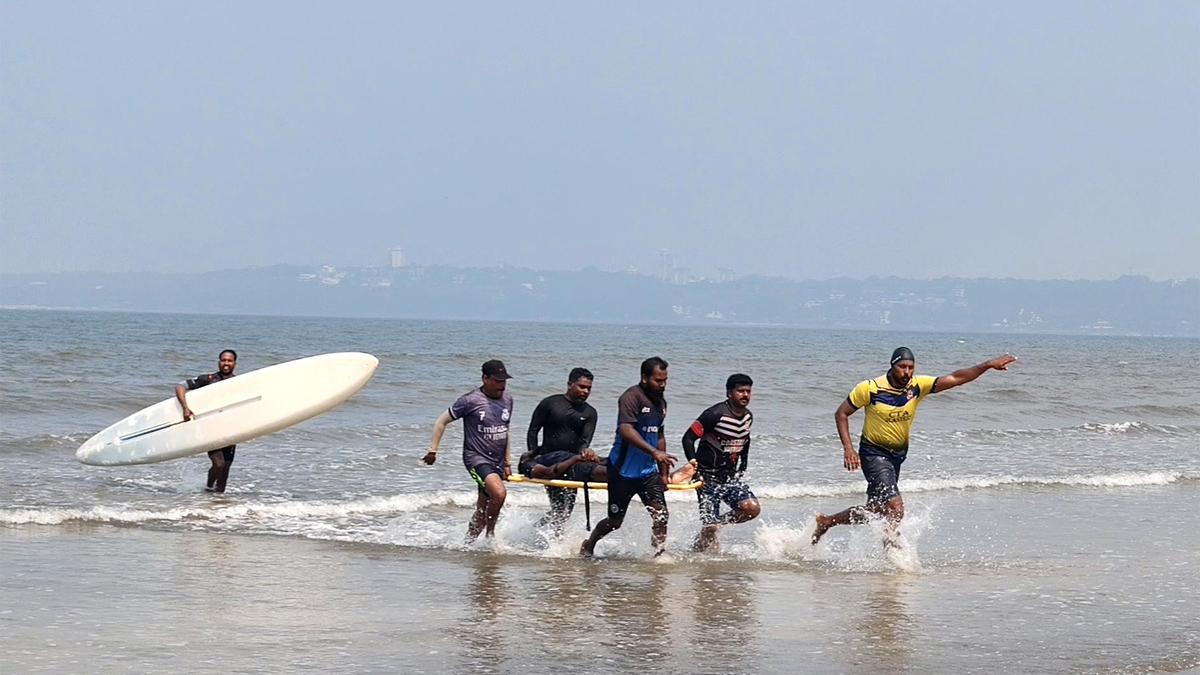
Kerala’s fisherfolk 'army' gets valuable rescue lessons from NIWS Goa
The Hindu
Kerala's fisherfolk undergo vital sea rescue training at NIWS Goa, enhancing their skills for disaster response and community safety.
Back in 2018, as Kerala faced unprecedented floods, N.P. Sanal was among the fisherfolk who set aside concerns for their own safety and waded into floodwaters in Kozhikode district to rescue stranded families. Eight years later, he is part of a batch of 34 fishermen about to complete training in sea rescue at the National Institute of Water Sports (NIWS) in Goa.
The conclusion of their training later this month will also mark the culmination of a project initiated by the Kerala government after the 2018 floods to train 900 fish workers from across the State in rescue operations during natural disasters.
"Being able to save a life is a blessing. It was after we took part in resuce efforts during the 2018 floods that the Chief Minister called us fisherfolk as Kerala's army. The government also realised that we have a key role to play during natural disasters. This training provides us a systematic understanding of how to go about rescuing, victims especially during accidents in the sea," Sanal tells The Hindu during a training session on the Caranzalem beach, behind the NIWS campus.
Far out in the sea, two 'victims' are close to drowning. Two rescuers head out towards them with their surfboards crashing against the waves. Once near the victims, they effortlessly flip their boards to place the two on the surface, after which they navigate the board back to the shore. On the shore, other rescuers join them to provide the victims with cardiopulmonary resuscitation (CPR) and first aid, before rushing them to the ambulance. The mock rescues continue as a cycle through the day.
The Kerala Fisheries department is funding the initiative with ₹50,000 spent for each trainee, who gets a daily stipend of ₹700. The trainees were chosen from the fishing community in several phases with an ability to swim 100 m in 3 minutes being the minimum qualification. The current batch is the 24th one.
Navy veteran N. Murugesan, the chief instructor, shares several stories of trainees from the previous batches who have taken part in rescue operations in their localities, from Kasaragod native Babish, who rescued four persons during a boat accident, to another youth who rescued a girl who fell into a river from a bridge in Alappuzha. He says that there are now 900 well-trained rescuers all across Kerala who can make all the difference between life and death during crisis situations.


Hyderabad's LPG crisis forces kitchens to switch to firewood, raising environmental, health, and fire safety concerns amid rising costs.

Congress urges Election Commission to reconsider Puducherry Assembly election date, citing potential campaigning challenges and Assembly tenure concerns.

Shorts News:JD Vance backs Trump’s handling of Iran war amid speculation of rift

The Clamorous reed warbler is as loud as they come, but in the urban environment, it is outshouted. Weed clearing in urban habitats brings down its home, the bulrushes. Bulrushes in wetlands are not encroachments, but ‘legal homes’ to birds in the crake and rail family and warblers, so government line agencies ought to tread on them thoughtfully

Uttar Pradesh ATS arrests a dental student for alleged connections to an ISIS online module, probing extremist recruitment activities.

Rajinikanth refutes TVK leader's claims about DMK threats preventing his political entry, expressing gratitude to supportive political figures.

Tamil Nadu CM Stalin celebrates the Union government's approval for archaeological excavations, crediting DMK's persistent advocacy for the win.

Dilip Ghosh will contest Kharagpur Sadar in the 2026 West Bengal polls, aiming for increased BJP votes.

A hotel fire in Pahalgam leads to one death from a reversing fire tender; multiple LPG blasts hinder firefighting efforts.

The Clamorous reed warbler is as loud as they come, but in the urban environment, it is outshouted. Weed clearing in urban habitats brings down its home, the bulrushes. Bulrushes in wetlands are not encroachments, but ‘legal homes’ to birds in the crake and rail family and warblers, so government line agencies ought to tread on them thoughtfully

The people of at least one State will heave a sigh of relief now that the schedule for five Assembly elections — all in April — has been announced.

Four charred bodies discovered in a car near Tirunelveli; police investigate potential murder or suicide.

Five insurgents linked to PREPAK and KYKL arrested near India-Myanmar border; explosives and arms recovered in separate operation.