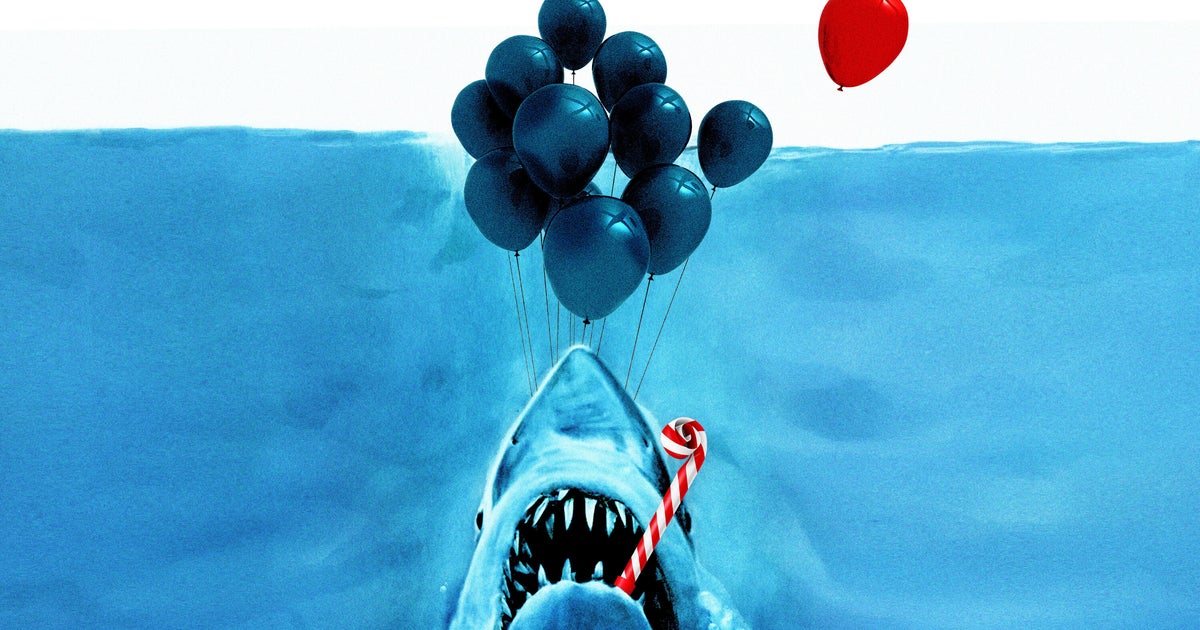
'Jaws' Sparked America's Fascination With Sharks — And Left Behind A Complicated Legacy
HuffPost
It's been 50 years since the Steven Spielberg blockbuster hit theaters.
Last summer, a great white shark washed up on the shore of Nantucket, Massachusetts. When a family on vacation came across the beached behemoth as it flailed in the shallow waves, they made a surprising choice. Members of the group cautiously approached the shark and pushed it back into the ocean. Video of the event quickly went viral — a feel-good story with a hint of danger.
But 50 years ago, during the same summer that “Jaws” first swam into theaters, a similar encounter might have gone very differently.
On June 20, 1975, Steven Spielberg unleashed “Jaws” on the world, inventing the modern blockbuster and launching a global fascination with sharks. It was the first film to gross more than $100 million at the U.S. box office, according to the American Film Institute. Based on the best-selling book by Peter Benchley, “Jaws” sparked a surge of interest in studying the ancient apex predator — and an obsession with hunting sharks as trophies.
“When ‘Jaws’ came out, there was an uptick in shark tournaments,” said Wendy Benchley, a longtime ocean conservationist who is married to the “Jaws” author and appears in the upcoming National Geographic documentary “Jaws @ 50.” “This fictional book and movie somehow gave people the license to kill sharks.”
In the half-century since, our understanding of great white sharks has increased dramatically, but there’s much we still don’t know about the ruler of the sea. At the same time, shark populations around the world have decreased dramatically due to overfishing, although sightings (and attacks) have increased recently along the East Coast of the United States for reasons that scientists still don’t fully understand.


Bravo’s franchise is 20 this year, and it’s time to honor some of our favorite women.

Bravo’s franchise is 20 this year, and it’s time to honor some of our favorite women.

Kerry Washington and Elisabeth Moss are the draw for this new Apple TV series, but the writing doesn’t give them enough to work with.

The long-running series has been riddled with mess for years. ABC, it’s time to let it go.

Scherzinger appeared at a loss for words to explain why the pop group is touring as a trio rather than the original six.

The medical drama's latest true-to-life storyline targets the president's ongoing immigration crackdown in the middle of the ER.

The actor and martial artist starred in the long-running TV series "Walker, Texas Ranger."

The show's live audience grimaced and groaned while the clip was shown.

Holly Hallstrom recalls how the late game show host’s behavior led her to go broke and live out of her car.

The stand-up comedian has joined a swath of celebrities to be honored with a less-than-perfect wax figure.

"My goal has always been to educate and inform," the news host said in announcing her departure.

“It makes no sense at all," said the late-night host.

The 55-year-old performer, whose given name is Michael Lawrence Tyler, pleaded guilty to third-degree rape in an Ascension Parish courtroom, records show.