Is it okay to be a fan?
The Hindu
Fan culture explored through anecdotes, expert opinions, and psychological insights, highlighting the fine line between admiration and obsession.
A few years ago, filmmaker Krishand RK met a fan during a screening of his national award winning movie ‘Avasavyooham’. The fan waxed eloquently about his film and the impact it left on him. The fan also took Krishand’s cell phone number. But he thought nothing much of it. Over the course of the next 12 months, he received multiple calls, as the fan made repeated attempts to connect with Krishand, discussing his movie. Then it started to get a bit out of hand.
“I would always give him a time limit. I will say beforehand that I only have five minutes. He would share his thoughts on my movie, or my interviews. After some time he started getting angry with me because I was doing commercial films,” Krishand recalls. When the calls started to become too frequent, Krishand blocked him on his phone and social media accounts. The fan then got hold of Krishand’s mom’s phone number. “It got to a point where it became annoying. That being said, there are also fans who come from different parts of the country to watch my movies as they get screened or those who reach out to me with their thoughts on the old blogs I wrote or the graphic artworks of mine,” he says. The aforementioned fan now sends mails, once in a while. “I think the problem was that he was naive, and so was I. And I never imagined I’d run into a problem like this,” he says.
Rapper Eminem’s song ‘Stan’ tells the story of an obsessed fan named Stan. History has it that the term “fan” originated in the 17th Century, as a shorthand for “fanatic”. From fan gatherings to fan fiction, we have come a long way. Take any field and fan culture is woven into it. As media and social media intruded into our lives, engagement with celebrities became even more easier. For the fan, the perceived direct channels for communication with the celebrity empower him. The line blurs sometimes, as seen with the overzealous fan of Krishand.
Why do we become fans? What is the reason for this star-chasing culture? Dr. Aravind Thampi, senior consultant psychologist, KIMSHEALTH, Thiruvananthapuram, says that any idolisation is a projection of one’s own unconscious desires. “It is a projected behaviour. When a person watches a movie and sees the actor indulging in heroic acts, they are in a way satisfying their unfulfilled desires. They are watching their projected ideal self on screen and one’s desires get fulfilled in watching these characters come alive,” he says. According to him, fandom has also changed over the years, as we started getting connected digitally. With the entry of mobile phones and social media, fandom and how fans interact with the stars have also changed. “There was a time when only movie stars drew attention. Now anime, comic characters, artists, etc. have a faithful fan following. There is a cultural shift too, be it in music, art or movies. But I do not see blind hero idolisation,” he says.
Anandakrishanan S, who recently passed out of the Government Law College, Ernakulam says that he has been a die-hard fan of actor Mohanlal ever since he can remember. “My mom says that I was so smitten by the actor that I would watch him without blinking an eye when I was a baby,” he laughs. “Well, that is what my mom says. I think it all started with my sister Devika. She used to be an ardent fan of Mohanlal and soon I also followed. Even now when his movies get released I ensure that I catch the first show. I watched the recently released ‘Empuraan’ movie twice on the day it was released. Even if his movies don’t do well in theatres, I would still watch them,” says Anandakrishnan. “The facial similarity the actor has with my father is perhaps also one reason,” he adds as an afterthought.
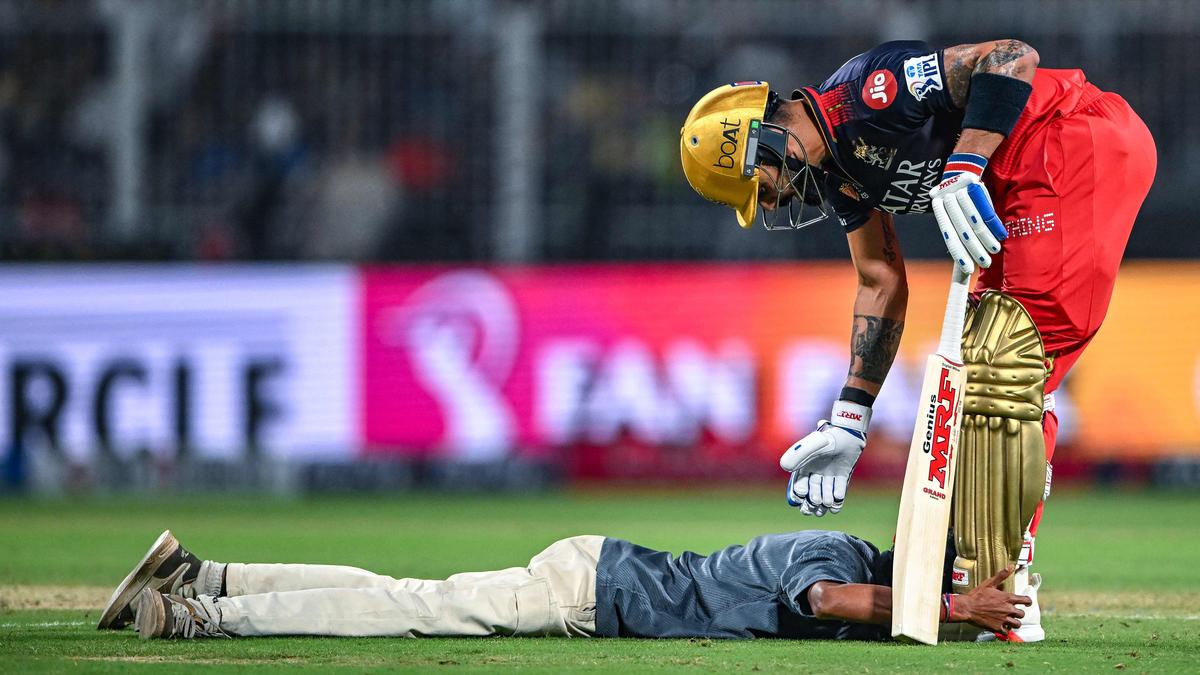
Sometimes you could be so invested in a media figure that they could make or break your day. Sreejith Sivaraman, a wildlife biologist who is currently pursuing a PhD in Kerala Forest Research Institute (KFRI) says that he is an ardent fan of Indian cricketer Virat Kohli and that if the player doesn’t do well on the field, it could ruin his day. “I admire Kohli for the player and the person he is. If for some reason Kohli fares poorly, it would dampen my spirits. Then I will have to uplift my mood by focusing on something else. Even if India lost the match, if Kohli scored well, I would still be happy,” he laughs. “He is a legendary player. He is sincere, hardworking, responsible and a true leader. In the cine field I admire Mohanlal. If you ask me how much of a fan I am, I would say that I would watch even the films that may not do well,” he says.
Fandom comes with a lot of ‘responsibilities’, that are either self imposed or imposed by the society. “Hey, how can you not know that if you are a fan,” is a question that can be shot at you at any point in time should you choose to call yourself a fan. As you become a fan you may see yourself justifying your ‘idol’ even for the choices they make in life. And sometimes, the fan becomes heavily invested, ending up stalking and forming a fictional relationship with the star. Perhaps that is where the line has to be drawn, learning to separate the art from the artist. A parasocial relationship refers to a one-sided, imagined relationship or bond a fan or a person might feel with a public figure who they do not know.


Telangana integrates with the 'Vahan' platform and eliminates 2% tax on second vehicles, enhancing transport services and transparency.

Delhi CM Rekha Gupta presents the Economic Survey 2025-26, highlighting growth in income and fiscal deficit details.

Ready for IPL 2026? The Chennai Super Kings’ 'Roar 26' event delivered several Dhoni moments, fan frenzy and an energetic AR Rahman concert.

An alleged dating app scam in Hyderabad's Jubilee Hills has reportedly swindled a man of ₹28,000 at a pub.

T.N. Chief Secretary and DGP visit Governor at Lok Bhavan, presenting flowers in courtesy call.

Eight TSPC Maoists arrested in Hazaribag, Jharkhand, with weapons and ammunition seized during a police operation.

Four ambulances of a Jewish community service in London were set ablaze in a suspected antisemitic hate crime.

Gautham Manohar hopes his photographs serve as reminders of the Earth’s delicate beauty

Thousand Lights faces parking chaos and traffic congestion despite its political significance and ongoing development efforts.

Generic semaglutide increases accessibility, but doctors caution against misuse and quality concerns

Haryana Police removes 857 links to Badshah's 'Tateeree' for objectionable content, ensuring a safer digital environment.

Congress criticises Modi for not leveraging the upcoming BRICS+ Summit to address the West Asia crisis amid U.S. tensions.

Nagapattinam faces underdevelopment and resource challenges, impacting its rich heritage and the livelihoods of its fishing community.