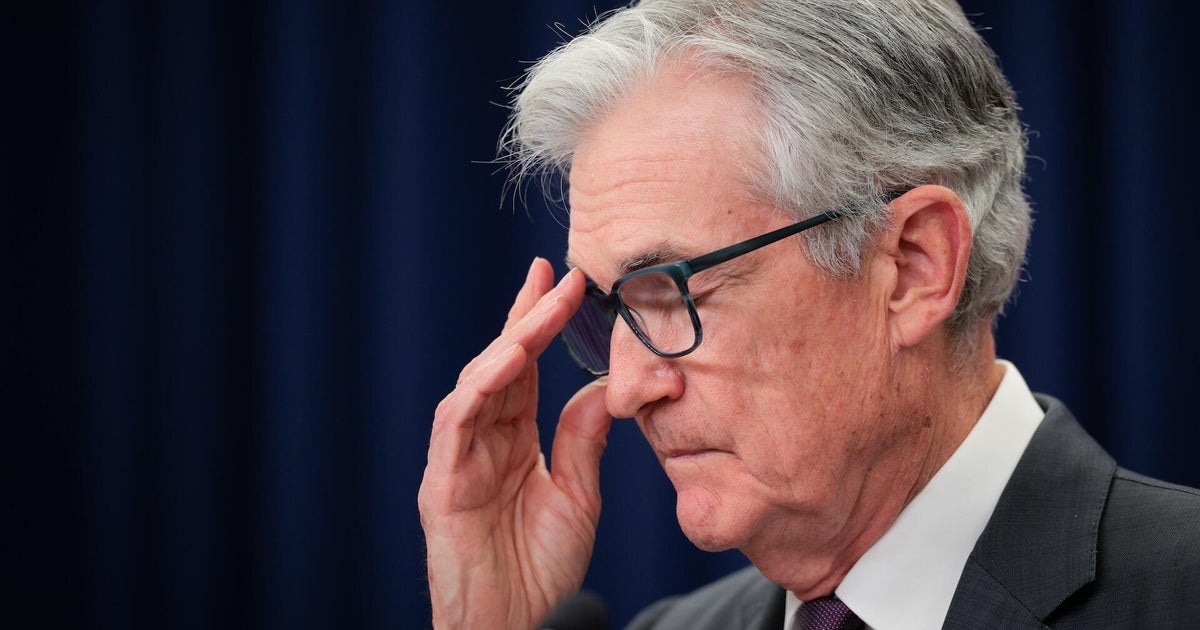
Iran war is making it harder for the Federal Reserve to cut interest rates
CBSN
Americans eager for lower borrowing costs may have a long wait ahead of them. Edited by Alain Sherter In:
Americans eager for lower borrowing costs may have a long wait ahead of them.
The Iran war is complicating the picture for the Federal Reserve, which is set to meet on March 18 for its next interest rate decision. Economists had predicted the Fed would hold its benchmark rate steady on Wednesday, but many had penciled in a cut at the central bank's next meeting in June.
Soaring oil and gas prices, sparked by the conflict in the Middle East, now have economists tearing up their forecasts. Higher energy prices could ripple through the economy, pushing up transportation costs, food prices and utilities, according to Wall Street analysts.
The specter of higher inflation poses a conundrum for policymakers, who face the challenge of ratcheting down inflation toward the Fed's 2% annual target while also propping up a labor market that is showing signs of fatigue.
On March 13, the Fed's preferred inflation gauge — the Personal Consumption Expenditures index — showed that consumer prices crept higher in January, a sign that costs continued to rise even before the Iran war's impact on the energy sector.


Gasoline prices inched higher on Monday with Brent crude remaining above $100 per barrel, as the Strait of Hormuz, a vital shipping lane for the global energy supply, remains paralyzed amid the Iran war. In:

Travelers continue to face long lines at airports across the U.S. due to the partial government shutdown affecting TSA agents. In:

A haunting whale song discovered on decades-old audio equipment could open up a new understanding of how the huge animals communicate, according to researchers who say it's the oldest such recording known. In:

Mexican authorities have arrested a suspected drug trafficker who played a key role in the raid that led to the death of Mexican drug lord Nemesio Oseguera last month, the defense ministry said on Sunday. In:

UConn edged UCLA as the No. 1 overall seed in women's NCAA Tournament when the bracket was announced Sunday night. In:

Americans eager for lower borrowing costs may have a long wait ahead of them. Edited by Alain Sherter In:

Gunnar Henderson and Roman Anthony homered and the United States limited the Dominican Republic's electric offense to win a thrilling semifinal 2-1 on Sunday and move one win from capturing its second World Baseball Classic championship. In:

The documentary "All the Empty Rooms," which memorialized children killed in school shootings through a look at the bedrooms they never returned to, took home the Oscar for Best Documentary Short at the 98th Academy Awards on Sunday. In:

A tie at the 2026 Oscars on Sunday marked a rare moment for the movie awards ceremony — the seventh time in the academy's history that two awards were given for one category. In:


Texas Republican Rep. Dan Crenshaw said Sunday that President Trump is "doing what's needed" as the Pentagon is set to deploy a few thousand more Marines to the Middle East as tensions escalate between the United States and Iran. In:

On this "Face the Nation with Margaret Brennan" broadcast, moderated by Margaret Brennan: In:

Three weeks after the United States beat Canada in the Olympic ice hockey finals, the Americans overcame their neighbors again to win Paralympic gold and complete the three-peat at Milan Cortina. In: