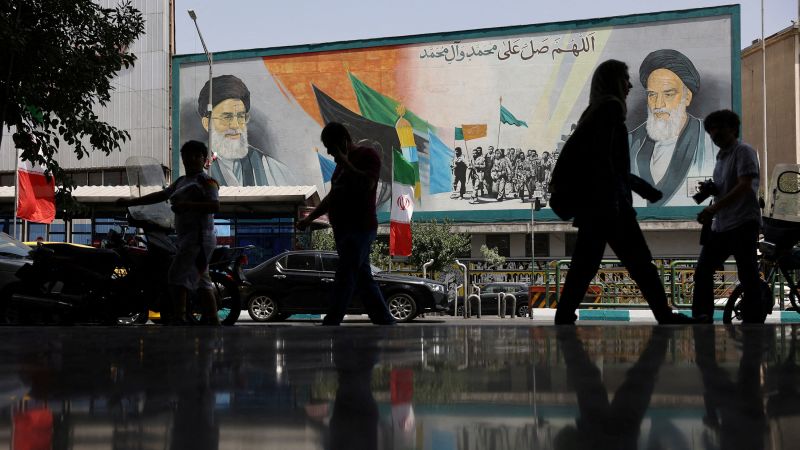
Iran-Israel conflict: After the war, enter the diplomats
CNN
Following American airstrikes against Iranian nuclear facilities last week, and then the imposition of a ceasefire, it’s time to step back and assess what has changed in the Middle East, and the chances of translating military success into lasting strategic gains.
Following American airstrikes against Iranian nuclear facilities last week, and then the imposition of a ceasefire, it’s time to step back and assess what has changed in the Middle East, and the chances of translating military success into lasting strategic gains. In a national security crisis, what does not happen can be as important as what does. That is particularly true regarding the recent conflict with Iran. For years, analysts predicted that an American strike into Iran would result in an all-out war in the Middle East, hundreds if not thousands of American casualties, and a ladder of escalation that Tehran might ultimately control through asymmetrical means — such as militias across the region with weapons capable of striking American personnel and positions. I had thought those claims were exaggerated and a product of Iranian propaganda as much as sound analysis. That’s been especially true in this crisis, which unfolded after a nearly 18-month degradation of Iranian power by Israel in response to Tehran’s fateful decision to join in a war against its rival shortly after Hamas’ attack into Israel on October 7, 2023. Today, we have not just theories and predictions of Iran’s response to an American attack — but lived experience. And so far, it turns out the pessimists were wrong. Iran responded feebly with a telegraphed and defeated missile attack against a US base in Qatar, which served only to unite the Gulf states in condemnation of Iran. Iran’s militias — from Hezbollah in Lebanon, already degraded after losing its own conflict with Israel last year, to the Iraqi militias under the control of Iran’s Islamic Revolutionary Guards Corps — stood down entirely. Further afield, nobody came to Iran’s assistance. There is a theory in foreign policy circles that an alliance called “CRINK” — China, Russia, Iran, North Korea — might band together in a crisis or conflict with the West. No doubt, this collection of states may form tactical and issue-specific partnerships such as North Korea and Iran supporting Russia in its war against Ukraine. But when push came to shove in the Middle East, with Iran suffering its greatest military setbacks since its 1979 revolution, these partners were nowhere to be found. China made clear that Iran should not think about shutting the Strait of Hormuz given its reliance on Gulf oil exports, and when Iran’s foreign minister visited Russia amid the crisis, he left with only a benign statement from Moscow calling for de-escalation.


A statue of Christopher Columbus has been erected outside of an ornate federal office building on the White House grounds — the latest sign of the Trump administration’s efforts to reshape cultural and historical representations across the nation’s capital.

Kentucky Gov. Andy Beshear, speaking in JD Vance’s home state of Ohio on Saturday, tore into the vice president, questioning his Appalachian roots and telling voters they “deserve better.”

President Donald Trump has said ICE agents will head to US airports tomorrow amid a partial government shutdown. Follow for live updates

Cuba is working to restore the electricity supply after another island-wide blackout left more than 10 million people without power.

President Donald Trump said Sunday border czar Tom Homan will be in charge of deploying Immigration and Customs Enforcement agents to airports on Monday, with Homan telling CNN the agents will help with security at entrances and exits to ease the Transportation Security Administration’s workload.

Donald Trump wants us to believe that a deal with Cuba is close at hand. After this past week, I am not so sure.

President Donald Trump has said ICE agents will head to US airports tomorrow amid a partial government shutdown. Follow for live updates

President Donald Trump said Sunday border czar Tom Homan will be in charge of deploying Immigration and Customs Enforcement agents to airports on Monday, with Homan telling CNN the agents will assist with security at entrances and exits to ease TSA workload amid a partial government shutdown.

Janet Mills and her allies are counting on a gender gap to narrow Platner’s wide lead ahead of the June 9 primary to decide who will face incumbent Republican Sen. Susan Collins. They are betting that the unfiltered style that has brought Platner widespread attention as someone who could help Democrats reach young men will backfire with women.

Why do people “pledge allegiance” to a “state” that is no longer a state? And what spurs someone to not just attack innocent people, but to then make a statement of loyalty while doing so?

A Supreme Court case examining state deadlines for election ballots sent in the mail is just the tip of the spear in President Donald Trump’s war on mail-in voting.

As a shrinking number of Transportation Security Administration agents work to keep hourslong security lines moving despite not being paid, President Donald Trump stepped into the fray Saturday, announcing he will send Immigration and Customs Enforcement officers to airports by Monday if Congress doesn’t agree to a plan to end the partial government shutdown.

Donald Trump wants us to believe that a deal with Cuba is close at hand. After this past week, I am not so sure.