Indigenous business leaders support push to build major projects — but want 'terms that work for us'
CBC
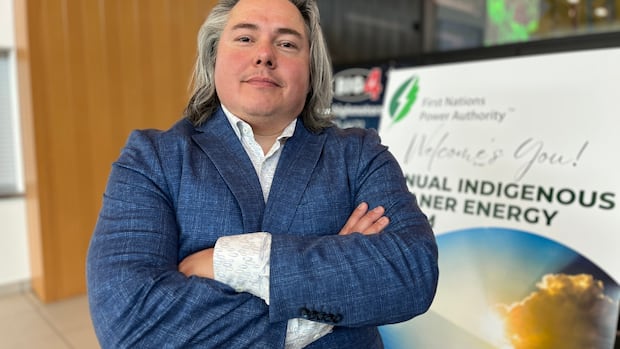
Indigenous business leaders gathered outside Calgary this week for an energy industry conference say they're not opposed to building major projects quickly — in fact, they're all for it.
But as Ontario and B.C. pass bills criticized by First Nations in those provinces for trampling on their rights in the service of fast-tracking infrastructure, they warn that Canada risks backsliding into a more contentious relationship with Indigenous communities that will ultimately delay projects further.
"Broadly speaking, are First Nations or Indigenous communities opposed to development? Absolutely not. Are we opposed to resource projects? Absolutely not. Energy generation? Absolutely not. We want to participate on terms that work for us," said John Rowinski, CEO of the Zhooniya Makak Limited Partnership with Hiawatha First Nation, who is from the Mohawks of the Bay of Quinte near Belleville, Ont.
"Frankly, they would likely find much less opposition to these projects if they showed a willingness to talk in advance as opposed to after the fact," he said in an interview.
Amid an increasingly tumultuous trade relationship with the U.S., politicians at both the federal and provincial levels have been scrambling to show they can get major projects built quickly and boost the country's economy.
But recent bills passed in Ontario and B.C. aimed at speeding up major projects have already been subject to significant criticism from First Nations.
In both provinces, the legislation includes an aim to fast-track projects that could include critical mineral mines and has been met with concern from First Nations that it could trample over their rights.
In Ontario, Premier Doug Ford has said he will consult with First Nations over the coming months, while in B.C., Infrastructure Minister Bowinn Ma said she will "work to come back together" and heal any rifts that have been created.
The federal Liberal government also tabled a bill Friday that pledges to advance national interest projects, in part by speeding up approvals from five years to two.
The Assembly of First Nations, which met with Prime Minister Mark Carney on Thursday, has previously said that while it supports efforts to protect Canada from geopolitical uncertainty, it had concerns that draft legislation could "violate many collective rights of First Nations."
In a statement, a spokesperson for the federal government said the proposed act recognizes that Indigenous consultation and partnership are key to building projects in the national interest.
"To that end, Section 35 rights are constitutionally protected. There is no possibility of any government overriding those rights. This legislation acknowledges that and considers Indigenous consultation and partnership as integral," said Gabriel Brunet, a spokesperson for Dominic LeBlanc, who is the minister responsible for Canada-U.S. trade and intergovernmental affairs.
Business leaders gathered in Alberta this week say they agree with the urgency of getting projects built and diversifying trade away from the U.S.
"I see Canada as one of the richest countries in the world with our resources, we just need to get it to market," said Karen Ogen, CEO of the First Nations Natural Gas Alliance and former elected chief of the Wet'suwet'en First Nation in B.C., speaking on the sidelines of the Indigenous Cleaner Energy Forum on Tsuut'ina Nation, just west of Calgary.


Timiskaming—Cochrane MPP John Vanthof recalls the meeting in Thunder Bay earlier this month. He was part of the nine-day road trip along Highways 11 and 17 with other NDP MPPs.

A bill before the Nova Scotia Legislature is proposing raising the age limit for support for young people who have been in the foster care or group home system to 26.

The Fredericton Police Force has reallocated funds so new staff can be hired this year to better manage evidence after a police error upended murder cases against five people.

One of two pilots killed in a plane crash at New York's LaGuardia Airport Sunday earned his wings at an Ontario college, CBC News has learned.

Air Canada passengers who were aboard Flight 8646 when the CRJ-900 aircraft struck a fire truck upon landing at New York's LaGuardia Airport on Sunday evening say the collision was sudden and forceful, and they may owe their lives to the pilots who died in the incident.

Cardiac services are set to expand at a Winnipeg hospital once regarded as one of the best in Canada for heart care.

A 26-second TikTok video has ignited a larger conversation about vulnerable populations, theft and content creation.

Some family doctors and emergency room physicians working in Edmonton hospitals warn that an April 1 end to stipend pay arrangements could put patient care at risk and increase suffering.

An Auditor General of Canada report has found that B.C. saw drastically fewer international students than was forecast ever since wide-ranging federal immigration cuts began in 2024.

Six years after e-learning became a mandatory requirement to get an Ontario high school diploma, students don't appear to be taking online school to diversify their course selection as the province had intended, according to a CBC News analysis of provincial enrolment data.

Sarnia City Council will hold a special meeting Tuesday morning to respond to social media comments made by Coun. Bill Dennis, who criticized city spending on a new mural by Indigenous artist Kennady Osborne as “virtue signalling by woke politicians” — then made a series of comments in response to a reply from Aamjiwnaang Chief Janelle Nahmabin that some have characterized as unprofessional and aggressive.

While many Albertans continue to feel the pinch at the pump, Premier Danielle Smith says the government is not considering any fuel tax breaks, as it does not believe it will make much of a difference.

WARNING: This story contains disturbing details about gruesome deaths and sexual abuse.