India expresses serious concerns in WTO meet over unilateral protectionist measures
The Hindu
India expresses concerns over trade protectionism in WTO meeting, highlighting issues with EU carbon tax and deforestation regulation.
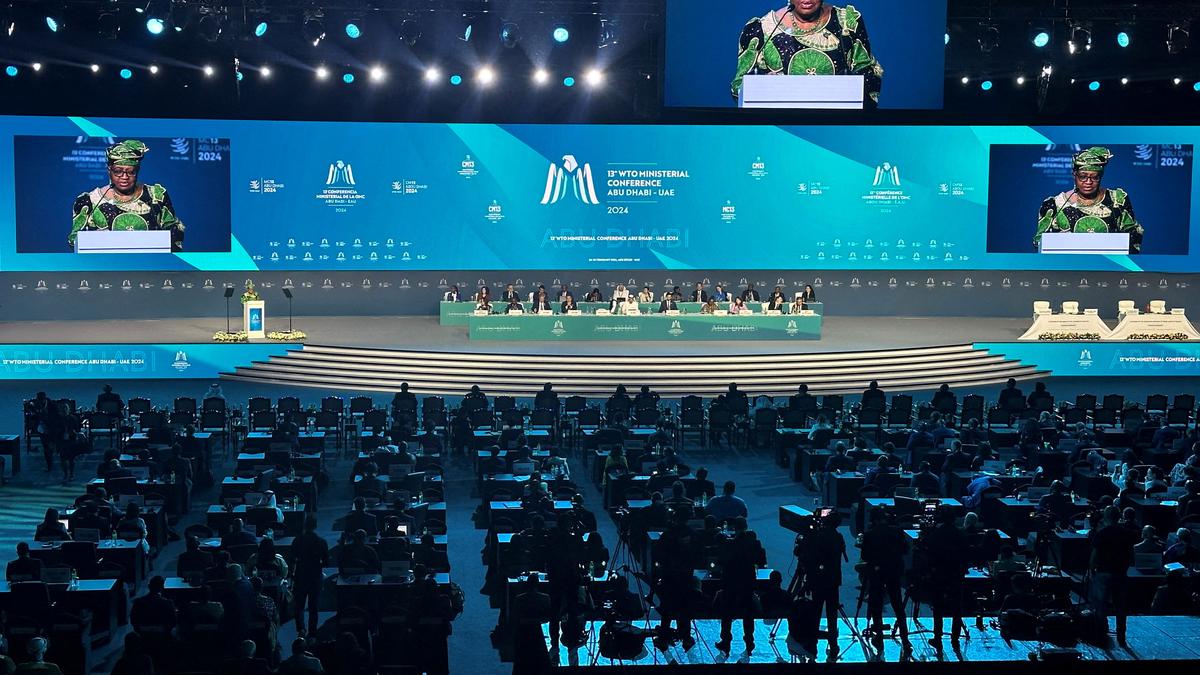
India on February 26 expressed "serious" concerns in a WTO meeting in Abu Dhabi over increase in the use of trade protectionist measures by certain countries in the name of environment protection.
The remarks assume significance as the country has earlier flagged issues over the European Union's (EU) decision to impose carbon tax (a kind of import tax) on sectors such as steel and fertiliser; and adoption of deforestation regulation by the 27-nation bloc.
Speaking at a session on sustainable development and policy space for industrialisation, Commerce Secretary Sunil Barthwal said developing countries require flexibility in the existing WTO (World Trade Organization) agreements to overcome the constraints faced by them in their industrialisation.
He also expressed concerns on the concerted attempt by the developed countries to club long-standing development issues like policy space for industrial development with new issues of 'Trade and Industrial policy'.
The CBAM (Carbon Border Adjustment Mechanism), or carbon tax, will come into effect from January 1, 2026 for seven carbon-intensive sectors, including steel, cement, fertiliser, aluminium and hydrocarbon products.
The CBAM will translate into a 20-35% tax on select imports into the EU starting January 1, 2026.
India's 26.6% of exports of iron ore pellets, iron, steel, and aluminium products go to the EU.


Iran continues to export millions of barrels of oil amid war, with 90 ships crossing the Strait of Hormuz despite sanctions.

Amazon CEO Andy Jassy said during an internal all-hands meeting he expects artificial intelligence could help cloud computing unit Amazon Web Services achieve $600 billion in annual sales, double his own prior estimate.

Government mandates airlines to allocate 60% of seats free, enhancing passenger rights and convenience across Indian aviation.

Microsoft is weighing legal action against Amazon and OpenAI over a $50 billion deal, the Financial Times reported

Stock markets rally with Sensex and Nifty gaining, despite HDFC Bank and others lagging behind amid falling crude prices.

OpenAI has signed a new deal to sell access to its AI models to U.S. defence and government agencies through Amazon’s cloud unit for classified and unclassified work, the ChatGPT maker said

Samsung Electronics said on Wednesday that it expects to start volume production of Tesla’s chips

The Trump administration said in a Tuesday court filing that the Pentagon’s blacklisting of Anthropic was justified and lawful

Mastercard Move aims to simplify cross-border payments for SMEs and students in India, enhancing efficiency and reducing costs.

SBI raises ₹6,051 crore through 10-year bonds, attracting strong investor demand with a 7.05% coupon rate.

In February, as per government data, domestic LPG production was slightly more than 1 million tonne.

Union Government urges States and UTs to expedite approval of gas pipeline projects to promote piped natural gas usage.

Parliamentary panel criticizes Ministry of Planning and Niti Aayog for persistent underutilization and poor financial management practices.