India glorious Premium
The Hindu
India glorious
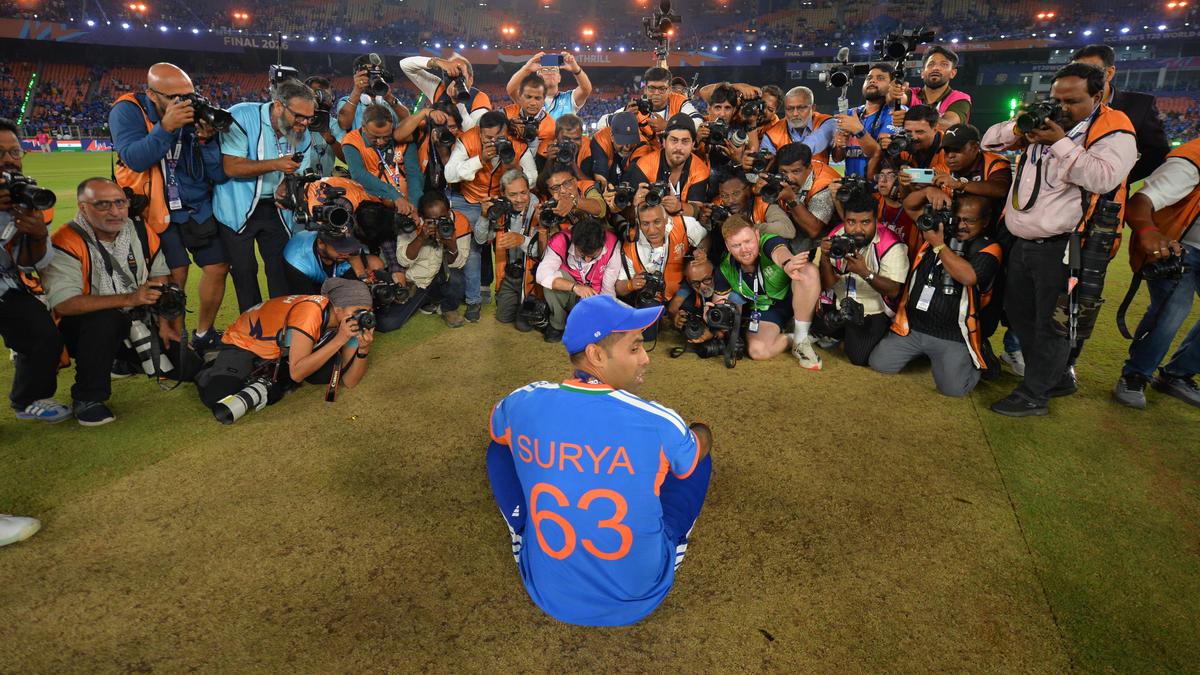
In 2024, the emotions were raw, visceral, visible. In 2026, there was calmness and poise. The contrast couldn’t have been starker.
There was a compelling reason for the Class of 2024, under Rohit Sharma, to celebrate their dramatic seven-run triumph over South Africa in the final of the T20 World Cup in uninhibited fashion. Just in isolation, it was an extraordinary jailbreak. India appeared out for the count after a 24-run 15th over from Axar Patel that left the South Africans with a straightforward target of 30 off 30 deliveries. With six wickets standing, the batting side was the odds-on favourite; the only way a reversal in fortunes was possible was through an extraordinary, otherworldly bowling display that also needed, certainly needed, a collective batting brain-fade.
India kept up their end of the bargain, through the magnificent Jasprit Bumrah and his admirable pace-bowling comrades-in-arms, Arshdeep Singh and Hardik Pandya. South Africa kept up theirs too, allowing the fear of success – yes, there really is some such thing – to leave them with addled brains and leaden feet. When victory was the easier, more inviting option, South Africa chose to embrace defeat. They were driven towards that result by India, energised by the dismissal of the marauding Heinrich Klaasen, but the victors will be the first to concede that they couldn’t have done it on their own, not without the generosity of the Proteas.
Rohit, prone on the Kensington Oval turf in the beautiful Barbadian capital of Bridgetown, pounded his right palm on the grass, an outpouring of relief and delight and vindication and redemption. His predecessor as captain, Virat Kohli, struggled to hold back the tears after playing a crucial knock that would have counted for little had it not been for the end result. Pandya, Rohit’s deputy, made no attempt at affected machismo, allowing the tears to roll down his cheeks unchecked as he reflected on a difficult few months triggered by his elevation as captain of Mumbai Indians, at the expense of the popular Rohit, who had led the franchise to five IPL crowns.
And then, of course, there was the ghost of seven months previous, always perched on the shoulder, always a painful reminder of what could have been. Seven months before they sang the consolatory redemption song, Rohit’s fabulous band had come unstuck on the grandest stage of all, the final of the 50-over World Cup. India entered the tournament as the team to beat, to emulate the side of 2011 under Mahendra Singh Dhoni which justified favouritism on its way to becoming the first team to win the World Cup on home turf. They played with flair and imagination and creativity and chutzpah, sweeping all-comers in extraordinarily breathtaking fashion. They didn’t just win matches, they annihilated opponents with their daring and courage, with their aggression and depth.
The Narendra Modi Stadium, everyone was convinced, would be the platform for their coronation. But sport seldom encourages fairytales, and so it was that, inspired by Travis Head, Pat Cummins’ men completely silenced a massive pro-India home crowd, conjuring a six-wicket victory that plunged a nation into despondency and despair.


India dominates Uruguay 4-0 in the Women’s Hockey World Cup Qualifiers opener, securing top spot in Pool B.

Working with coach Vishnu Prasanna fast-tracked GM Aarav’s rise

India clinches the T20 World Cup, defeating New Zealand by 96 runs, marking their fifth World Cup victory.

Punjab FC aims to extend its winning momentum against a challenging NEUFC in the upcoming ISL match.

India vs New Zealand T20 World Cup final LIVE: Find IND vs NZ head-to-head records and pitch reports for 2026 T20 World Cup Final. Follow The Hindu for more updates.

Carlos Alcaraz and Novak Djokovic advance at Indian Wells, with Alcaraz maintaining his unbeaten 2026 record.

India Women lost to Australia Women by 10 wickets in a one-off Test in Perth, despite Pratika Rawal's 63 runs.

De Kock and Miller slam ICC for prioritizing England's travel, leaving South Africa and West Indies in the dark.

Antoine Griezmann will stay with Atletico Madrid for at least two more seasons, confirms sporting director Mateu Alemany.

Kevin Pietersen expresses interest in coaching England cricket, advocating for a more strategic approach to Test matches.

Bengaluru FC secures a 2-1 victory over Mohammedan SC, climbing to fifth in ISL standings amid Mohammedan's fourth straight loss.

Suryakumar Yadav addresses concerns over Varun's form, emphasizing team effort and a relaxed approach ahead of the T20 final.

Lakshya Sen defeats Li Shi Feng to reach All England semifinals, avenging last year's quarterfinal defeat.