In wake of U.S. strikes, Iran faces a pivotal choice: dash to build a weapon or negotiate
CBC
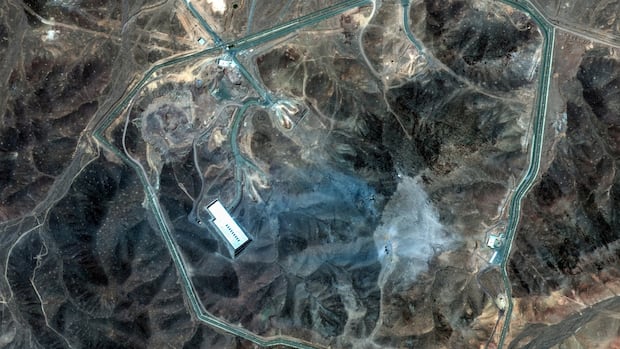
Hiding key Iranian nuclear facilities deep under a mountain made them that much harder for U.S. and Israeli weapons to reach.
It will also make it more difficult to assess just how successful the historic U.S. strikes against them overnight Saturday were and more challenging to predict Iran's next steps.
In his statement moments after the U.S. attack by B-2 bombers and their deep-penetrating almost 14 tonne bombs, U.S. President Donald Trump was unequivocal in his claim:
"Iran's key nuclear enrichment facilities have been completely and totally obliterated," he said.
Israeli Prime Minister Benjamin Netanyahu sounded equally conclusive, claiming his promise to destroy Iran's nuclear facilities had been "fulfilled."
Yet, within hours, Iranian officials were giving Reuters news agency a conflicting account, claiming that most of the highly enriched uranium at Fordow had been moved elsewhere before the attack.
Fordow is Iran's main site for enriching uranium, with some of the stockpile there having been enriched to about 60 per cent in the assessment of the International Atomic Energy Agency, charged with monitoring Iran's nuclear facilities. Ninety percent enrichment is considered weapons capable.
"The degree of damage inside the uranium enrichment halls can't be determined with certainty," IAEA director General Grossi said Sunday of the strike on Fordow.
The sprawling Isfahan site, which had already been struck several times since Israel's strikes began June 13, also suffered "extensive additional damage" in the U.S. operation, the agency said.
The IAEA had reported on Saturday that the facilities at Isfahan bombed by Israel either contained no nuclear material or small quantities of natural or low-enriched uranium, an indication that the highly enriched uranium might be stored elsewhere.
In his morning-after briefing, General Dan Caine, the head of the U.S. Joint Chiefs of Staff, said the three targeted sites had sustained "extremely severe damage and destruction," but he acknowledged a final damage assessment would take some time.
He said the operation was "the largest B-2 operational strike in U.S. history."
But Daria Dolzikova, with the Royal United Services Institute, a London-based military think tank, said it might not be enough to destroy Iran's nuclear program.
"The fundamental reality remains that military action alone can only roll back the program by degrees, not eliminate it fully," she said.


With jagged cliffs rising from the Arabian Sea, the Strait of Hormuz is striking in its scenery — and these days, its emptiness. This resource superhighway, which normally hosts more than a hundred of the world’s largest oil and liquid natural gas (LNG) tankers every day, has seen no more than a handful all week.

The Canadian government said Tuesday it is alarmed by the escalation of violence and attacks in Lebanon, as the war in the Middle East expands.

In a resounding victory that is guaranteed to reshape Nepal's politics, rapper-turned-politician Balendra Shah appeared headed for a landslide win in the South Asian country's first polls since youth-led protests toppled the previous government last fall.

China’s latest blueprint for driving growth in its economy was largely written before the U.S. and Israel instigated the most far-reaching war in the Middle East in decades.

U.S. President Donald Trump's firing of Homeland Security Secretary Kristi Noem on Thursday overshadowed the announcement of his plans to nominate Republican Sen. Markwayne Mullin as her successor.

The truck carrying Nepali prime ministerial candidate Balendra Shah was swarmed by cheering supporters in the capital, Kathmandu, on Saturday, unable to inch forward as the former rapper, wearing sunglasses and a sleek black suit, danced on top of the roof.

Israel sent troops into southern Lebanon on Tuesday and warned residents of more than 80 villages to evacuate as the Iran-backed militant Hezbollah group said it was ready for an "open war" with Israel in the wake of the U.S.-Israeli war with Iran.

U.S. President Donald Trump has given Americans a short list of his objectives in attacking Iran, but when it comes to the justification for launching the war and how the conflict is expected to play out, he and his team are sending mixed messages.

Omid Golabkesh dragged his suitcase down a long hallway marking the exit of the Kapikoy border crossing in eastern Turkey. He had nearly reached the end of an exhausting journey that included a 12-hour drive to the checkpoint from his home in Tehran.