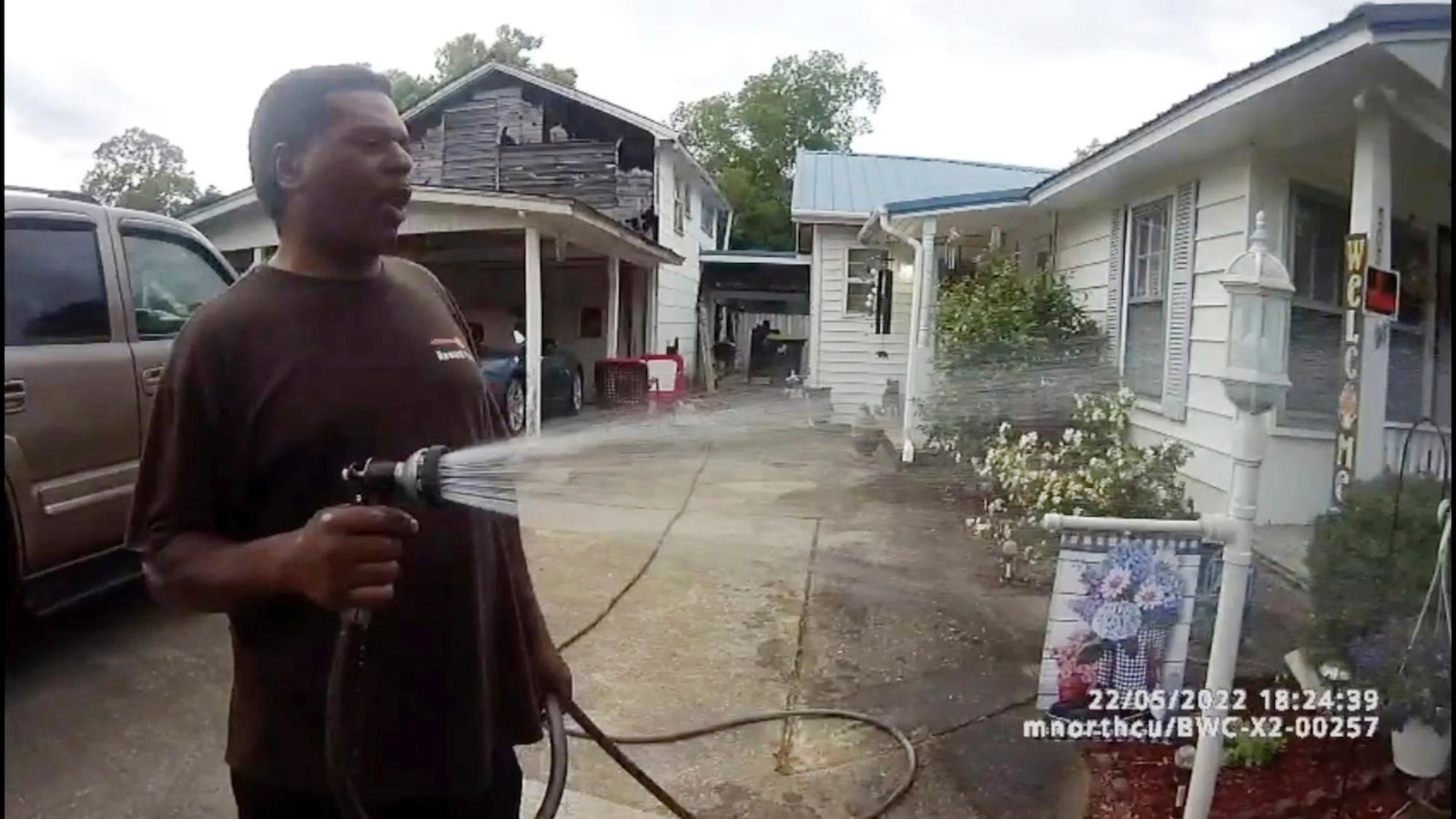
In Black pastor's arrest, Alabama Supreme Court rules police can demand to see identification
ABC News
The Alabama Supreme Court has ruled that police may require a person to provide identification during a valid stop if officers find their verbal answers insufficient
MONTGOMERY, Ala. -- Ruling in the case of a Black pastor who was arrested while watering his neighbor’s flowers, the Alabama Supreme Court said police can demand to see identification during a stop if they are dissatisfied with a person's verbal answers.
Justices issued the 6-3 decision last week after a federal judge presiding over a lawsuit about Michael Jennings' 2022 arrest asked the court to clarify whether officers can demand to see a person's identification under the state's "stop-and-identify” law. The minister was arrested when he declined to show Childersburg police identification.
Justice Will Sellers wrote that state law, “does not exclude from its purview a request for physical identification when a suspect provides an incomplete or unsatisfactory response to an officer’s demand to provide his or her name and address and an explanation of his or her action.”
In May 2022, officers questioned Jennings in his neighbor’s yard. Another neighbor had called 911 because she saw an unfamiliar car and a “young Black male” around the house. Officers who responded found Jennings watering flowers and asked what he was doing.
Jennings identified himself as "Pastor Jennings" and told officers that he lived across the street and was caring for his neighbor's yard while they were vacationing. Officers asked to see his identification and Jennings refused, saying he hadn't done anything wrong. The woman who called 911 also later identified Jennings as another neighbor.


A Florida man convicted of abducting, raping and murdering a young mother is set to be executed

A New York man who spent nearly two decades in prison for a roughly $550 robbery has been exonerated and freed

Pope Leo XIV will accept the Liberty Medal in Philadelphia on July 3 in a remote broadcast from the Vatican

The University of Florida is moving to deactivate its College Republicans chapter after reports of antisemitic behavior by some members

Researchers say the discovery of the oldest known recordings of whale sounds could open up a new understanding of how the huge animals communicate

President Donald Trump's decision to replace Department of Homeland Security Secretary Kristi Noem gives him an opportunity to reset his mass deportation agenda — or to double down on a campaign promise

There's nothing quite like March Madness to remind people of what college sports is all about

Lawyers are scheduled to make closing arguments at the trial of a Utah woman who published a children’s book about grief after the death of her husband and was later accused of killing him

The CEOs of the nation’s top airline companies are imploring Congress to restore funding to the Department of Homeland Security and embrace a bipartisan solution to pay federal aviation workers, including airport security officers, during a partial gov...

The Trump administration’s immigration crackdown is expanding, but the public data that tracks it is drying up

Gulf states have reported new missile and drone attacks Sunday after Tehran threatened to widen its campaign and called for the evacuation of three major ports in the United Arab Emirates

Thousands of spectators were expected to line the streets of South Boston on Sunday for the city’s annual St. Patrick’s Day parade, one of the largest celebrations of Irish heritage in the country

Two weeks of war in Iran has President Donald Trump increasingly knocked back on his political heels