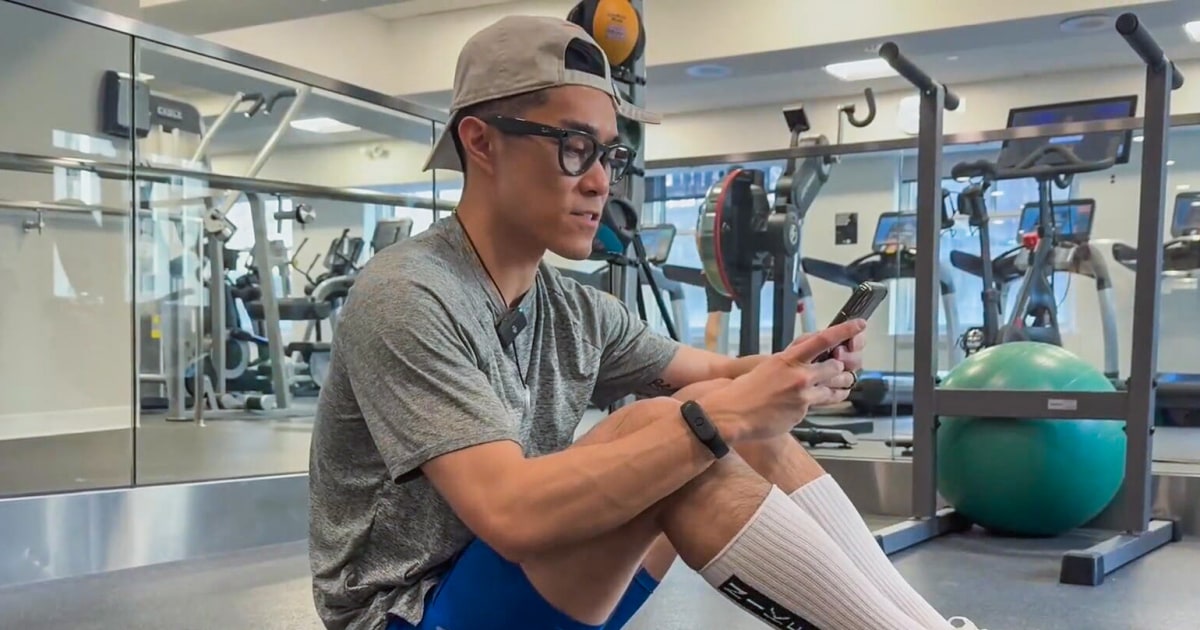
I wore a bunch of AI devices at once. It was probably overkill.
NBC News
Tech companies want you to buy wearable devices, promising an artificial intelligence boost to your work and your life
Tech companies want you to buy wearable devices, promising an artificial intelligence boost to your work and your life.
I put that promise to the test myself, by giving four products a spin for a few days to see if they could make my complicated life any easier.
So I strapped Amazon’s Bee bracelet onto my wrist ($49.99), popped a pair of Ray-Ban Meta Gen 2 glasses on my face ($329 — $459), slid an Oura Ring onto my finger ($349 — $499) and hung an Omi around my neck ($89). The ring was borrowed from a co-worker, while the other three devices were provided by the companies for testing.
The overall takeaway? AI can make work and play slightly more efficient, but the overlap in functionality makes it clear that more is not necessarily better, and you don’t have to wear four AI products at once to get by. And beyond the jarring aesthetic of wearing all these devices, there’s also the weirdness of walking around with the ability to record people around you — sometimes passively.
The first of the four devices I interacted with upon waking up was the fitness and sleep tracker Oura Ring, the only one that really requires 24-hour usage. Through a chatbot on the app called an “Oura Advisor,” I could ask questions such as how to structure a workout that would meet my activity needs for the day.


The Big 12 Conference is ditching its slippery new glass floor for a hardwood court for the final two days of the tournament.

A defunct NASA satellite that launched 14 years ago to study Earth’s radiation belts is expected to crash back to the planet on Tuesday

A manufacturing problem in millions of Abbott glucose sensors for diabetes patients has been tied to at least seven deaths and hundreds of injuries worldwide.

Russia is “engaged in a large-scale global attempt” to take over Signal and WhatsApp accounts, two Dutch intelligence agencies said Monday.

Although Obamacare sign-ups have fallen significantly this year over skyrocketing monthly premiums, Dr. Mehmet Oz believes enrollment is still too high.

NEW YORK — As a man wearing a neon-blue jellyfish hat fought off draping tentacles to scroll through his phone and find the latest message from his personal AI assistant, three people wearing Pegasus wings flitted through a sweaty Manhattan apartment-turned-ballroom trying to recruit users for their latest AI solution.“It’s getting hot, and the lobster is getting warm,” said Michael Galpert, one of the hosts of the event, encouraging the thousand-plus crowd to settle down so the evening’s presentations could begin.

Two marsupial species thought long extinct, until now known only from fossils, were found alive in New Guinea through a collaboration of scientists, indigenous communities and citizen scientists

The Food and Drug Administration’s vaccine chief, Dr. Vinay Prasad, will depart the agency next month, an FDA spokesperson said.

Anthropic said Thursday that the Defense Department has designated it a threat to national security, a striking move that bans it from doing business with the U.S. military and could send shock waves through America’s AI industry

The bill would create a national weather safety board to investigate deadly disasters and recommend changes for the future. It would be styled after the National Transportation Safety Board.

After President Trump told pregnant women not to take Tylenol, orders for it declined among pregnant women who visited emergency rooms, according to new research.

Nebraska became the latest state to sue Roblox on Wednesday, alleging that the popular gaming platform exploits children and misrepresents its safety practices

A combination of balmy winter weather in the western United States and one of the worst snow droughts in decades has experts concerned about wildfire season.