Primary Country (Mandatory)

Other Country (Optional)

Set News Language for United States

Primary Language (Mandatory)
Other Language[s] (Optional)
No other language available

Set News Language for World

Primary Language (Mandatory)
Other Language(s) (Optional)

Set News Source for United States

Primary Source (Mandatory)
Other Source[s] (Optional)

Set News Source for World

Primary Source (Mandatory)
Other Source(s) (Optional)
  • Countries
    • India
    • United States
    • Qatar
    • Germany
    • China
    • Canada
    • World
  • Categories
    • National
    • International
    • Business
    • Entertainment
    • Sports
    • Special
    • All Categories
  • Available Languages for United States
    • English
  • All Languages
    • English
    • Hindi
    • Arabic
    • German
    • Chinese
    • French
  • Sources
    • India
      • AajTak
      • NDTV India
      • The Hindu
      • India Today
      • Zee News
      • NDTV
      • BBC
      • The Wire
      • News18
      • News 24
      • The Quint
      • ABP News
      • Zee News
      • News 24
    • United States
      • CNN
      • Fox News
      • Al Jazeera
      • CBSN
      • NY Post
      • Voice of America
      • The New York Times
      • HuffPost
      • ABC News
      • Newsy
    • Qatar
      • Al Jazeera
      • Al Arab
      • The Peninsula
      • Gulf Times
      • Al Sharq
      • Qatar Tribune
      • Al Raya
      • Lusail
    • Germany
      • DW
      • ZDF
      • ProSieben
      • RTL
      • n-tv
      • Die Welt
      • Süddeutsche Zeitung
      • Frankfurter Rundschau
    • China
      • China Daily
      • BBC
      • The New York Times
      • Voice of America
      • Beijing Daily
      • The Epoch Times
      • Ta Kung Pao
      • Xinmin Evening News
    • Canada
      • CBC
      • Radio-Canada
      • CTV
      • TVA Nouvelles
      • Le Journal de Montréal
      • Global News
      • BNN Bloomberg
      • Métro
How would a carbon market function? | Explained

How would a carbon market function? | Explained

The Hindu
Monday, December 16, 2024 05:23:58 AM UTC

COP29 in Baku boosts carbon market standards for international emissions control, highlighting potential benefits and challenges of carbon trading.

The story so far: COP29, the ongoing climate conference in Azerbaijan’s capital Baku, has given a fillip to the idea of using carbon markets to curb carbon emissions by approving standards that can help in the setting up of an international carbon market as soon as the coming year.

Also read: A guide to COP29 climate jargon

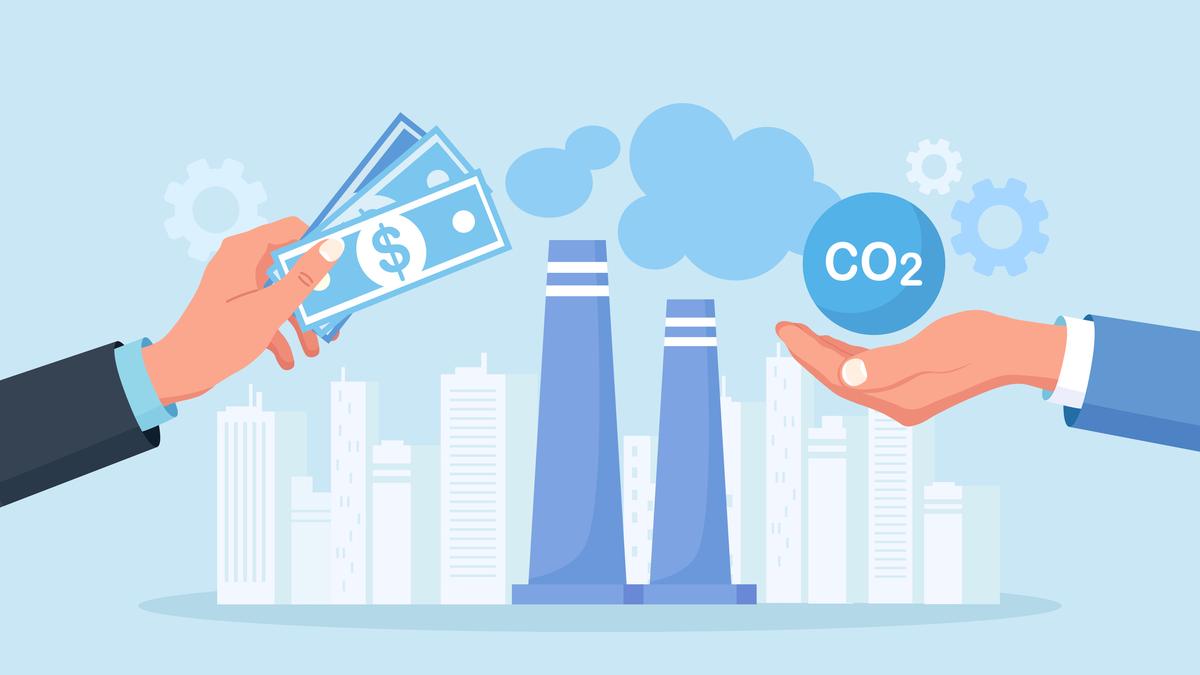
A carbon market is a market that allows the buying and selling of the right to emit carbon into the atmosphere. Suppose a government wants to limit the amount of carbon emitted into the atmosphere. It can issue certificates called carbon credits that allow the holder of the certificate to emit a certain amount of carbon into the atmosphere. One carbon credit is equivalent to 1,000 kilograms of carbon dioxide. By limiting the number of carbon credits that are issued, governments can control how much carbon is released into the environment. It should be noted that anyone who doesn’t hold carbon credits to their name would not be allowed to emit any carbon into the atmosphere. Carbon credits were first used in the 1990s in the U.S., which introduced the cap-and-trade model to control the emission of sulphur dioxide.

Individuals and firms that hold carbon credits but don’t actually need them for any reason can sell their credits to interested buyers. The price at which these carbon credits are traded is determined by market forces, which in this case are the supply of carbon credits and the demand for these certificates. A carbon market can also include the trading of carbon offsets. In this case, a business that pollutes the environment for example, can purchase carbon offsets sold by an environmental NGO that promises to plant trees that suck a certain amount of carbon emissions out of the atmosphere for each offset that it sells.

Pollution of the environment and climate change caused by carbon emissions is a classic case of what economists call an externality. An externality is caused when the cost of an economic activity is not properly accounted for (or internalised) by the market price system due to the absence of well-defined property rights. For example, a business that uses raw materials such as iron will have to pay the supplier who owns the iron to be able to procure and use it, thus incurring a certain cost. But when the same firm emits carbon into the atmosphere, it doesn’t usually have to pay any money to anyone. In other words, firms are generally able to emit their waste into the atmosphere for free. This of course leads to unhindered pollution of the atmosphere as firms in this case have no financial incentive to curb their carbon emissions. Carbon markets in which the right to pollute is traded for a price can solve the problem by imposing a certain cost on firms for polluting the atmosphere, helping to curb emissions in the process.

Also read: Takeaways from COP29 

The intersection of standardised accounting frameworks and technological advancements has improved the ability of corporations to monitor and report their carbon emissions. While, this is difficult for the vast majority of small businesses in the developing world, particularly in accurately capturing supply chain emissions, ongoing developments, like real-time data tracking of the energy sector, continue to enhance the granularity and reliability of corporate carbon accounting. However, corporations have preferred a voluntary reporting system, like the Carbon Disclosure Project. They have been loathe to government interventions limiting carbon emissions, arguing that such budgeting may lead to output restrictions or rise in costs. They also point to varied production processes, some that might have diverse supply chains that might make it difficult to find the optimal carbon budget for their facilities. Large multinational corporations such as ExxonMobil and General Motors have advocated for carbon markets that allows free trading of carbon credits among firms at a price determined by market forces, that would allow these firms to purchase carbon credits from other firms, which don’t need them as much. This they say, helps allocate carbon credits more efficiently than government diktat.

Read full story on The Hindu
Share this story on:-
More Related News
RBI to conduct ₹1 lakh crore OMO during December to inject liquidity

RBI plans ₹1 lakh crore OMO in December to boost liquidity amid upcoming tax payments, ensuring stability in the banking system.

Why IndiGo has delayed, cancelled hundreds of flights

IndiGo faces ongoing flight delays and cancellations due to technology issues, weather, and new crew rostering rules.

Stock markets witness volatile trends

Stock markets experience volatility as investors await RBI's monetary policy amid foreign fund outflows and mixed global trends.

ED attaches fresh assets worth over ₹1,100 crore in case against Anil Ambani’s Reliance Group

ED attaches assets worth ₹1,120 crore in Anil Ambani's Reliance Group case, totaling ₹10,000 crore amid money laundering probe.

Rupee rises 20 paise to 89.69 against U.S. dollar

Rupee rises 20 paise to 89.69 against the dollar as investors await RBI's monetary policy decision amidst market pressures.

Economic offenders who fled the country owe ₹39,000 crores to Indian Banks?

Just nine Fugitive Economic Offenders (FEOs) owed Indian banks over ₹58,000 crore in principal and interest. To date, banks have recovered just over ₹19,000 crore — roughly 33% of the total dues.

Indian businesses have ample opportunity in Russia if only they take ‘leap of faith’: Goyal

Commerce Minister Piyush Goyal urges Indian businesses to seize opportunities in Russia's market, addressing talent shortages and trade demands.

‘Premiumisation driving growth in beauty, personal care industry’

Premiumisation is driving the growth in beauty and personal care industry in India and this segment is growing faster than the products made for the masses, industry executives said at Cosmoprof India 2025, a beauty & personal care industry event currently underway in Mumbai.

We will burn the planet expanding AI at the current technology, says NTT Data’s Khan

Scaling Artificial Intelligence(AI) at the speed at which consultants project is not possible by the laws of physics and may not be environmentally sustainable, said Tanvir Khan, who is the Executive Vice President and Chief Operating Officer of NTT DATA North America, part of the Japanese technology services and data centre company NTT Data, in an interview with The Hindu.

Rupee rises 19 paise to close at 89.96 against U.S. dollar

The Rupee appreciated by 19 paise to close at 89.96 against the U.S. dollar amid weak dollar index support.

India seeks bigger slice of China's expanding tea market at buyer-seller meet

India aims to expand its tea exports to China, highlighting diverse varieties like Darjeeling and Masala at a recent buyer-seller meet.

Stock markets bounce back after four days of decline; Sensex climbs 158 points

Stock markets rebound after four days of decline as Sensex rises 158 points, driven by tech and IT shares.

India cuts Russian oil imports by 38% in October 2025, sharpest fall so far

India reduces Russian oil imports by 38% in October 2025, marking the sharpest decline in value and volume yet.

IndiGo cancels 1,000 flights, gets exemption on night duty limits for pilots

IndiGo cancels over 1,000 flights, faces crew shortages, and receives government exemptions as air travel chaos ensues across India.

Fino Payments Bank gets RBI nod to become SFB

Fino Payments Bank receives RBI approval to transition into a Small Finance Bank, marking a significant milestone in its evolution.

Lok Sabha passes ‘Health Security se National Security Cess Bill’, 2025

Lok Sabha passes Health Security se National Security Cess Bill, 2025, imposing a 40% tax on pan masala for public health funding.

Adani, Hindalco seek Peru copper assets as demand surges

Adani and Hindalco are exploring investments in Peru's copper sector to meet India's rising demand for copper.

India talking to 8 more nations for UPI acceptability:

India is negotiating with eight nations to expand UPI payment acceptance, enhancing digital transactions for Indian tourists abroad.

India turns to Belgium, Egypt, others for specialty fertilisers amid China export curbs

India seeks alternative sources for specialty fertilizers from Belgium, Egypt, and others due to China's export restrictions.

India, Russia agree to continue working towards enhancing trade in national currencies

India and Russia commit to enhancing trade in national currencies, aiming for $100 billion bilateral trade by 2030.

Stock markets rally as RBI cuts interest rate; Sensex jumps 447 points

Stock markets soar as RBI cuts interest rates, with Sensex rising 447 points amidst positive investor sentiment and revised growth forecasts.

AAP's Raghav Chadha demands ban on 10-minute delivery services, protection for gig workers

AAP's Raghav Chadha calls for banning 10-minute delivery services, highlighting the harsh conditions faced by gig workers.

IndiGo flight cancellations LIVE: Airline offers full waiver on cancellations/reschedule requests up to Dec. 15

IndiGo flight cancellations: Follow LIVE updates from The Hindu as IndiGo's operations face issues with over 400 flights cancelled today.

DGCA clears IndiGo’s plea for exemption from night-duty limits for pilots

DGCA grants IndiGo exemption from night-duty limits for pilots amid widespread flight cancellations and operational disruptions.

RBI to launch two-months campaign to resolve pending grievances with Ombudsman

RBI to launch a two-month campaign in January 2026 to address pending grievances with the Ombudsman for improved customer service.

© 2008 - 2025 Webjosh  |  News Archive  |  Privacy Policy  |  Contact Us