How is the interim Budget different from Annual Budget? | Explained
The Hindu
The Modi government prepares to present its twelfth Budget and second interim budget ahead of the 2024 General elections. Here’s a look at how is it different from the annual budget
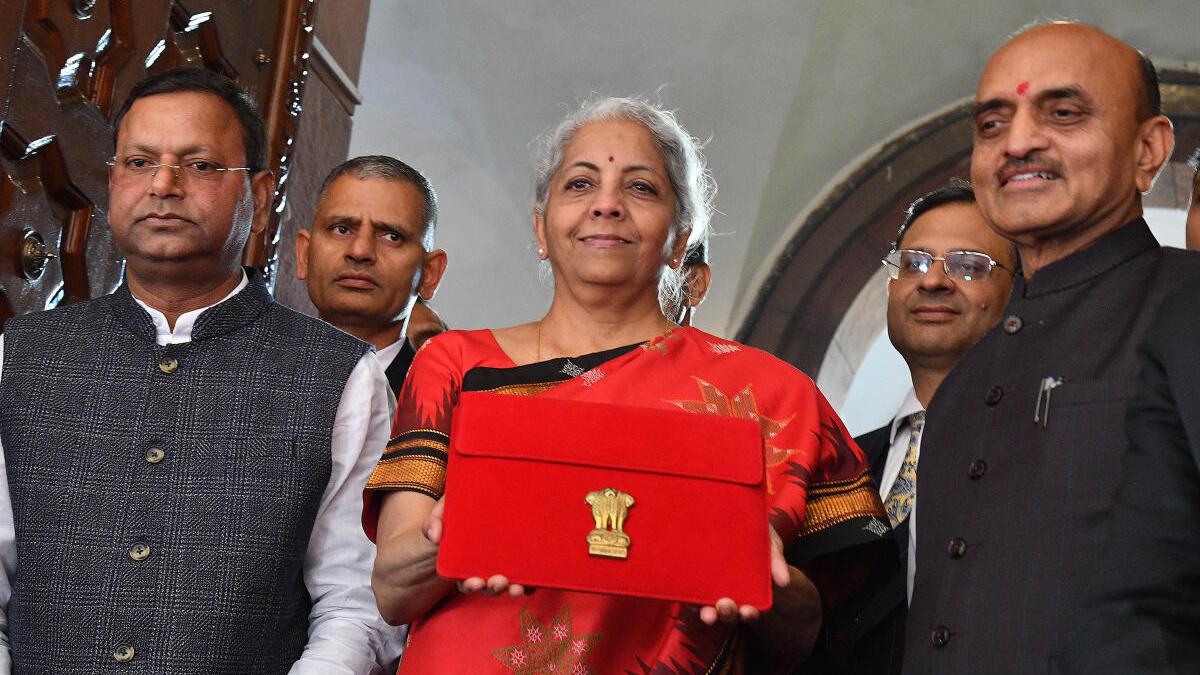
Ahead of the 2024 general elections, the Modi government is preparing to present its second interim budget on February 1. Union Finance Minister Nirmala Sitharaman, who has presented the budget for the past five years, will seek Parliament’s approval for the government’s expenditure for the first four months of this fiscal year. India will most likely go to polls in April-May this year.
As per Article 112 of the Indian Constitution, a statement of the estimated receipts and expenditure of the Government of India for a specific financial year— referred to as ‘annual financial statement’ — is laid before both Houses of Parliament. The Centre seeks both Houses’ approval to withdraw the necessary funds from the Consolidated Fund of India; this statement has to be passed by both Houses.
However, in an election year, the incumbent Government cannot present a full Budget as there may be a change in the executive after the polls. Hence, the need for an interim budget. As there is no constitutional provision for an interim budget, the Centre can choose to seek the Lower House’s approval for the funds required for the transition period (April - July) till the new government presents a full Budget— via the votes on account provision.
Article 116 of the Constitution allows the Lower House to make any grant in advance for the estimated expenditure for part of any financial year by voting and passing such a legislation, i.e. vote on account. The Lok Sabha is empowered to authorise withdrawal of required funds from the Consolidated Fund of India for such expenditure.
A simple vote on account includes presenting the Centre’s fund requirements for salaries, ongoing projects and other expenditure for the transitional period, and is then passed via the Lok Sabha sans debate. It cannot make any changes to tax rates. It is also valid only for two months and can be extended up to four months.
However, it has been the trend for outgoing governments to present an interim budget instead of a simple vote on account. In an interim budget, the Finance Minister will present the current state of the Indian economy, its fiscal status including India’s revised estimated growth in the next year (here FY 25 from April 2024-March 2025). She will also detail the government’s planned and non-planned expenditure and receipts. While the Centre has to desist from announcing any major scheme which could influence voters or present an Economic Survey, the government is allowed to revise tax rates via an interim budget.
Affirming the same, Ms. Sitharaman said, “The Budget that the government presents would just be to meet with the expenditure of the government till a new government comes to play. So no spectacular announcements are made that time. You may have to wait till after the new government comes in and the next full Budget will July 2024. So things have to wait till then.”


Petroleum Ministry directs reforms to enhance natural gas infrastructure, streamline approvals, and ease transition from LPG to PNG.

The Sora decision means the end of a blockbuster $1 billion deal between Disney and the ChatGPT maker that was announced a little more than three months ago.

Regulator mandates city gas distributors to provide piped gas to educational institutions within five days, supporting India's transition from LPG to PNG.

NHAI's Raajmarga InvIT listed on BSE, enhancing investor participation in highway infrastructure with strong demand and oversubscription.

HDFC Life Insurance faces ₹172 crore Income Tax order for alleged violations, plans to appeal the decision.

Air-conditioner makers in India are looking forward to FY27 with hope as the war in West Asia threatens to impact plastic component availability and consumer sentiment, adding to the challenges around raw material price and new energy label, a senior executive of a leading company has said.

Rupee falls 23 paise to an all-time low of 93.76 against the U.S. dollar amid foreign fund outflows and global uncertainties.

Stock markets surged nearly 2% as Trump paused strikes on Iran, boosting investor confidence amid easing geopolitical tensions.

Coal Minister urges State leaders to maintain stable coal prices amid rising global costs, assuring ample domestic supply.

Mahanagar Gas ensures reliable PNG and CNG supply in Maharashtra and Karnataka, offering customer benefits to encourage adoption.

OpenAI Chief Executive Sam Altman said on Monday he has stepped down from the board of directors of Helion Energy, the fusion startup he has backed since 2015

Nikhil Kamath and Quant MF back Swan Defence's oversubscribed ₹500 crore Offer for Sale, reflecting strong investor interest in defence stocks.

HDFC Bank appoints law firms to investigate allegations by former Chairman Atanu Chakraborty following his resignation.