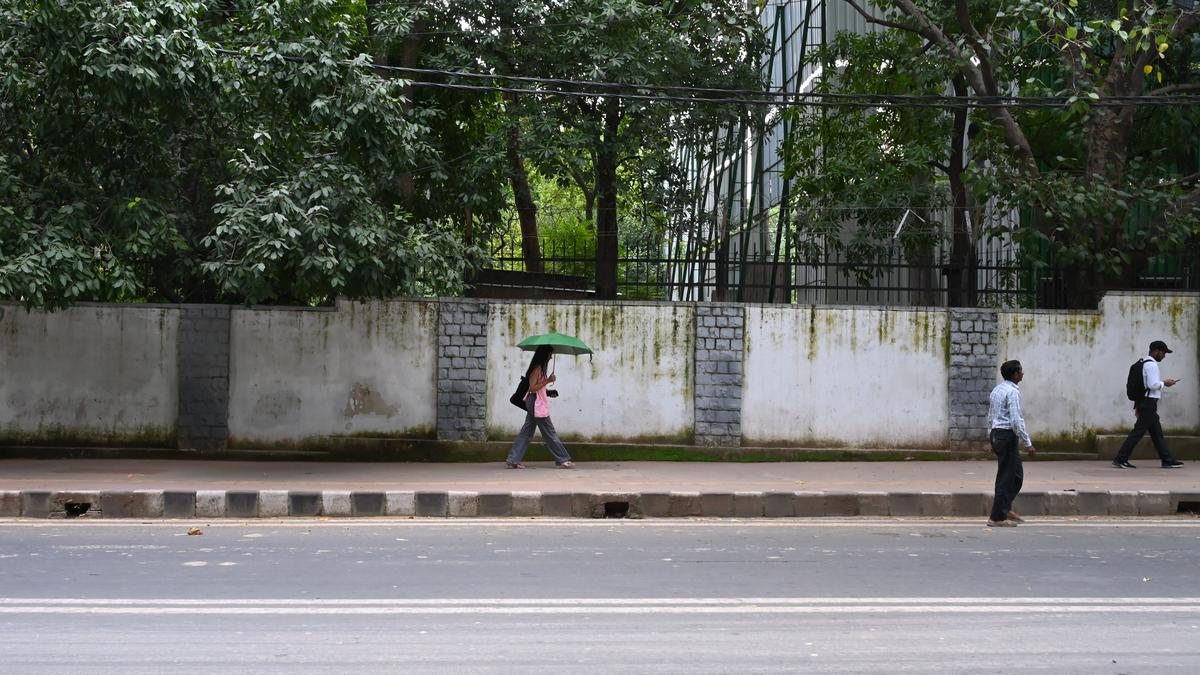
How better footpaths can decongest Indian cities and boost urban productivity
The Hindu
Discover how improved footpaths can reduce congestion and enhance productivity in Indian cities, promoting sustainability and economic growth.
Aashit Verma
As Indians, many of us have grown up aspiring for the prestige of owning a fancy car. Yet, ask almost anyone enduring the daily grind on our city roads, and the sentiment is likely universal: dread. The daily commute, whether to work or a weekend outing, has become synonymous with soul-draining congestion and depleting productive hours that could otherwise be spent with family or focused on work. This widespread frustration, born from endless brake-paddle toggling in traffic, is reshaping our urban landscapes.
Indian cities are organically evolving into ‘mini pocket cities,’ where essential amenities such as malls, offices, and high streets are clustering within a 5 km radius of major residential zones. This decentralisation is a direct response to the long commute, inadvertently highlighting an overlooked opportunity in urban mobility.
According to the World Bank’s insightful report ‘Investing for momentum in active mobility’, a significant portion of urban travel in India is short distance: 35% of trips are under 3 km, and 50% are under 10 km. This data reveals a compelling truth: at least 35% of these trips could potentially be offloaded from congested roads if our cities prioritised and properly developed pedestrian infrastructure. Astonishingly, the financial case for footpaths is compelling. The cost of constructing a well-designed footpath, complete with proper width, barricades, and level surfaces, is approximately ₹10 lakh per km. Compare this to an average of ₹10 crore per km for a modern road, and you quickly realise footpaths are roughly 100 times more cost-effective.
While footpaths alone cannot entirely resolve India’s formidable traffic challenges or unlock all economic benefits, they represent a foundational requirement that can no longer be overlooked in the journey towards decongestion. Their impact multiplies exponentially when paired with robust public transport systems such as metro networks and efficient feeder buses, which together can significantly reduce reliance on private vehicles and make urban travel more predictable and manageable.
To truly grasp the potential of walkable cities and how Indian urban planning can strategically leverage its unique evolution, it’s beneficial to examine how international metros encourage and utilise walking. Understanding these diverse contexts can illuminate practical lessons for our ‘mini pocket cities.’


NASA revamps its Artemis lunar program to address delays and ensure a Moon landing by 2028.