Horticulture department swings into action in Thanjavur to contain coconut wilt disease
The Hindu
After coconut farmers in Pattukkottai noticed sap oozing from the base of trees and other symptoms, the Horticulture department in Thanjavur and scientists from the Coconut Research Board in Veppankulam Station conducted a field survey. They identified the issue as ‘Thanjavur wilt’ disease, common in this region during summer
After coconut farmers in Pattukkottai noticed sap oozing from the base of trees and other symptoms, the Horticulture department in Thanjavur and scientists from the Coconut Research Board in Veppankulam Station conducted a field survey. They identified the issue as ‘Thanjavur wilt’ disease, common in this region during summer.
Following this, the department instructed block-level officers to inspect all areas for affected trees. The research station issued a detailed advisory. The disease appears mostly in sandy coastal groves with poor maintenance. Initial signs include sap oozing up to 3 feet from the base, trunk discoloration and rot, yellowing and drying fronds, decayed roots, and premature nut fall. In advanced cases, beetle infestations and fungal growth at the base may occur.
The disease is caused by ganoderma lucidum, a fungus that spreads via soil and water and survives long-term in the soil. Management includes removing infected trees, avoiding shared irrigation, and using drip systems. Farmers are advised to apply bordeaux mixture around the tree base and administer hexaconazole root treatment quarterly.
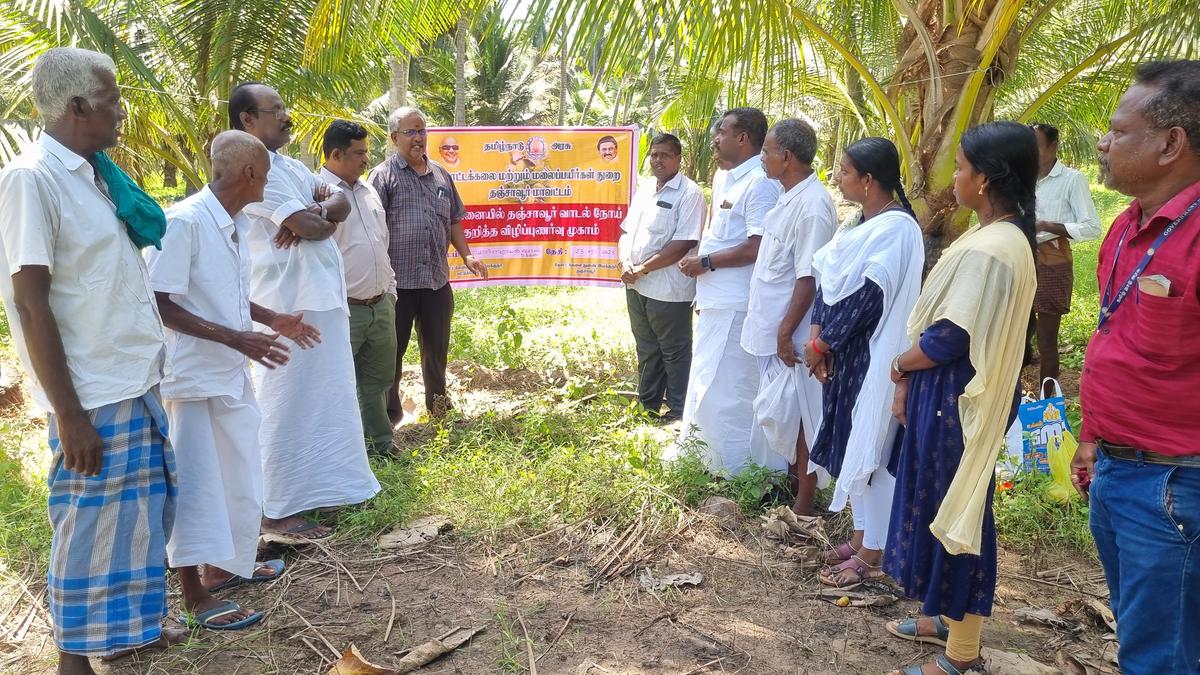
On Friday, an awareness camp was held at Ponnvarayankottai village by the Horticulture department. Demonstrations on disease symptoms and control methods were conducted. Officials, scientists, and farmers participated, including Deputy Director A. Venkataraman and experts from Veppankulam station.
The department has directed block-level demonstrations involving scientists and farmers to promote early detection and disease management.


R. Sarath Kumar expresses concerns over unfulfilled BJP promises and lack of roles for supporters ahead of the 2026 Tamil Nadu elections.

Delhi's hospital merger aims to enhance MBBS and PG seats, boost medical education, and improve healthcare services, says CM Rekha Gupta.

K.C. Tyagi leaves JD(U) to join Rashtriya Lok Dal, aiming to revive his political career in Uttar Pradesh.

Manipur CM Y Khemchand Singh calls meeting with Kuki Zo Council a positive step towards restoring peace and trust.

Papanasam dam's water level is 66.50 feet, with inflow and discharge rates reported.

Suspended Police Inspector P.G. Sandesh faces rape and extortion charges after a college principal alleges sexual assault from 2020 to 2023.

Tamil Nadu CM M.K. Stalin promises improvements to the 'Vidiyal Payanam' initiative, enhancing free bus travel for women and marginalized groups.

Kerala State Electricity Board seeks approval for a medium-term power deal with Damodar Valley Corporation amid procurement challenges.

Environmentalists in Madurai urge government action for the conservation of the endangered Grey Slender Loris in Melur taluk.

CPI leader K. Narayana criticizes Modi's silence on war, urging India to promote peace amid a deepening global crisis.

Environmental activist Bolisetty Satyanarayana urges urgent action to protect Kolleru Lake from ecological degradation and illegal aquaculture.

A 27-year-old man was murdered in east Bengaluru, with police suspecting a financial dispute as the motive.

A survey reveals a drastic decline in Thiruvananthapuram's house sparrow population, prompting calls for urgent conservation efforts.