Holidays, monuments, streets. What happens to Cesar Chavez’s legacy?
USA TODAY
Cesar Chavez was heralded as a labor and civil rights icon. This is being questioned after allegations he sexually assaulted women and girls.
Dozens of streets, schools and parks bear his name. Public libraries and state offices close to honor his birthday in the three large states where it's a holiday. American presidents honored him with the Medal of Freedom and a National Monument in Keene, California.
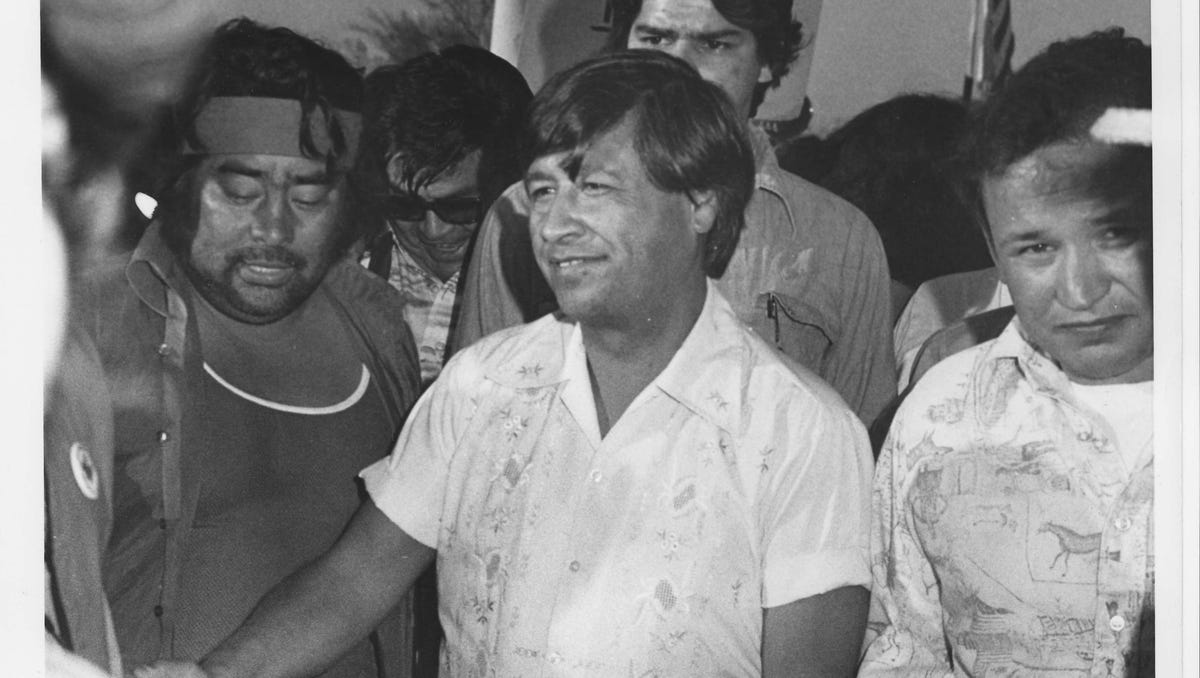
For decades, Cesar Chavez, the revered late leader of the United Farm Workers union, was heralded as a labor and civil rights icon, even more so after his death over three decades ago. He came to personify Mexican American and Latino identity.
Yet this week, Chavez is in the spotlight for an array of horrifying allegations. His legacy faces a reckoning after several women, including union co-founder Dolores Huerta, said he sexually assaulted them, including some who were children at the time. Most kept the dark secrets hidden. Others were purged from UFW ranks when they spoke out, a New York Times investigation published March 18 found.
Some labor advocates and scholars said the revelations could provide a much-needed opportunity to reconsider the importance of female workers and activists, rather than attributing the movement's collective successes to one man.
"The farmworker movement has always been bigger and far more important than any one individual," Huerta, now 95, said in a statement that detailed her sexual assault by Chavez, which resulted in two children she said she gave up for adoption. "Cesar’s actions do not diminish the permanent improvements achieved for farmworkers with the help of thousands of people. We must continue to engage and support our community, which needs advocacy and activism now more than ever."


Dolores Huerta alleges Cesar Chavez sexually assaulted her while both were leading the farmworker movement and co‑founding the United Farm Workers union.

TSA lines across the country are lengthening and terrorism threats are on the rise as the Department of Homeland Security remains partially shut down.

Cesar Chavez was heralded as a labor and civil rights icon. This is being questioned after allegations he sexually assaulted women and girls.

From propeller planes to high-tech jets, Air Force One has evolved into a flying White House, carrying presidents and American power worldwide.

National Republicans are sharing videos from inside the Atlanta airport blaming the partial government shutdown on Democrats. Long lines continue.

Intelligence leaders faced tense Senate questioning as Tulsi Gabbard defended the U.S. assessment of the Iran war.

Authorities have described the March 12 synagogue attack as a targeted act of violence against the Jewish community.

Civil rights icon Dolores Huerta publicly alleges Cesar Chavez sexually assaulted her, following a New York Times investigation.

Head of the U.S. National Counterterrorism Center Joe Kent resigned over the war in Iran. President Donald Trump called him 'weak on security.'

As DHS plans a major ICE detention center in Social Circle, GA, officials have cut off water to site. Oakwood also passes resolution to stop center.

A proposed voting bill, the SAVE Act, could require proof of citizenship like a birth certificate. Here's how to get one.

Here's how the Illinois House and Senate races are stacking up this midterm cycle.

Plus: Fallout of a Trump administration resignation. Here is the news to know on Wednesday.