Hard to make the case for new US global tariffs to apply to Singapore: Ex-US envoy
The Straits Times
No evidence of balance of payments or currency crisis in the US to justify Sec 122 tariffs, economists say. Read more at straitstimes.com.
HOUSTON – Is the US economy in hot water or is it the “hottest economy in the world”, as President Donald Trump likes to say in nearly every speech?
That is a key question now that Mr Trump has invoked a law designed to be used when the US economy is in serious crisis, in order to impose a new global tariff of 10 per cent on nearly all goods imported into the US – including from Singapore.
These tariffs – imposed in the wake of a US Supreme Court ruling on Feb 20 that declared most of Mr Trump’s “reciprocal” tariffs illegal – have been imposed under Section 122 of the US Trade Act of 1974.
It is a power granted by Congress as a remedy – the tariffs can only last for up to 150 days – when the US economy experiences “large and serious balance-of-payments deficits” or faces “imminent and significant depreciation of the dollar”.
Except, most economists concur that the US is facing no such crisis. And legal experts predict imminent suits in the Court of International Trade in Washington DC, challenging the use of a statute that no president has invoked until now.
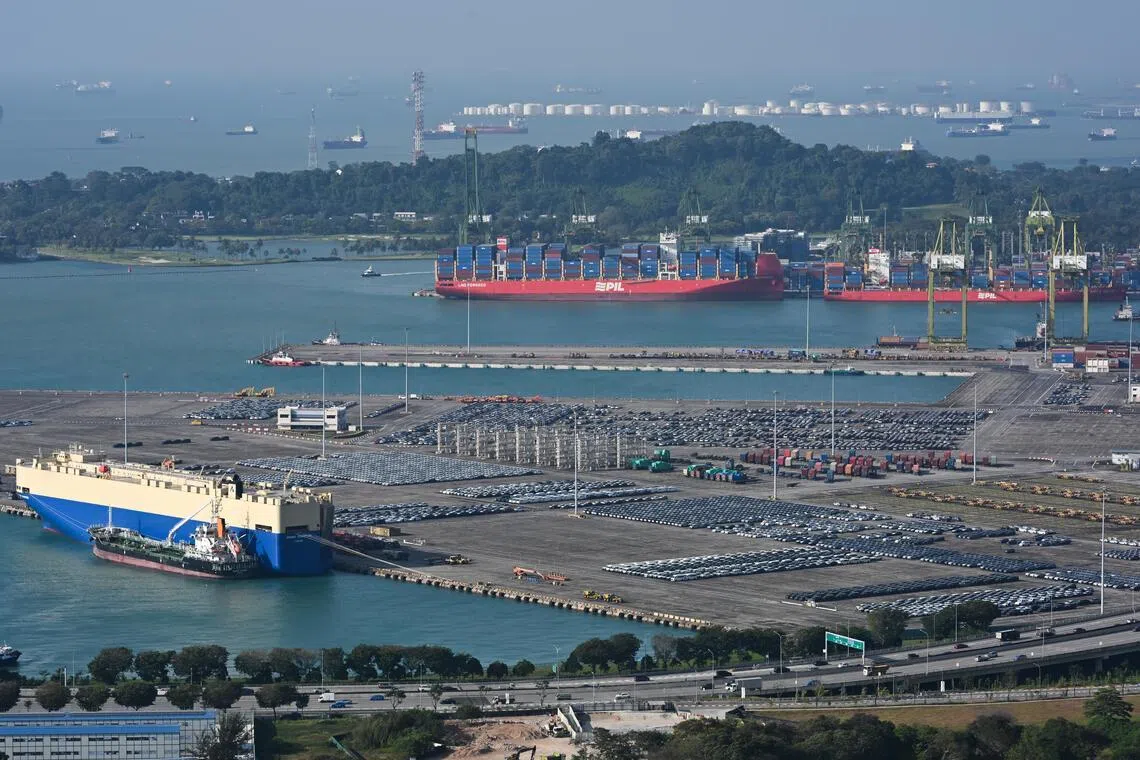
The tariff is especially jarring when it comes to Singapore, a free trade partner and one of the few Asian economies with which the US has consistently run a trade surplus.


March 17 - An unknown projectile struck a Kuwait-flagged tanker 23 nautical miles east of Fujairah in the United Arab Emirates causing minor structural damage, the United Kingdom Maritime Trade Operations (UKMTO) said on Tuesday. Read more at straitstimes.com.

An air strike on a drug rehabilitation centre in Kabul killed at least 400 people. Read more at straitstimes.com.

A recent case involved a Chinese student who lost RM20,580 (S$6,710). Read more at straitstimes.com.

The family has received death threats on several occasions in person and via phone and text message. Read more at straitstimes.com.

LONDON, March 17 - Britain, Finland and the Netherlands are looking at teaming up to jointly finance and procure weapons, munitions and military equipment, given the increasing threat level across the world, with war in Ukraine and in the Middle East. Read more at straitstimes.com.

The accused, who is also a single mother, pleaded for a lighter sentence. Read more at straitstimes.com.

More than 15 cremation urns were allegedly stolen from niches at a memorial park columbarium. Read more at straitstimes.com.

The measure is intended to prevent potential terrorism and accidents during the concert on March 21. Read more at straitstimes.com.
March 17 - A Russian attack damaged industrial, port and energy infrastructure facilities in Ukraine's Odesa region on the Black Sea overnight, causing disruption to power supplies in separate settlements in the southern part of the region, a local official said on Tuesday. Read more at straitstimes.com.

Some parents believe the dangers remain unavoidable for a generation growing up online. Read more at straitstimes.com.

March 17 - Ukrainian President Volodymyr Zelenskiy is due to meet Prime Minister Keir Starmer in London on Tuesday to agree a deeper defence and industrial partnership, the British government said. Read more at straitstimes.com.

The new austerity measures will apply to schools and universities, and remain in place indefinitely. Read more at straitstimes.com.

March 17 - The International Monetary Fund has raised concerns that Ukraine may be unable to tap its $8.1 billion aid as lawmakers stall on measures to release the funding, Bloomberg News said on Tuesday, citing an IMF representative familiar with the matter. Read more at straitstimes.com.