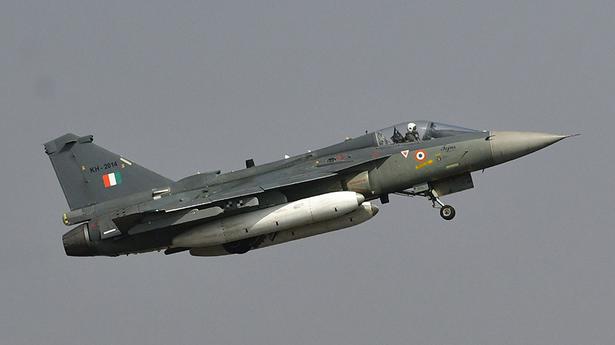
HAL opens office in Kuala Lumpur to explore business operations in Southeast Asia
The Hindu
HAL’s new office in Kuala Lumpur would take up the market promotion of the company’s range of products and services not only in Malaysia but also all of Southeast Asia
Hindustan Aeronautics Limited will set up an office in Kuala Lumpur to tap business opportunities in Malaysia and the entire Southeast Asian region, the PSU said in a statement on Thursday.
The new office is expected to help the public sector firm to explore business around Fighter Lead-in Trainer (FLIT) LCA and other requirements of Royal Malaysian Air Force (RMAF) like Su-30 MKM and Hawk upgrades, as per HAL.
“It will reinforce the commitment of India in supporting the Malaysian Defence Forces and industry for sustainable aerospace and defence landscape in Malaysia,’‘ said a company communique.
According to HAL, the company had submitted a proposal to the Ministry of Defence (MINDEF), Malaysia in October 2021 for the supply of 18 FLIT LCAs against a global tender issued by RMAF.
The final winner of the tender is expected to be declared soon by Malaysian authorities and LCA Tejas stands a fair chance of selection in the bid as it meets all the parameters sought by RMAF, as per the release.
Further, being one of the largest producers of Russian-origin Su-30 aircraft, HAL has the capabilities to extend the required support to RMAF for the Su-30 MKM fleet which is facing low serviceability issues due to the ongoing Russia-Ukraine crisis, the release stated.


Erran Berger, the Vice President of Product Engineering at LinkedIn, thinks the former type of division of labour is rapidly disappearing

India mandates oil and gas firms to share import and export data to mitigate consumer shortages amid rising global prices.

HDFC Bank's chairman Atanu Chakraborty resigns over ethical concerns; Keki Mistry appointed interim chairman for three months.

Stock markets continue to rise for the third day as Sensex and Nifty gain nearly 1%, fueled by IT stocks.

Indian-flagged vessels in the Strait of Hormuz carry 2 lakh MT LNG and 16.7 lakh MT crude, amidst geopolitical tensions.

Equity analysts downgrade earnings forecasts for oil marketing companies, citing rising costs and market pressures for fiscal 2027.

Plastic product prices may surge by 50-60% in April due to rising polymer costs amid ongoing geopolitical tensions.

Centre offers 10% more LPG to States that accelerate piped gas rollout amid ongoing supply challenges and increased consumer demand.

Indian-flagged vessels in the Strait of Hormuz carry 2 lakh MT LNG and 16.7 lakh MT crude, amidst geopolitical tensions.

Stock markets continue to rise for the third day as Sensex and Nifty gain nearly 1%, fueled by IT stocks.

Rising oil prices and LPG shortages are driving India's shift to electric cooking, offering cost-effective and energy-efficient alternatives.

The rupee fell to a record low of 92.63 against the dollar, while equities surged with Sensex up 633.29 points.

Alibaba is sharpening its artificial intelligence strategy by focusing on agents that connect the many businesses under its sprawling corporate umbrella.