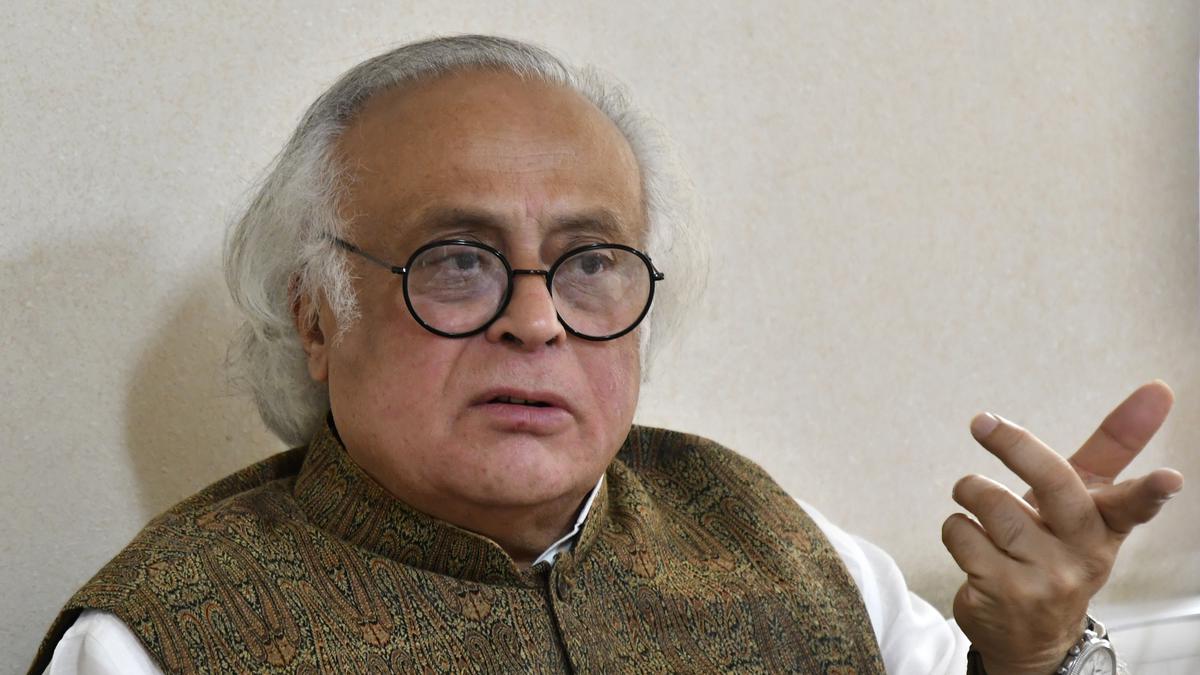
Government must ensure corporate takeovers are fair, monopolies are not created: Jairam Ramesh
The Hindu
Government must prevent corporate monopolies, ensure fair competition, and stop undue political influence in takeovers, says Congress leader.
The Congress on June 15 said it is the government's responsibility to ensure that competition among corporates is not stifled, oligopolies or monopolies do not emerge and corporate takeovers are free and fair.
“It is also the government’s responsibility to ensure that undue advantage arising out of access to political power is not exercised,” party general secretary Jairam Ramesh said.
His comments came after the Adani Group acquired Penna Cements while strengthening its share in the cement sector in southern India.
"Aap chronology samajhiye (understand the chronology): September 2022: Adani acquires Ambuja Cements and ACC, to become country's second largest cement player. August 2023: Adani acquires Sanghi Industries, India's largest single-location cement unit. June 2024: Adani acquires Penna Cements, giving it substantial market share even in the last remaining region of South India." he said.
"Upcoming: Adani is exploring the acquisition of Saurashtra Cement, Vadraj Cement, and the cement business of Jaiprakash Associates," Mr. Ramesh claimed in a post on X.
Quoting former RBI deputy governor Viral Acharya, he said the noted financial economist had established that the five big conglomerates, including the Adani Group, are building monopolies in 40 sectors, including in the cement sector.
"This growing monopolisation is linked to India's shaky economic growth, unemployment crisis, and high inflation. In 2015, when a common man used to spend ₹100 on goods, ₹18 would go as profit to the business owner — in 2021, the owner now gets ₹36 in profits," Mr. Ramesh claimed.


The Thane police have arrested two co-founders of cryptocurrency exchange platform CoinDCX in connection with an alleged fraud of Rs 71.6 lakh, officials said

Meta Chief Executive Mark Zuckerberg is building a CEO agent to help him do his job, the Wall Street Journal reported

Insurance penetration and density are often misunderstood and do not reveal how many families are insured or whether they would be financially secure if the main earning member were to die. The real issue is not reach but adequacy, as households may have life insurance but not enough cover to replace lost income, leaving them financially vulnerable.

Five top firms lose ₹1 lakh crore in market value, with HDFC Bank experiencing the largest decline of ₹56,124.48 crore.

L&T confirms 95% of its West Asia project sites are safe, while addressing logistics challenges amid ongoing regional conflicts.

Mines Ministry to auction 19 critical mineral blocks on March 23, expanding strategic resources for clean energy and technology sectors.

Mines Ministry to auction 19 critical mineral blocks on March 23, expanding strategic resources for clean energy and technology sectors.

Five top firms lose ₹1 lakh crore in market value, with HDFC Bank experiencing the largest decline of ₹56,124.48 crore.

HDFC Bank terminates three senior officials over client onboarding issues at its DIFC branch amid ethical concerns following chairman's resignation.

Air India CEO warns of potential flight cuts and reduced travel demand due to rising fuel costs amid ongoing Gulf conflict.

Options are widely used by retail traders to speculate on the value of the stock for immediate gains and such behaviour in large scale can distort the market

India achieves 1 billion tonne coal production for the second consecutive year, ensuring stable energy supply and economic growth.

Generic drugmakers in India launch affordable Semaglutide versions, targeting a $1 billion diabetes and weight loss market.