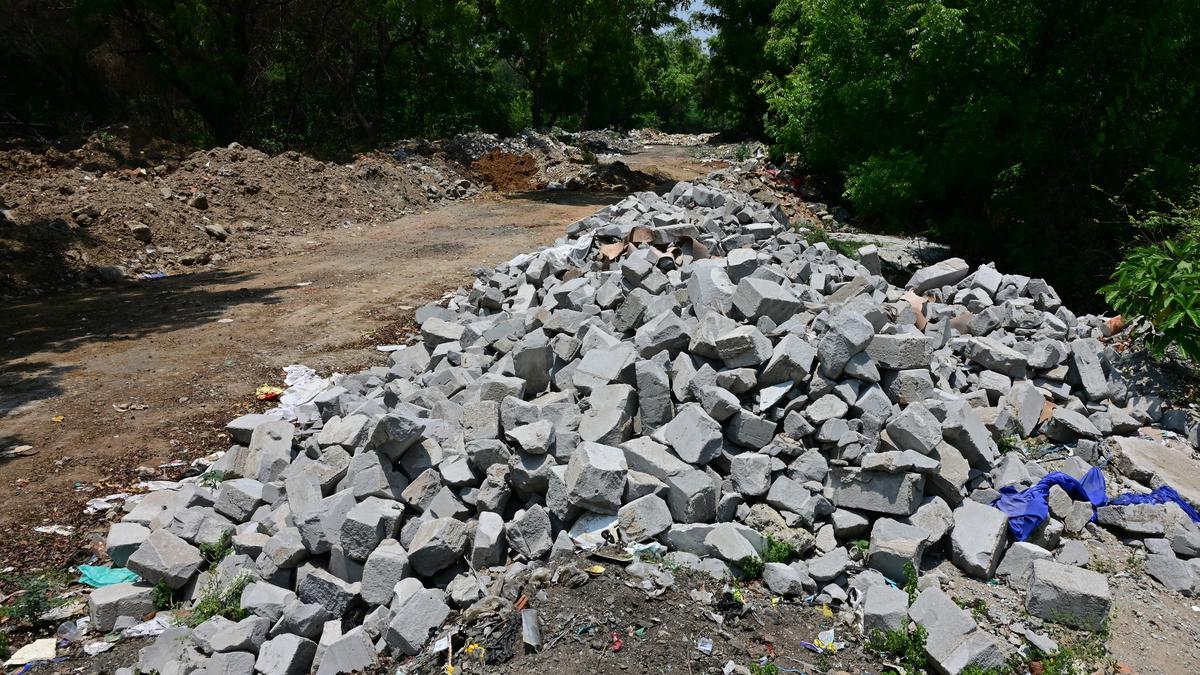
GCC’s new guidelines for managing C&D waste comes into effect
The Hindu
Here are the salient features for putting construction and demolition waste in its place under Greater Chennai Corporation limits, and what happens to the waste left on the dumpyards
From April 21, Greater Chennai Corporation will levy a fine of ₹ 5000 if one is found dumping construction and demolition waste on streets, pavements, drains, public spaces, vacant sites or any other unauthorised location.
Construction and Demolition (C&D) waste includes debris and rubble resulting from construction, re-modeling, repair and demolition operations. Steel, aluminium, wood and other components currently being salvaged for reuse or recycling are not included in this category.
GCC in its revised guidelines insists that “occupiers” generating small quantities of C&D waste during repair or minor renovation shall keep the waste within their own premises until collection by their own means or by GCC-authorised C&D waste transporters or empanelled vendors or lorry owners authorised by GCC to collect waste from door steps.
The occupiers can contact GCC’s website for hiring services of the C&D waste transporters or empanelled vendors or the authorised concessionaires and pay necessary collection and transportation charges to transporters and pay for processing fee, says the note.
What kind of a generator are you and where should you dump C&D waste?
Anyone generating less than 1 MT of waste generate from minor house repairs comes under the category of “micro generators”. This waste can be disposed of in earmarked dumping sites or one can call GCC’s toll free number 1913 for a pick-up.
Those generating C&D waste during building renovation, remodelling or repairing where the total weight is more than 1 MT and less than 20 MT per day comes under “Small Generators”. The two processing centres that will be taking such waste are at the dumpyards at Perungudi and Kodinguyur.


BJP's Vijayendra accuses Congress of using money to influence Bagalkot bypolls, urging voters to reject their tactics.

First randomization of electronic voting machines completed in Tirunelveli and Tenkasi districts for upcoming Assembly elections.

RPF seizes 10.12 kg of unclaimed cannabis worth ₹5.06 lakh from a train in Mangaluru.

Kolar's groundwater levels rise to 50-100 ft due to the K.C. Valley project, ensuring clean water and improved health outcomes.

Three smugglers arrested in Sangareddy with 574 kg of ganja valued at ₹2.87 crore during a police operation.

Mysuru MP urges a 'flex-free Mysuru' by discouraging birthday banners, promoting responsible celebrations to preserve the city's heritage.

Farmers of Kalakudi demand payment for paddy bags procured at DPC

BJP's seal on a 2019 Election Commission letter ignites controversy in Kerala, prompting claims of careless handling by CPI(M).

Transgenders go on rally condemning Transgenders Amendment Bill 2026

Supreme Court dismisses plea challenging Sonam Wangchuk's detention, noting the Centre revoked it on March 14, 2026.

Private medical shops in Telangana government hospitals face eviction due to expired leases and ongoing legal challenges, says Health Minister.

A.P. BIE Secretary reviews answer script evaluation, emphasizing transparency and accuracy to ensure error-free marking and timely results.

Join the walkathon in Puducherry to promote oral hygiene awareness and celebrate World Oral Health Day with community participants.