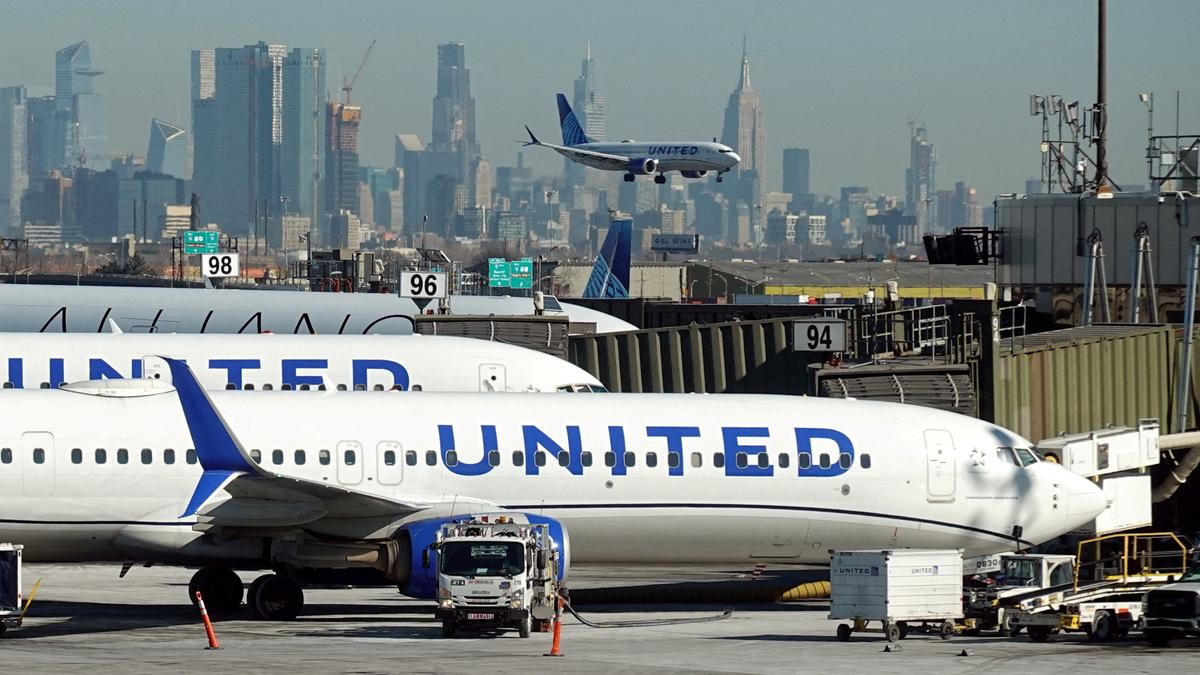
Fuelling the aviation industry
The Hindu
Aviation Turbine Fuel (ATF) powers global aviation, with a shift towards Sustainable Aviation Fuel (SAF) for a greener future.
The aviation industry, a cornerstone of globalisation and modern transportation, relies heavily on one vital resource: aviation turbine fuel (ATF). Primarily derived from crude oil, ATF is a specialised kerosene refined to meet stringent quality and safety standards. With more than 100,000 flights taking off and landing around the world each day, understanding what fuels this immense operation—and where that fuel comes from—is critical.
Aviation Turbine Fuel (ATF), widely recognised as jet fuel, is an essential high-performance fuel for aircraft gas-turbine engines. The two primary types are Jet A and Jet A-1, with Jet A-1 being the global standard due to its exceptional cold-weather performance. These fuels, which range in colour from clear to straw-coloured, are rigorously tested to meet international standards set by leading organisations such as ASTM (American Society for Testing and Materials) and DEF STAN (the UK Ministry of Defence Standard). Formulated with advanced additives, jet fuel effectively prevents static discharge, corrosion, and microbial growth, ensuring safety and reliability even in the most demanding conditions at 35,000 feet.
ATF is formed during the refining of crude oil. The process starts in petroleum refineries, where crude oil is distilled into various fractions. One of these fractions is kerosene, which is then hydrotreated to remove impurities like sulphur. The resulting jet fuel is blended to meet performance requirements.
Refineries all over the world customise their output to include ATF, particularly those located near major airports or transportation hubs. Transportation from refinery to wingtip involves pipelines, ships, railcars and fuel trucks. Major fuel hubs near airports contain large tank farms that store and distribute ATF via hydrant systems on the tarmac.
The demand for ATF is concentrated in countries with large aviation sectors, and these nations often maintain robust refining capacities to ensure fuel availability. However, not all aviation hubs produce their jet fuel; many rely on imports. Some of the key players in global ATF production and distribution are:
As the world shifts toward sustainability, the aviation industry is under pressure to reduce its carbon footprint. Enter Sustainable Aviation Fuel (SAF), a bio-based alternative to traditional jet fuel. Made from feedstocks like used cooking oil, plant waste, and even captured CO₂, SAF can reduce lifecycle greenhouse gas emissions by up to 80%.
Airlines like KLM, Lufthansa, and Delta have already begun incorporating SAF into their fuel mix. However, challenges such as high production costs, limited feedstock availability, and infrastructure compatibility hinder widespread adoption. Still, governments and industry players are investing heavily in SAF development, with ambitious targets set for 2030 and beyond.


The Thane police have arrested two co-founders of cryptocurrency exchange platform CoinDCX in connection with an alleged fraud of Rs 71.6 lakh, officials said

Meta Chief Executive Mark Zuckerberg is building a CEO agent to help him do his job, the Wall Street Journal reported

Insurance penetration and density are often misunderstood and do not reveal how many families are insured or whether they would be financially secure if the main earning member were to die. The real issue is not reach but adequacy, as households may have life insurance but not enough cover to replace lost income, leaving them financially vulnerable.

Five top firms lose ₹1 lakh crore in market value, with HDFC Bank experiencing the largest decline of ₹56,124.48 crore.

L&T confirms 95% of its West Asia project sites are safe, while addressing logistics challenges amid ongoing regional conflicts.

Mines Ministry to auction 19 critical mineral blocks on March 23, expanding strategic resources for clean energy and technology sectors.

Mines Ministry to auction 19 critical mineral blocks on March 23, expanding strategic resources for clean energy and technology sectors.

Five top firms lose ₹1 lakh crore in market value, with HDFC Bank experiencing the largest decline of ₹56,124.48 crore.

HDFC Bank terminates three senior officials over client onboarding issues at its DIFC branch amid ethical concerns following chairman's resignation.

Air India CEO warns of potential flight cuts and reduced travel demand due to rising fuel costs amid ongoing Gulf conflict.

Options are widely used by retail traders to speculate on the value of the stock for immediate gains and such behaviour in large scale can distort the market

India achieves 1 billion tonne coal production for the second consecutive year, ensuring stable energy supply and economic growth.

Generic drugmakers in India launch affordable Semaglutide versions, targeting a $1 billion diabetes and weight loss market.