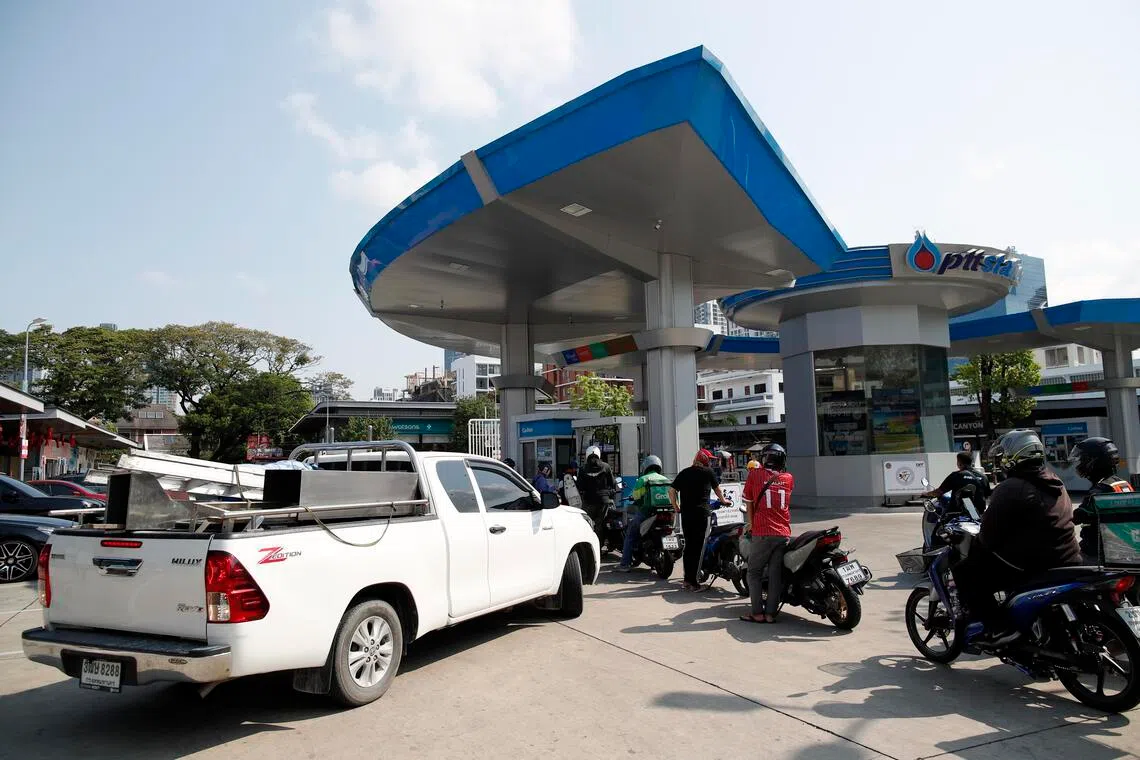
Fuel crunch in Thailand hits emergency medical vehicles in 39 provinces
The Straits Times
Rescue missions in some areas have been restricted due to fuel shortage. Read more at straitstimes.com.
BANGKOK – Thailand’s Public Health Minister Pattana Promphat said on March 19 that the fuel crisis has affected emergency medical service vehicles, prompting the Ministry of Public Health to instruct directors of all hospitals and provincial public health offices to address problems and monitor the situation closely.
He said conditions vary by location, but the government has discussed that ambulances and rescue vehicles must be given the highest priority, with reserves set aside to ensure they remain ready to save lives.
For fuel management in hospitals under the ministry, officials have been told to maintain sufficient reserves for at least one to two days of operations, while stressing that facilities should not stockpile beyond necessity.
Hospitals are also instructed to coordinate with fuel stations and regular business partners to jointly monitor fuel stocks and ensure enough supply for ambulances to refuel.
Secretary-General Pichet Nongchang of the National Institute for Emergency Medicine (NIEM) said fuel shortages in many areas have been driven by public anxiety and panic over potential shortages and expectations of higher prices.
International conflict and war have disrupted normal fuel transport routes, pushing demand above typical daily levels, while many stations were not prepared. As fuel deliveries nationwide take time, supply has not kept up with public demand.


MADRID, March 19 - Spain will delay the presentation of its annual budget, Prime Minister Pedro Sanchez said on Thursday, as the cabinet puts together a package of emergency measures to counter the economic impact of the Iran war. Read more at straitstimes.com.

The statue “was toppled in the 14th century and shattered into more than 10,000 fragments by looters”. Read more at straitstimes.com.

MOSCOW, March 19 - A senior Russian official called on Thursday for the creation of a safety zone around Iran's Russian-built Bushehr nuclear plant to prevent a major disaster, two days after a projectile struck within several hundred metres of its reactor. Read more at straitstimes.com.

WASHINGTON, March 19 - U.S. Defense Secretary Pete Hegseth said on Thursday that the United States' objectives in the war against Iran have not changed since strikes started on February 28. Read more at straitstimes.com.

DUBAI, March 19 - Iran's foreign minister called for vigilance and regional coordination in separate calls with counterparts in Turkey, Egypt and Pakistan as the military warned of a tougher response to any further attacks on its energy infrastructure, state media reported on Thursday. Read more at straitstimes.com.

Defence lawyers will be required to obtain clearances before appearing in national security cases. Read more at straitstimes.com.

ATHENS, March 19 - An air defence system operated by Greek military personnel in Saudi Arabia intercepted two ballistic missiles launched from Iran on Thursday, Greece's defence minister said. Read more at straitstimes.com.

Rescue missions in some areas have been restricted due to fuel shortage. Read more at straitstimes.com.

Diesel stocks are down to 30 days, said Australia's Energy Minister. Read more at straitstimes.com.

Authorities reported seven new cases of the disease that has killed two people so far. Read more at straitstimes.com.

Asia-bound travelers bypass Gulf hubs due to Iran conflict, boosting Singapore Airlines and other Asian carriers. Read more at straitstimes.com.

COPENHAGEN, March 19 - A Russian fighter jet violated neighbouring Estonia's airspace on Wednesday, triggering a response from NATO's Baltic Air Policing, Estonian Foreign Minister Margus Tsahkna said. Read more at straitstimes.com.

For years Washington had pressed China to arrest sellers of chemicals used to make the deadly drug. Read more at straitstimes.com.