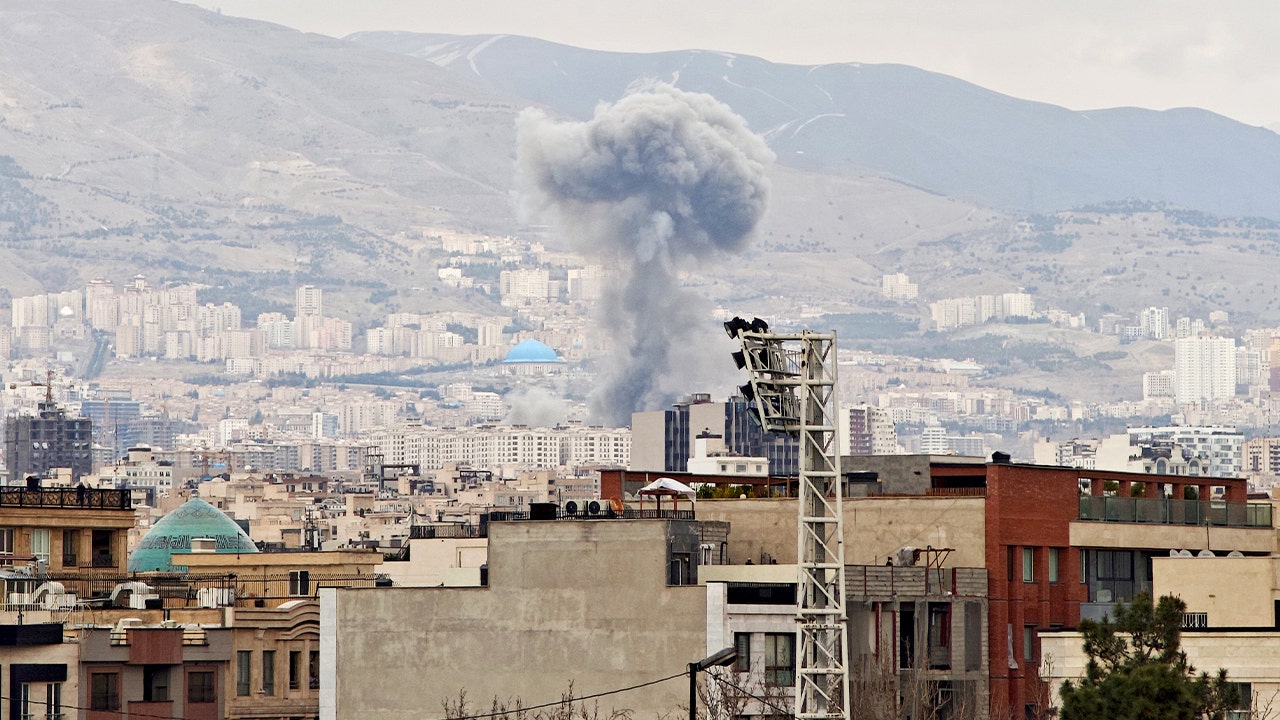
From missiles to minerals: The strategic meaning behind the Iran strike
Fox News
The death of Iran's supreme leader, Ayatollah Ali Khamenei, following U.S.-Israeli strikes in February 2026 represents a pivotal moment in American strategy focused on economic security.
Tanvi Ratna is a policy analyst and engineer with a decade of experience in statecraft at the intersection of geopolitics, economics, and technology. She has worked on Capitol Hill, at EY, at CoinDesk and others, shaping policy across sectors from manufacturing to AI. Follow her takes on statecraft on X and Substack.
Over the past five years, Washington’s strategic thinking has shifted decisively away from counterterrorism-era priorities toward competition defined by industrial capacity, infrastructure control and technological ecosystems. Energy routes, mineral supply chains, semiconductor inputs and data networks are no longer treated as commercial concerns alone; they are now regarded as national security assets. In that framework, instability surrounding Iran intersected directly with several emerging pillars of U.S. strategy.
Iran occupies a uniquely sensitive position in the global economic system. The Strait of Hormuz remains one of the world’s most critical maritime arteries, carrying roughly one-fifth of globally traded oil and a substantial share of liquefied natural gas exports. Persistent uncertainty around the waterway — whether through missile capabilities, naval harassment risks or proxy-linked disruptions across adjacent shipping zones — has imposed structural costs on global trade. Energy volatility feeds directly into inflation, manufacturing competitiveness and industrial planning across allied economies.


Cartels killed more than 1 million Americans since 1999 and the raid on Mexico's El Mencho should just be a part of a needed war against narco-terrorists.

Virginia voters chose fairness in 2020 redistricting reform. But politicians now seek to bypass independent commission for partisan advantage in elections.

Air-raid sirens sound across Tel Aviv as Iranian missile attacks kill 11 Israeli civilians and wound dozens in retaliation for U.S.-Israel strikes.

Former President Bill Clinton testified under subpoena in the House Oversight Committee’s Jeffrey Epstein probe, a move that could set a new precedent.

Several House Republicans have pushed Speaker Mike Johnson to wage an open battle with the Senate GOP over the SAVE America Act.

At least 54 protesters were arrested during an anti-Immigration and Customs Enforcement demonstration outside the Bishop Henry Whipple Federal Building in Minneapolis on Sunday.

'Road rage incident' turns deadly as Virginia highway stabbing leaves 2 people dead; dog also killed
A road rage incident on I-495 in Virginia escalated into a mass stabbing that resulted in two deaths, including a dog. The suspect was fatally shot by police.

A road rage incident on I-495 in Virginia escalated into a mass stabbing that resulted in two deaths, including a dog. The suspect was fatally shot by police.

Tomahawk cruise missiles, B-2 stealth bombers and one-way attack drones spearheaded the blitz as US air, sea and missile power struck Iran in the first 24 hours of 'Operation Epic Fury.'

Multiple maritime incidents occurred in the Strait of Hormuz region following U.S.-Israeli strikes on Iran under Operation Epic Fury, with vessels hit by projectiles.

Trump launches Operation Epic Fury against Iran using airpower strikes, marking unexpected regime-change operation that could define his entire second presidential term.

FBI investigates downtown Austin shooting as potential terrorism after gunman killed 3 people and wounded 14 others outside entertainment district bar.

Modern warfare now blends airstrikes with cyber operations as Iran faces coordinated digital offensive targeting command systems and infrastructure.