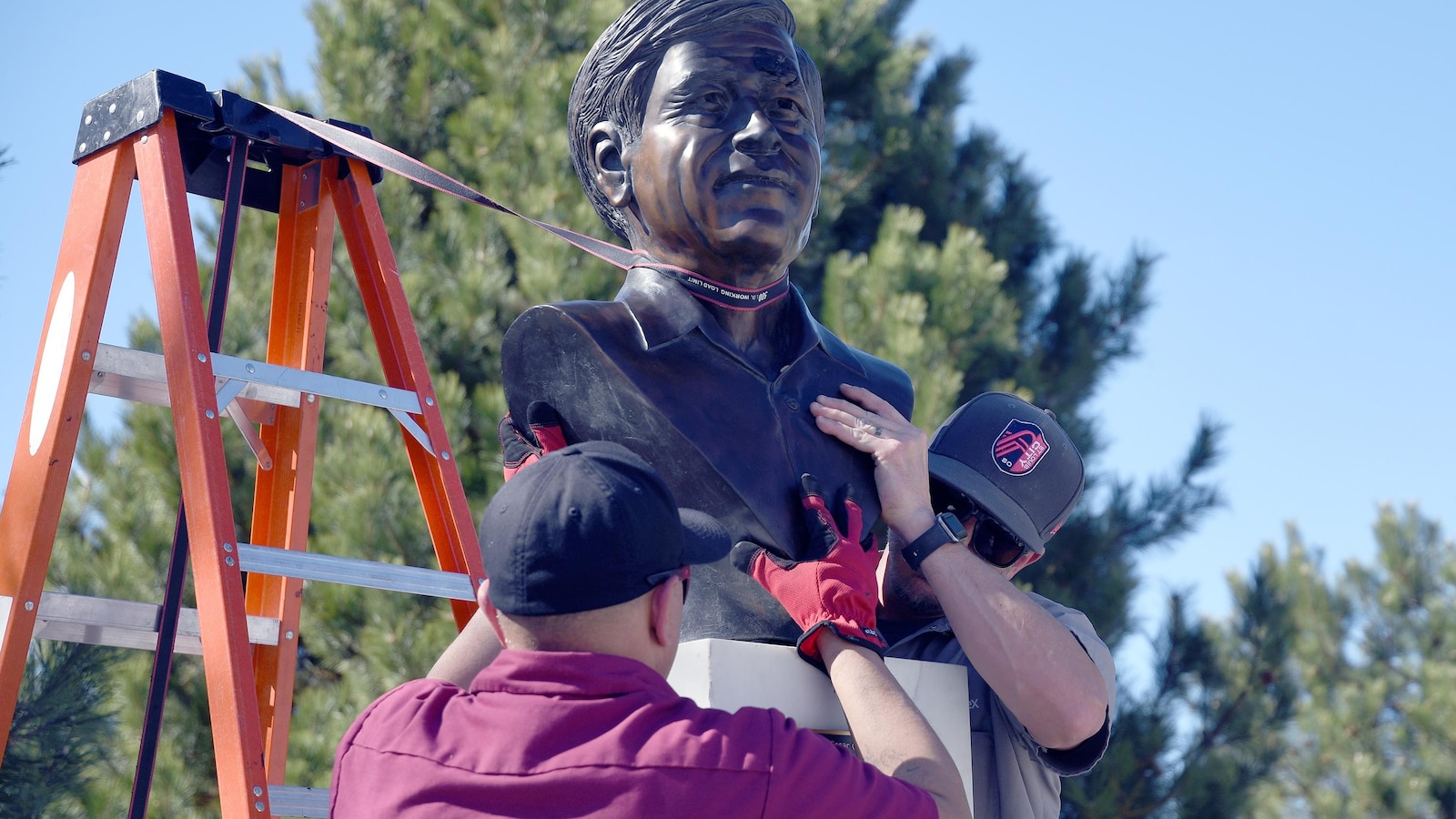
For César Chavez supporters, a painful question: What to do with his legacy now
ABC News
Sexual abuse allegations against the revered labor leader César Chavez have led to a swift fallout, leaving many to reconcile the legacy of a man who fought tirelessly for the rights of farmworkers
Antonio Bustamante has kept a watercolor of labor leader César Chavez for more than 35 years, hanging it on the wall of his law office in Yuma, Arizona. As a young man, he was moved by Chavez and helped organize workers before joining his security team.
Like many others, Bustamante must now wrestle with reconciling the man he adored with the allegations Chavez groomed and sexually abused women and young girls.
“I’m trying to figure out how emotionally and intellectually I’ll be able to understand my perception of him as an extremely good man,” Bustamante said, his voice heavy with emotion, “compared to these things that are said he did.”
Chavez built a national reputation organizing in the fields. With Dolores Huerta — also one of his victims — he co-founded the United Farm Workers union, led a hunger strike, a grape boycott with Filipino farmworkers, and eventually pressured growers to negotiate better wages and working conditions for Mexican American farmworkers.
Nearly two weeks after a New York Times report detailing allegations of sexual abuse, communities and rights groups across the country are still figuring out how he should be remembered. His name and image have already been erased from monuments, streets and murals around the country.


The White House is scheduled to release President Donald Trump’s 2027 budget Friday

Amazon is slapping a 3.5% fuel and logistics surcharge on third-party sellers that sell on its platform starting later this month amid a spike in fuel prices since the war in Iran

In recent months, thousands of immigrants living legally in the U.S. and waiting for rulings on their asylum claims were suddenly ordered deported to countries where most have no ties

Ted Bundy's violent spree spanned at least four years, leaving dozens of victims, including at least 30 women and girls killed

Alabama Gov. Kay Ivey has been hospitalized after undergoing what her office described as a minor procedure to remove fluid that was pressing on her lung

Homeland Security is pausing plans to buy new warehouses for immigrant detention as it reviews contracts signed under former secretary Kristi Noem

A U.S. resident of 27 years who was deported to Mexico by the Trump administration has returned home to Sacramento

Democrats are trying to win back the Senate

Sexual abuse allegations against the revered labor leader César Chavez have led to a swift fallout, leaving many to reconcile the legacy of a man who fought tirelessly for the rights of farmworkers

Sexual abuse allegations against the revered labor leader César Chavez have led to a swift fallout, leaving many to reconcile the legacy of a man who fought tirelessly for the rights of farmworkers