Five Hindu Bangladeshi immigrants in Karnataka get citizenship, but wait for others is still long
The Hindu
Five Hindu Bangladeshis in Karnataka naturalized as citizens, sparking more applications after the Citizenship Amendment Act, 2019.
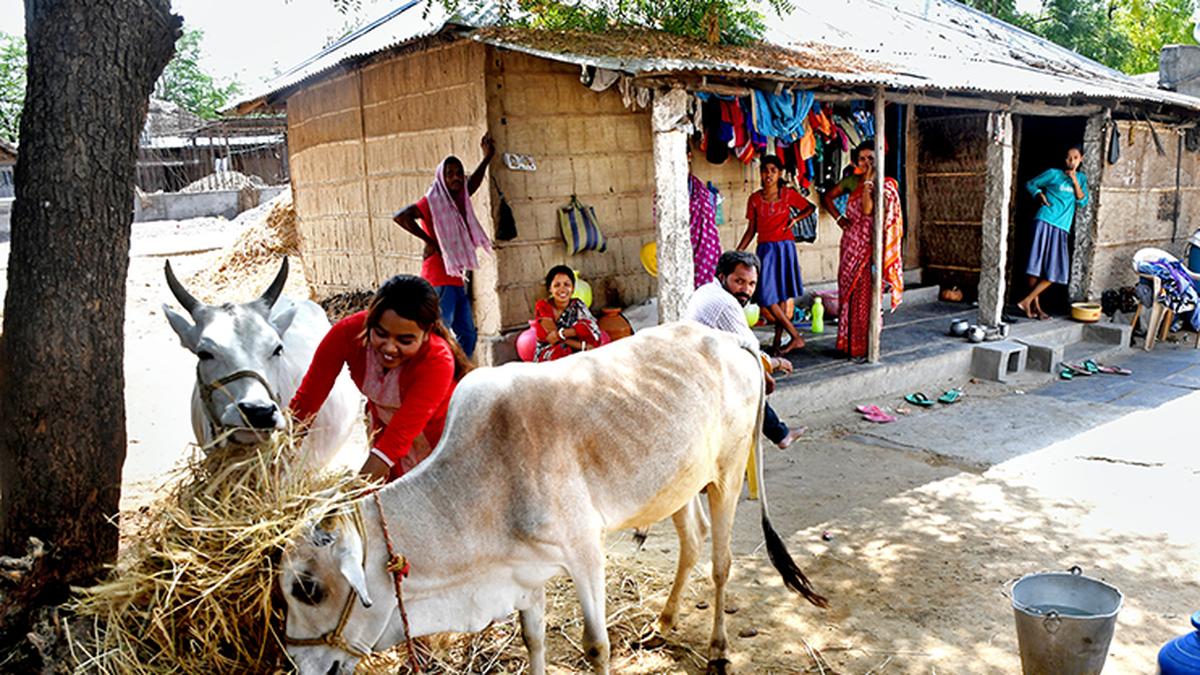
After living in India for decades, five Hindu Bangladeshis residing in the ‘Bangla camp’ at Sindhanur in Raichur district, about 400 km from Bengaluru, were naturalised as citizens last week — the first in Karnataka after the Citizenship Amendment Act, 2019, came to force. While about 300 applications are currently pending, citizenship given to five persons is expected to spur more people to apply.
The application process commenced in May after the notification of new rules in March, and the applications, it is learnt, went through vigorous checks, including from the Intelligence Bureau. The district-level committee comprising officials from the Central government departments, including Postal and Telegraph, Income Tax, and Railways, vetted the applications, mainly documents to trace ancestry in Bangladesh and interviewed the applicants before recommending their names.
Vijaykumar Bhavikatti, Director of Census Operation and Citizen Registration in Karnataka, issued the citizenship certificate to Biprodas Goldar, Sukumar Mandal, Ramakrishna Adhikary, Adwait Sarkar, and Jayanth Mandal last week.
“I am happy that finally I could get citizenship. For various reasons I had not applied earlier,” 85-year-old Mr. Sarkar, who earlier worked as an agriculture labourer, told The Hindu over the phone. A native of Khulna district in the then East Pakistan, Mr. Sarkar arrived in India in 1964, but arrived at Sindhanur camp in 1970. He has been given citizenship based on the Relief Eligibility Certificate or what was locally termed as “border slip” issued by the Indian authorities at the border when he crossed over to India. The certificate was given to those migrating from East Pakistan after January 1, 1964, to seek assistance from the Indian government.
For Mr. Sarkar, his citizenship does not solve the problem. None of his five children, including three daughters, who were all born in India, have citizenship. Amal Sarkar, his third child born in 1981, does not have a birth certificate as his mother gave birth to him near a field.
“Though I qualify to become an Indian citizen because I was born in India before 1987, I do not have any Bangladeshi document or an Indian birth certificate. Since I did not go to school, I don’t even have school documents. Now that my father has received citizenship, I am hopeful of getting it for myself,” he said.
According to Pranav Bala, also a Bangladeshi Hindu and an advocate, who is assisting people to apply online, of an estimated 20,000 population in the Bangla camp (2011 Census figure had 15,000), there could be an estimated 2,000 to 3,000 people without citizenship documents.


Palla urges NDA leaders to unite for grassroots outreach, enhancing public trust through balanced welfare and development initiatives.

Horses shone at Auroville's 2026 event, showcasing equestrian talent through dressage, derby, and show jumping competitions.

Telangana Governor Shiv Pratap Shukla attends Bihar Foundation Day celebrations in Hyderabad, honoring Bihar's historical and cultural contributions.

Samsung workers protest for the reinstatement of 27 suspended employees, citing unfulfilled promises from the Labour Minister.

The Vice-Chancellor of Rajiv Gandhi University of Health Sciences (RGUHS) B. C. Bhagavan said on Sunday that the university will soon open a research centre on Yoga and Naturopathy on 60-acre land in Bengaluru.

UT Matters: Construction of Uppar drain road overbridge in Puducherry to be completed in four months, amid traffic regulations.

Union Minister Dharmendra Pradhan highlights Bharat Innovates' aim to elevate Indian deep-tech startups to the global stage.

In an exclusive interview, DMK MLA Ezhilan discusses Tamil Nadu's 2026 elections, party structure, and local governance challenges.

Minister Satish Jarkiholi asserts confidence in retaining Davangere and Bagalkot seats in upcoming bypolls amid addressing internal discontent.

Sunil Ambekar of RSS emphasizes national unity, defending road prayer restrictions and promoting awareness of shared ancestry in India.

Opposition MPs and activists voice strong concerns against proposed amendments to the Transgender Persons Act at a Delhi hearing.

Four Assam police commandos injured in an extremist attack during a gunfight in Tinsukia district, officials report.

Campaigning intensifies in Ernakulam district as candidates engage voters ahead of the crucial Assembly polls.