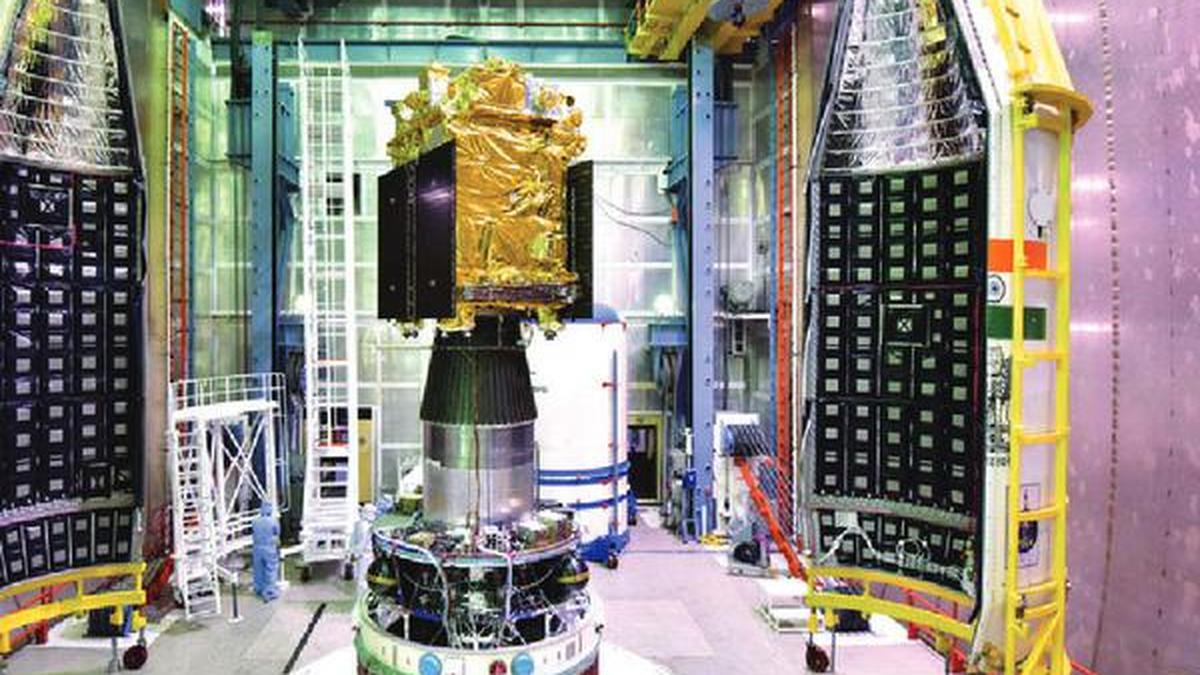
First science result from Aditya-L1 mission is out
The Hindu
Aditya-L1 mission's first science result led to the precise estimation of a solar coronal mass ejection onset time, thanks to data from the Visible Emission Line Coronagraph payload.
The first science result from the Aditya-L1 mission, India’s first scientific mission dedicated to studying the Sun, is out.
Scientists who developed Visible Emission Line Coronagraph (VELC) onboard Aditya-L1 precisely estimated the onset time of a coronal mass ejection that erupted on the Sun on July 16. VELC is the spacecraft’s primary payload.
The Indian Space Research Organisation (ISRO) launched Aditya-L1 on September 2, 2023, from the Satish Dhawan Space Centre in Sriharikota. The spacecraft’s VELC payload was developed by the Indian Institute of Astrophysics (IIAp), Bengaluru.
The Sun is a very active object and often spews vast quantities of plasma in violent eruptions called coronal mass ejections (CMEs).
“These are the most powerful explosions happening in our solar system,” the team of IIAp scientists involved with the VELC’s operations said in a statement shared with The Hindu. “When a CME blows past the earth, it can damage the electronics in satellites in near-earth space and disrupt radio communication networks on the earth.”
The team added that using unique data obtained with the VELC payload, members could precisely estimate the onset time of a CME that erupted from the Sun on July 16.
The results of the study, by R. Ramesh, V. Muthupriyal, Jagdev Singh, K. Sasikumar Raja, P. Savarimuthu, and Priya Gavshinde, are set to be published in a forthcoming edition of the peer-reviewed journal Astrophysical Journal Letters.


Justice Bhuyan emphasizes the judiciary's role as impartial, condemning reckless criminal cases and advocating for dissent and fair bail practices.

Vijay announces candidates for all 30 Puducherry Assembly segments as TVK prepares to contest independently on April 9.

Kerala LDF ministers declare assets nearing ₹2 crore each amid upcoming elections, revealing financial details and legal challenges.

Sunil Ambekar of RSS discusses organisational changes and initiatives to unify India and address social challenges in an exclusive interview.

Pinarayi Vijayan predicts the BJP will fail again in Kerala, emphasising the Left's enduring strength and commitment to development.

Small eateries in Coimbatore face operational challenges due to LPG cylinder shortages, impacting service and food prices.

Assembly polls 2026: Follow updates from The Hindu on the upcoming elections in five States, on March 22, 2026

Palla urges NDA leaders to unite for grassroots outreach, enhancing public trust through balanced welfare and development initiatives.

Horses shone at Auroville's 2026 event, showcasing equestrian talent through dressage, derby, and show jumping competitions.

Telangana Governor Shiv Pratap Shukla attends Bihar Foundation Day celebrations in Hyderabad, honoring Bihar's historical and cultural contributions.

Samsung workers protest for the reinstatement of 27 suspended employees, citing unfulfilled promises from the Labour Minister.

The Vice-Chancellor of Rajiv Gandhi University of Health Sciences (RGUHS) B. C. Bhagavan said on Sunday that the university will soon open a research centre on Yoga and Naturopathy on 60-acre land in Bengaluru.

UT Matters: Construction of Uppar drain road overbridge in Puducherry to be completed in four months, amid traffic regulations.