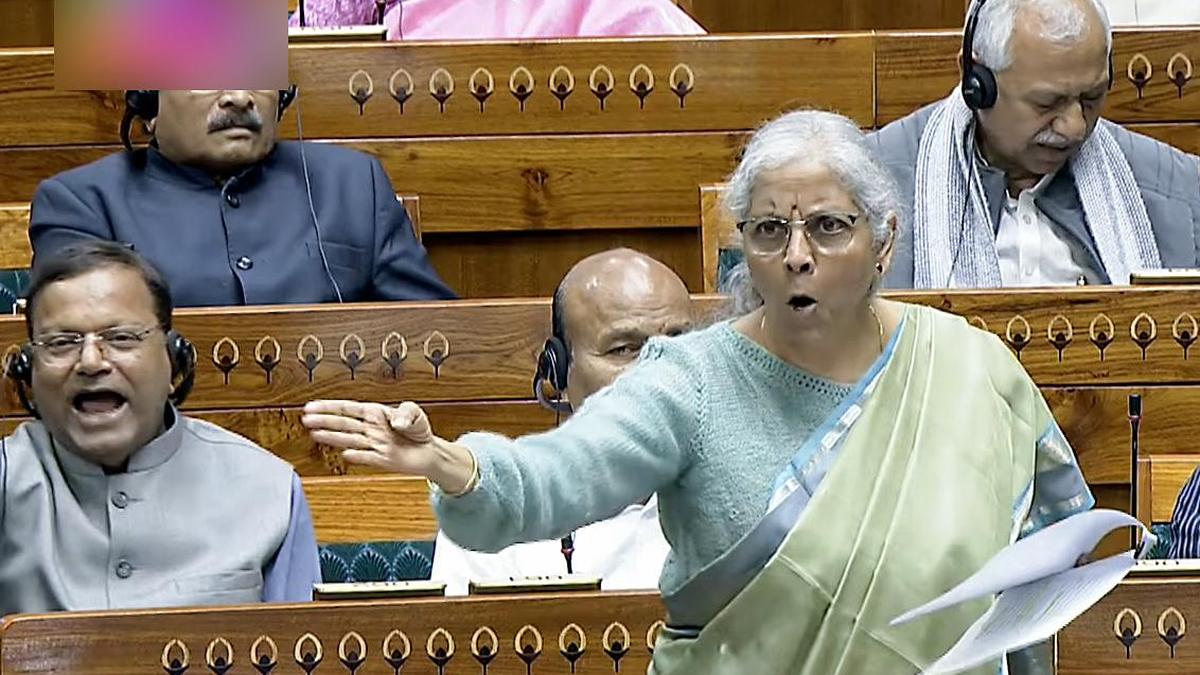
Finance Minister misinforming Parliament on WTO to justify sellout India-U.S. deal: Anand Sharma
The Hindu
Anand Sharma accuses Finance Minister Sitharaman of misleading Parliament on WTO claims to defend the controversial India-U.S. deal.
Congress leader Anand Sharma slammed Finance Minister Nirmala Sitharaman on Thursday (February 12, 2026) for criticising India’s stand at the WTO Ministerial Conference in Bali in 2013 during the UPA rule and accused her of “deliberately misinforming” Parliament to justify the “sellout” interim trade deal with the US.
Just for political gains, Ms. Sitharaman was misleading the nation and making an “orchestrated claim” that the UPA government “sold out” India’s food security at the WTO meeting in Bali, the former Commerce Minister said in a statement.
“It is unfortunate and shocking that Finance Minister Nirmala Sitharaman has deliberately misinformed the Parliament on the agreements reached at the ninth WTO Ministerial meeting in Bali in December 2013.
“In her desperation to justify and defend the sellout interim trade deal with the US, she has levelled an unfair allegation that the Congress-led UPA government had sold out India's right to food security at the WTO meeting in Bali. This is false and incorrect and contradicts the facts on record and WTO’s official statement," Mr. Sharma said.
Saying that the Finance Minister made the claim for political gains, he asserted that the “issue of public stockholding for food security was actually forced by India at the Bali Ministerial meeting and the same were secured and protected.”
Ms. Sitharaman, on Wednesday (February 11, 2026), launched a blistering attack on Leader of Opposition Rahul Gandhi, saying that it was the Congress-led UPA government which surrendered India's interest before international organisations, including the World Trade Organisation (WTO) and "sold" the interest of the poor and farmers.


Indian Overseas Bank challenges ₹766 crore tax demand notice from the Income Tax Department related to AY 2015-16.

Escorts Kubota on Tuesday rolled out a tractor developed for the paddy-growing regions as the agriculture machinery and construction equipment maker sharpens focus on south India on its way to become a pan-India player.

The rise in oil prices is expected to increase current account deficit (CAD) of major crude-importing Asian economies, which include India, according to an initial expert commentary.

India has 25 days of crude oil reserves and 25 days each of petrol, diesel stock: Government sources
India has ample crude oil and fuel reserves for 25 days each, ensuring 50 days of overall sufficiency amidst global tensions.

Tata Group Chairman expresses hope that West Asia conflict won't disrupt supply chains, prioritizing employee safety amid geopolitical uncertainties.

PM Modi calls for increased investment and prioritization of research in manufacturing to leverage new free trade opportunities for India.

Elon Musk’s social media platform X and artificial intelligence startup xAI plan to repay in full about $17.5 billion in debt tied to the companies, Bloomberg News reported

BMI warns that the ongoing West Asia conflict may deter investment in India, impacting GDP despite positive trade deal prospects.

Oil prices rise amid escalating U.S.-Israeli-Iran conflict, raising supply disruption fears through the critical Strait of Hormuz.

The US Treasury Department said Monday it is ending use of all Anthropic products, following US President Donald Trump's government-wide ban on the AI start-up after it rejected the Pentagon's demands.

Discover Rent a Tree, an innovative startup leasing mango trees across India, offering fresh Alphonso mangoes without the upkeep hassle.

Pine Labs plans to launch a stablecoin-backed prepaid card across nine countries, expanding its global payment solutions.

India's industrial production growth slowed to 4.8% in January 2026, with only infrastructure sector showing significant improvement.