Explained | Why is Australia facing an electricity crisis despite being a top exporter of coal and gas?
The Hindu
Australia’s energy market operator, in a drastic step, has suspended the National Electricity Market to avoid blackouts
The story so far: On Thursday, June 16, Chris Bowen, the Energy Minister of Australia — the world’s biggest exporter of coal and Liquified Natural Gas — asked the residents of its most populous state New South Wales (NSW), to conserve power as much as possible during the peak demand hours of 6 pm to 8 pm to prevent blackouts. Mr. Bowen added, however, that he was confident that the government could avoid blackouts.
This came just a day after the Australian Energy Market Operator (AEMO), in an unprecedented move amid the ongoing power crisis, suspended the wholesale electricity market for the East Coast, which includes five of Australia’s six states. AEMO cited that the power market had become “impossible to operate” while ensuring reliable and secure electricity supply to Australian households and businesses.
The Australian Energy Market Operator (AEMO) is responsible for operating two electricity spot markets through which electricity is traded across the country.
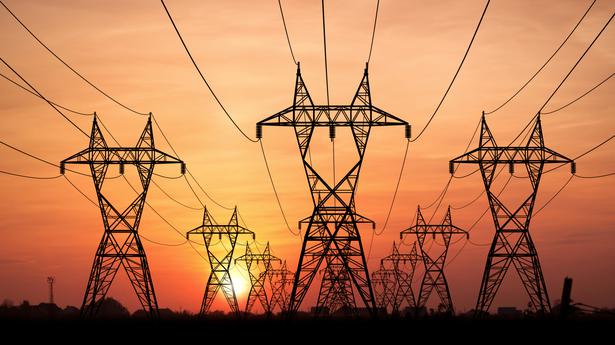
It operates the National Electricity Market (NEM), which is a wholesale market covering Australia’s five eastern and south eastern states- Queensland, New South Wales (including the Australian Capital Territory), South Australia, Victoria, and Tasmania —effectively covering the whole of Australia excluding the state of Western Australia and the Northern Territory. On the East Coast, coal-fired power constitutes nearly 65 per cent of electricity generation and gas 7 per cent, with the rest coming from renewable sources like wind, solar, hydropower, and others. The NEM operates a massive power grid and thousands of kilometres of transmission lines and cables.
On this wholesale or spot market, power generators offer to supply the market with specified amounts of electricity at varied prices or bids. The AEMO then “decides which generators will be deployed to produce electricity, with the cheapest generator put into operation first.” With this, AEMO aims to exactly match supply and demand.
The auction between generators is held every five minutes, meaning the dispatch price to deliver electricity is determined every five minutes. It is here that distribution companies or retailers buy electricity to provide power to homes and businesses.
As per the National Electricity Rules, minimum and maximum spot prices are set between -A$1000 and A$15,000 per megawatt-hour.


Vaccination policies must prioritize saving human lives over individual choice amid rising vaccine skepticism, asserts scientist Dr. Virander Singh Chauhan.

Seven Indian fishermen from Rameswaram arrested by Sri Lankan Navy, sparking protests and calls for government intervention.

Kerala cyber police file a case against X for an AI video allegedly defaming PM Modi and the Election Commission.

iKure and Izawa Co. partner to combat avoidable blindness by integrating innovative eye care technology into rural healthcare networks.

Thousand Lights MLA from the DMK N. Ezhilan, in an interview to The Hindu, observes that any popular personality entering politics will attract the limelight. But only a structured party machinery combined with popularity can ensure success. In this interview, he speaks about his tenure as first-time MLA from Thousand Lights Assembly constituency in Chennai, Vijay’s political entry shaping the 2026 elections, redressal of key grievances and more.

Abhishek Banerjee challenges BJP's Suvendu Adhikari in Nandigram, pledging community health initiatives if Trinamool Congress wins.

Rising LPG shortages in Karnataka boost firewood demand, reviving an informal market as households and hotels seek alternatives.

Against the backdrop of intense poll activity, a 400-metre stretch of an arterial road in the outskirts of Chennai (technically in Madurapakkam panchayat under Tambaram assembly constituency) presents a salute to the idea of res publica, which underpins India’s system of governance, where citizens have a say, at least before a government is securely ensconced in the seat of power. A Republic Day initiative shines bright every night

Fadnavis claims zero FIR in Ajit Pawar crash is a defamation attempt by Karnataka against Maharashtra's investigation efforts.

Set to unfold as a one-day pop-up on April 5, the Easter Sadya brings together both vegetarian and non-vegetarian menus, offering a peek into the food traditions of the Syrian Christian (Nasrani) community. While the traditional Sadya is often associated with dishes such as sambar, avial, and rice, this version expands to include community-specific festive dishes.

BJP nominates mother of R.G. Kar victim Abhaya to contest from Panihati in West Bengal Assembly elections.

Veteran Malayalam actor-director E.A. Rajendran passes away at 71, leaving behind a rich legacy in the film industry.

Dakshina Kannada Zilla Panchayat has rolled out digital mode of water bill generation and collection in 23 gram panchayats on a pilot basis for the first time in Karnataka. This is set to be extended to the remaining 200 panchayats shortly, according to the Zilla Panchayat Chief Executive Officer Narwade Vinayak Karbhari.