Primary Country (Mandatory)

Other Country (Optional)

Set News Language for United States

Primary Language (Mandatory)
Other Language[s] (Optional)
No other language available

Set News Language for World

Primary Language (Mandatory)
Other Language(s) (Optional)

Set News Source for United States

Primary Source (Mandatory)
Other Source[s] (Optional)

Set News Source for World

Primary Source (Mandatory)
Other Source(s) (Optional)
  • Countries
    • India
    • United States
    • Qatar
    • Germany
    • China
    • Canada
    • World
  • Categories
    • National
    • International
    • Business
    • Entertainment
    • Sports
    • Special
    • All Categories
  • Available Languages for United States
    • English
  • All Languages
    • English
    • Hindi
    • Arabic
    • German
    • Chinese
    • French
  • Sources
    • India
      • AajTak
      • NDTV India
      • The Hindu
      • India Today
      • Zee News
      • NDTV
      • BBC
      • The Wire
      • News18
      • News 24
      • The Quint
      • ABP News
      • Zee News
      • News 24
    • United States
      • CNN
      • Fox News
      • Al Jazeera
      • CBSN
      • NY Post
      • Voice of America
      • The New York Times
      • HuffPost
      • ABC News
      • Newsy
    • Qatar
      • Al Jazeera
      • Al Arab
      • The Peninsula
      • Gulf Times
      • Al Sharq
      • Qatar Tribune
      • Al Raya
      • Lusail
    • Germany
      • DW
      • ZDF
      • ProSieben
      • RTL
      • n-tv
      • Die Welt
      • Süddeutsche Zeitung
      • Frankfurter Rundschau
    • China
      • China Daily
      • BBC
      • The New York Times
      • Voice of America
      • Beijing Daily
      • The Epoch Times
      • Ta Kung Pao
      • Xinmin Evening News
    • Canada
      • CBC
      • Radio-Canada
      • CTV
      • TVA Nouvelles
      • Le Journal de Montréal
      • Global News
      • BNN Bloomberg
      • Métro
Explained| What are the issues with the new Quality Control Orders for fibres? 
Premium

Explained| What are the issues with the new Quality Control Orders for fibres?  Premium

The Hindu
Friday, March 31, 2023 03:12:48 AM UTC

how the new Quality Control orders issued by the BIS creates a disruption to global and domestic textile supply chains

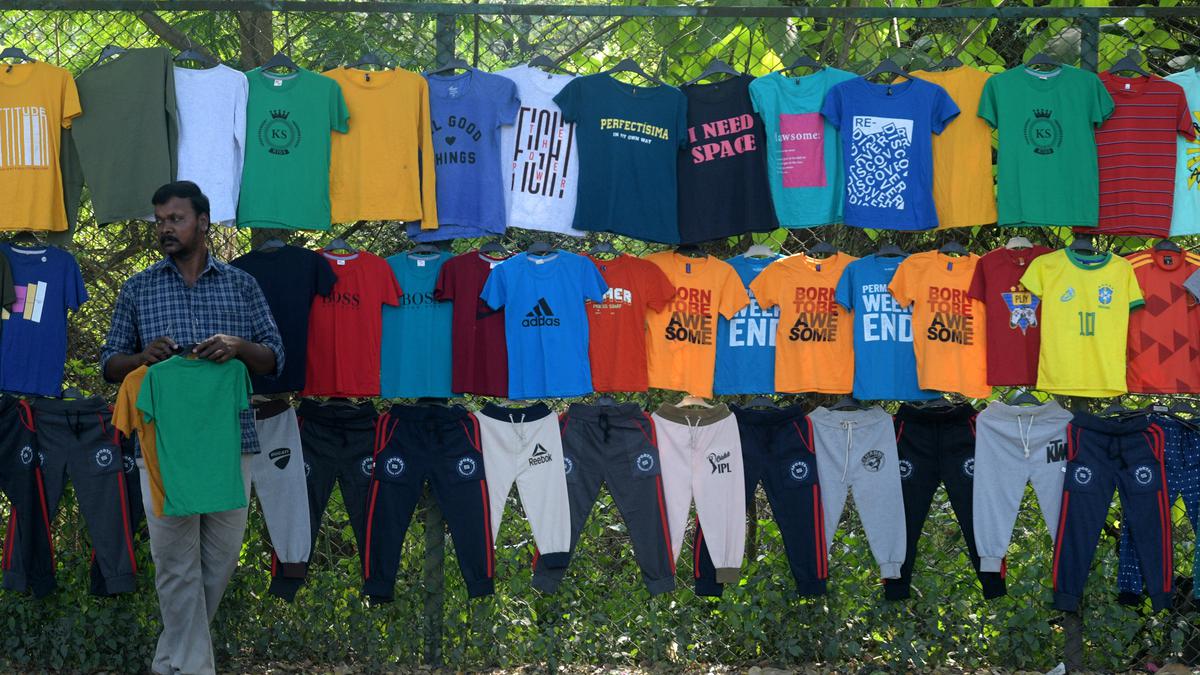
The story so far: Quality Control Orders (QCO) have been issued for fibres — cotton, polyester and viscose — that constitute the basic raw materials for majority of the Indian textile and clothing industry. While the standards were available earlier too, these are now revised and made mandatory for a few, and yet to be finalised for others. International manufacturers of these fibres, who supply to India, are also mandated to get a certificate from the Bureau of Indian Standards (BIS), which is the certifying authority for the QCOs.

The Indian textile and clothing industry consumes both indigenous and imported fibres and filaments. The imports are for different reasons — cost competitiveness, non-availability in the domestic market, or to meet a specified demand of the overseas buyer. The main aim of the QCO is to control import of sub-quality and cheaper items and to ensure that customers get quality products. The entire supply chain, from the textile manufacturers to exporters, has so far focused on quality standards prescribed by the buyers.

India imports annually 50,000 - 60,000 tonnes of viscose fibre and its variants such as Modal and Tencel LF from nearly 20 countries. In the case of polyester, almost 90,000 tonnes of polyester fibre and 1.25 lakh tonnes of POY (Polyester Partially Oriented Yarn) are imported annually.

The overseas fibre manufacturers sell not only to India but to other countries too. The supply of some fibres to India is in small quantities. Getting the certificate from the BIS involves a cost and and hence not all are interested in getting the certificate. The Indian textile manufacturers who are dependent on these suppliers for the raw material will have to either look at other suppliers or lose orders. For instance, a bed linen exporter in Tiruppur district imports polyester filament with functional properties from Turkey based on the demand of his European buyers. Though the imported filament constitutes just 6% of the product, the buyer has specified the source for the filament. Since the Turkey company is not interested in getting the BIS certificate, the exporter in Tiruppur has lost an order to Pakistan. Furthermore, BIS officials have to visit the manufacturing unit abroad before issuing the certificate and this process is yet to be completed for all suppliers who have applied for the BIS registration. There is no clarity on the fibres that were shipped before the certification and which will reach India in the coming days.

The textile buyers, be it domestic or international, have established a supply chain over the years and when there are constraints because of certification, the value chain is disrupted.

Be it viscose or polyester, some varieties of the fibre have special functional properties and separate HS (Harmonised Commodity Description and Coding System) code when imported. But, these are bundled in the QCO and thus have uniform quality standards. The textile industry imports just small quantities of such fibres and restricting its availability will deny Indian consumers of niche products. The textile industry is of the view that import of speciality fibres that are used as blends with other fibres should be made available without restriction. Also, any overseas applicant for the BIS certificate should get it without delay after inspection. Several textile units use lower grade fibres that are generated from rejects and wastes and these are not covered under the QCO. There is also a fear of costs going up for basic garments. Further, polyester spun yarn mills in the MSME sector need capital support to set up labs to test products. The QCO should be implemented only after the ambiguities are cleared and the anomalies set right, says the industry.

The BIS standards are mandatory for viscose staple fibre from March 29 and for five polyester products, including polyester staple fibre and polyester spun yarn from April 3.

Read full story on The Hindu
Share this story on:-
More Related News
Rupee slumps 9 paise to close at an all-time low of 90.41 against U.S. dollar

The rupee falls 9 paise to a record low of 90.41 against the dollar amid trade deal uncertainties and foreign fund outflows.

Mercedes to hike vehicle prices by up to 2% to offset impact of weakening rupee

Mercedes-Benz India will increase vehicle prices by up to 2% in January to counter rising costs and currency pressures.

Regulator CCI examining whether IndiGo violated competition norms: Official

CCI is investigating if IndiGo violated competition norms amid significant flight disruptions and concerns over its dominant market position.

Coal Controller Organisation appointed authority to regulate, register proposed coal exchanges 

The Coal Controller Organisation is appointed to regulate and register proposed coal exchanges, enhancing market competition and oversight.

Rupee hits record low as U.S. trade stalemate drags on, outflows pinch

The rupee hits a record low amid U.S. trade stalemate and portfolio outflows, prompting potential RBI intervention.

Auto industry continues wholesale momentum in November: SIAM data

November 2025 sees robust growth in India's auto industry, with record sales in passenger vehicles, two-wheelers, and three-wheelers.

Stock markets rally in early trade amid U.S. Fed rate cuts

Stock markets soar as Sensex and Nifty extend gains in early trade, driven by positive global trends and U.S. rate cuts.

Petroleum and Natural Gas Rules 2025 amended to ease business and operations, informs Hardeep Puri

Petroleum and Natural Gas Rules 2025 amended to enhance business ease, extend lease durations, and strengthen domestic exploration infrastructure.

Tata Hitachi increases its India focus amidst high U.S. tariffs, a weak rupee

Tata Hitachi strengthens its focus on India's construction market amid global tariffs and rupee depreciation, leveraging local growth opportunities.

Savings shift reshapes India’s markets

Domestic household savings replace foreign institutional money, giving Indian markets stability but raising concerns about unequal participation and limited returns for new retail investors. Access asymmetry and unequal outcomes emerge as key challenges, making investor protection, lower fees, passive investing, and stronger governance crucial.

Petroleum, External Affairs Ministries should work closely to further spur diversification efforts, suggest Parliamentary Committee

The Ministry of Petroleum and Natural Gas (MoPNG) should work closely with the Ministry of External Affairs (MEA), and other concerned government agencies, to strengthen diplomatic engagement with oil-producing countries, secure favourable investment terms and address tax and regulatory hurdles faced by public-sector enterprises (PSEs) abroad, the parliamentary committee on public undertakings (2025-26) stated in their latest report tabled Wednesday.

In Focus Podcast | Is the falling rupee a cause for alarm?

Why is the rupee falling? Is it falling worse than other currencies? Does the fall hurt or help the Indian economy? And finally, is this a cause for alarm? Here we discuss these questions.

India seeing great momentum in AI, agentic AI deployments: Satya Nadella

There’s great momentum in India in terms of AI and agentic AI applications getting deployed, observed Satya Nadella, Chairman and Chief Executive Officer, Microsoft.

Johnson & Johnson ordered to pay $40 million to two women in latest talc trial

Johnson & Johnson ordered to pay $40 million for talc-related ovarian cancer, with plans to appeal the jury's verdict.

Adani Green Energy case: SEBI clears insider trading charges against Pranav Adani, his relatives

SEBI clears Pranav Adani and relatives of insider trading charges related to Adani Green Energy's acquisition of SB Energy.

IndiGo faces nearly ₹59 crore penalty in relation to GST; airline to contest order

IndiGo contests a ₹59 crore GST penalty imposed for the financial year 2020-21, claiming the order is erroneous.

SBI passes RBI rate cut benefit to borrowers, reduces lending rate by 25 bps

SBI cuts lending rates by 25 bps following RBI's policy rate reduction, making loans cheaper for borrowers effective December 15, 2025.

India offers ‘final’ deal to U.S., but tariff removal is focus

India's revised trade deal with the U.S. emphasizes removing 25% tariffs on Russian oil while offering tariff cuts on imports.

RBI Deputy Governor rules out stablecoins in India 

RBI Deputy Governor T. Rabi Sankar dismisses stablecoins in India, citing lack of fundamental value and risks to monetary policy.

Union Cabinet allows for exporting coal up to 50% of received allocation

Union Cabinet approves coal export policy, allowing 50% of auctioned coal for any industrial use and export.

Union Cabinet allows for exporting coal up to 50% of received allocation

Union Cabinet approves coal export policy, allowing 50% of auctioned coal for any industrial use and export.

Cabinet approves Bill to hike FDI in insurance sector to 100%

Cabinet approves a bill to increase FDI in the insurance sector to 100%, enhancing growth and business ease.

Stock markets rise amid buying in metal shares and positive global trends

Sensex surges nearly 450 points driven by metal shares and positive global trends, with Nifty also rising above 26,000.

Sensex jumps nearly 450 points on buying in metal shares, positive global trends

Sensex rises nearly 450 points amid metal shares buying and positive global trends, with Tata Steel and Maruti among top gainers.

India, New Zealand discuss ways to fast-track FTA talks

India and New Zealand are working to expedite Free Trade Agreement negotiations to enhance trade and investment benefits.

© 2008 - 2025 Webjosh  |  News Archive  |  Privacy Policy  |  Contact Us