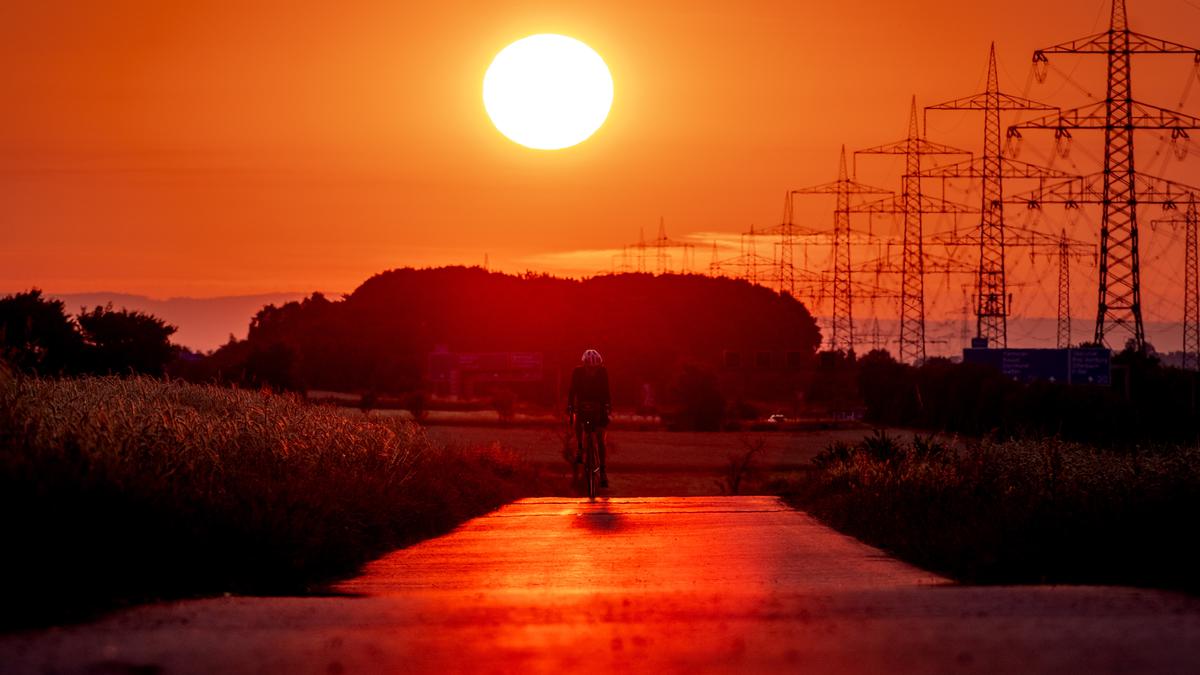
Explained | Climate targets are becoming outdated, so India needs its own Premium
The Hindu
Both the 1.5- and the 2-degree-Celsius thresholds for global warming are grounded in political expediency more than science, even as reducing emissions as a paradigm for tackling climate change has essentially failed.
The 1.5 degrees Celsius warming target has received considerable press along with the El Niño this year. Reports claimed that the planet could soon cross this temperature threshold due to this natural climate phenomenon.
But even if the world’s average surface temperature warms by more than 1.5 degreesCelsius for a year, nothing dramatically different may happen – other than the heatwaves, floods, droughts, and similar events that are already happening. The bigger question is: where is all the end-of-the-world messaging coming from?
Humankind might do well with less hyperbole about the climate crisis. It is a serious challenge today, yes, but a constant drumbeat of alarmist messages may only exacerbate climate anxiety and leave people feeling helpless – especially the young ones, who should be dreaming about saving the planet (or space travel) instead.
The target agreed to in the Paris Agreement, to keep the planet’s surface from warming by 2 degrees Celsius by the end of this century, has been touted as a monumental achievement, and it may well be if we actually manage to achieve this goal by 2100. But we must bear two things in mind. First, despite negotiations among the representatives of the world’s countries for more than two decades, global carbon emissions have shown no signs of slowing down.
Second, the 2 degrees Celsius target was not derived scientifically. The economics Nobel laureate William Nordhaus cautiously noted in the 1970s that a warming of 2 degrees Celsius above the pre-industrial level could render the planet warmer than it has ever been in several hundred-thousand years. He followed this claim up with a model of the socioeconomic impacts of crossing this threshold.
Some European politicians found this round number to be appealing as something to aim for in the 1990s, followed by climate scientists retrofitting their projected climate impacts to this warming level. Indeed, no sooner was this figure enshrined in the Paris Agreement than the Alliance of Small Island States demanded that it be lowered to 1.5 degrees Celsius. Once again, the climate community, now together with the socioeconomic-modelling community, retrofitted future scenarios to meet this so-called “aspirational” target.
Bringing science to serve society is a very noble goal, particularly when government officials demand scientific inputs for their decision-making. But many governments’ planned reliance on bioenergy and carbon-capture technologies to accomplish these goals do not consider the potential consequences of climate change on food and water security, for example – let alone the possibility that such promises have a long way to go before becoming viable.


Vaccination policies must prioritize saving human lives over individual choice amid rising vaccine skepticism, asserts scientist Dr. Virander Singh Chauhan.

Seven Indian fishermen from Rameswaram arrested by Sri Lankan Navy, sparking protests and calls for government intervention.

Kerala cyber police file a case against X for an AI video allegedly defaming PM Modi and the Election Commission.

iKure and Izawa Co. partner to combat avoidable blindness by integrating innovative eye care technology into rural healthcare networks.

Thousand Lights MLA from the DMK N. Ezhilan, in an interview to The Hindu, observes that any popular personality entering politics will attract the limelight. But only a structured party machinery combined with popularity can ensure success. In this interview, he speaks about his tenure as first-time MLA from Thousand Lights Assembly constituency in Chennai, Vijay’s political entry shaping the 2026 elections, redressal of key grievances and more.

Abhishek Banerjee challenges BJP's Suvendu Adhikari in Nandigram, pledging community health initiatives if Trinamool Congress wins.

Rising LPG shortages in Karnataka boost firewood demand, reviving an informal market as households and hotels seek alternatives.

Against the backdrop of intense poll activity, a 400-metre stretch of an arterial road in the outskirts of Chennai (technically in Madurapakkam panchayat under Tambaram assembly constituency) presents a salute to the idea of res publica, which underpins India’s system of governance, where citizens have a say, at least before a government is securely ensconced in the seat of power. A Republic Day initiative shines bright every night

Fadnavis claims zero FIR in Ajit Pawar crash is a defamation attempt by Karnataka against Maharashtra's investigation efforts.

Set to unfold as a one-day pop-up on April 5, the Easter Sadya brings together both vegetarian and non-vegetarian menus, offering a peek into the food traditions of the Syrian Christian (Nasrani) community. While the traditional Sadya is often associated with dishes such as sambar, avial, and rice, this version expands to include community-specific festive dishes.

BJP nominates mother of R.G. Kar victim Abhaya to contest from Panihati in West Bengal Assembly elections.

Veteran Malayalam actor-director E.A. Rajendran passes away at 71, leaving behind a rich legacy in the film industry.

Dakshina Kannada Zilla Panchayat has rolled out digital mode of water bill generation and collection in 23 gram panchayats on a pilot basis for the first time in Karnataka. This is set to be extended to the remaining 200 panchayats shortly, according to the Zilla Panchayat Chief Executive Officer Narwade Vinayak Karbhari.