Explained | Budget 2023: What are laboratory-grown diamonds? Premium
The Hindu
Are diamonds made in a laboratory better than naturally-occurring ones?
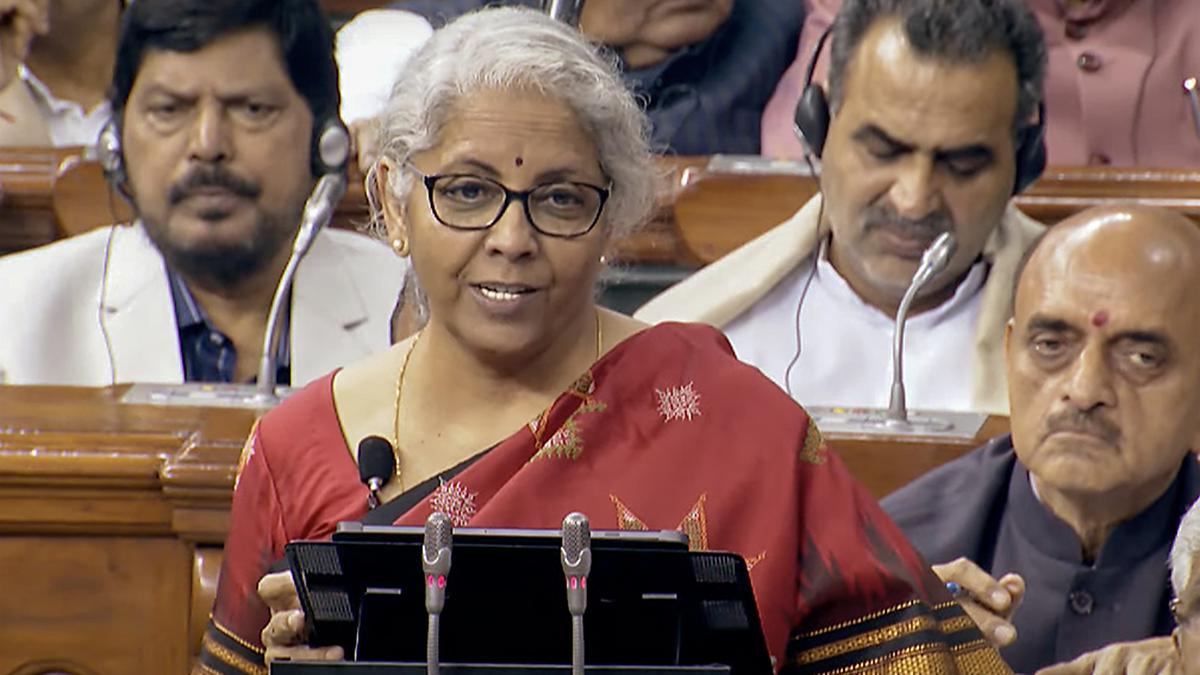
The story so far: The 2023 Union Budget shines special attention on laboratory-grown diamonds (LGD). In her Budget speech, Finance Minister Nirmala Sitharaman said that the sector has “high employment potential” and announced a number of schemes to promote their research and development in India.
As the name suggests, LGD are manufactured in laboratories, as opposed to naturally-occurring diamonds. However, the chemical composition and other physical and optical properties of the two are the same.
Naturally-occurring diamonds take millions of years to form; they are created when carbon deposits buried within the earth are exposed to extreme heat and pressure. On the other hand, LGDs are mostly manufactured through two processes – high pressure, high temperature (HPHT) method or Chemical Vapour Deposition (CVD) method.
Both HPHT and CVD methods of growing diamonds artificially begin with a seed — a slice of another diamond. In the HPHT method, the seed, along with pure graphite carbon, is exposed to temperatures around 1,500 degrees Celsius and extremely high pressure.
In the CVD method, the seed is heated to around 800 degrees Celsius inside a sealed chamber filled with a carbon-rich gas. The gas sticks to the seed, gradually building the diamond.
Scientists working at a General Electric research laboratory in New York are credited with the creation of the world’s first-ever LGD in 1954.
Visually and chemically, the two are the same. However, the environmental footprint of a diamond grown in a laboratory is much lesser than that of a naturally-occurring diamond. According to a report by Diamond Foundry, an environmentally-conscious LGD manufacturer, it takes ten times more energy to extract a natural diamond from the earth than it takes in creating one above the ground. Open-pit mining, one of the most common methods of mining naturally-occurring diamonds, involves moving tonnes of earth and rock to extract these precious stones.


Government launches ₹497 crore RELIEF scheme providing credit insurance to exporters affected by the West Asia crisis, focusing on MSMEs.

Crude oil futures rise amid Middle East attacks, pushing Brent above $116 on fears of tightening global supply.

West Asia conflict delays India’s FTA talks with GCC and Israel, while UK and EU agreements proceed as planned in 2024.

Russian Urals oil vessels will reach India on March 21 amid stable fuel prices and diversified LPG imports.

Warner Bros. dominated the Academy Awards, but Paramount’s looming acquisition of the studio signals the biggest restructuring of the industry in decades and a battle over the future of Hollywood itself

HDFC Bank board calls Atanu Chakraborty’s resignation baffling, affirms robust corporate governance and strong market confidence.

RNFI and Jio Payments Bank launch cardless UPI QR cash withdrawals for instant access across urban, semi-urban, and rural India.

RBI approves HDFC Bank's chairman transition plan, affirming the bank's strong financials and competent management.

Markets fall 2% as Israel attacks Iran’s South Pars gas field, pushing Brent crude above $112 and rupee below ₹93.

HDFC Bank shares drop over 4% following chairman’s ethical resignation, raising insider trading and management concerns.

Erran Berger, the Vice President of Product Engineering at LinkedIn, thinks the former type of division of labour is rapidly disappearing

India mandates oil and gas firms to share import and export data to mitigate consumer shortages amid rising global prices.

HDFC Bank's chairman Atanu Chakraborty resigns over ethical concerns; Keki Mistry appointed interim chairman for three months.