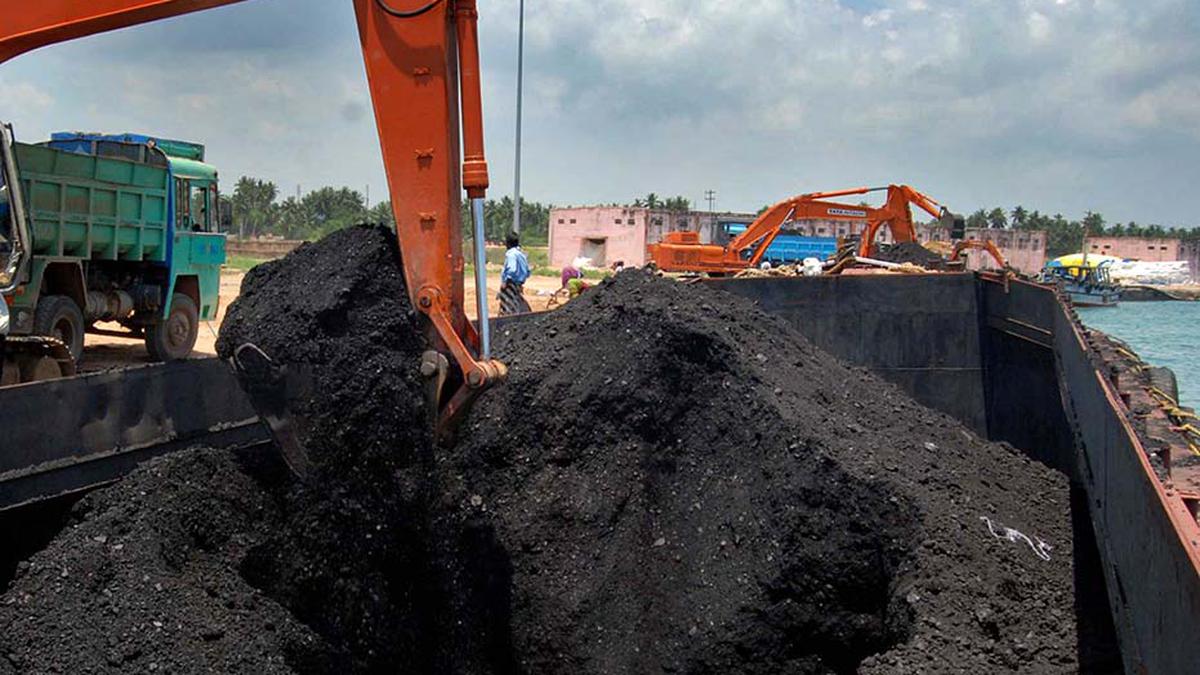
EV batteries get extra power from coal in new experiment
The Hindu
Coal can inject some extra life into chargeable batteries for EV without burning, a new study has found.
GUWAHATI
Coal can inject some extra life into chargeable batteries for electric vehicles (EV) without burning, a new study has found.
An advanced model of a hybridized battery management system (HBMS) using coal-based pouch cell supercapacitors and Li-ion batteries in an experiment by a team of scientists helped increase the maximum speed of e-rickshaws to 45 km per hour with an additional power gain of 433 watts.
The maximum speed of e-rickshaws across the Indian market is 35 km per hour.
The study titled ‘Fabrication of pouch cell supercapacitors using abundant coal feedstock and their hybridization with Li-ion battery for e-rickshaw application’ was published in the latest issue of the Netherlands-based Journal of Energy Storage.
The authors of the study are Binoy K. Saikia, Santhi Maria Benoy, Mousumi Bora, Dipankar Neog, Dhrubajyoti Bhattacharjya, Akhil Rajbongshi, and Prasenjit Saikia. They are associated with Council of Scientific and Industrial Research (CSIR)-North East Institute of Science and Technology in eastern Assam’s Jorhat.
“For the fabrication of coal-based pouch cell supercapacitor, we synthesized highly porous, high-surface-area activated carbon with good electrochemical performances from low-grade sub-bituminous coal feedstock,” the study paper read.


The Economic Survey urges fiscal flexibility for the Centre while warning States about deteriorating financial conditions due to rising deficits.

Economic Survey highlights fodder shortages as key challenge for India's livestock and fisheries sectors, impacting growth and production costs.

The 2025-26 Economic Survey argues that prioritizing economic growth over immediate carbon cuts is essential for sustainable climate adaptation.

India's internet user base reaches 958 million, with 57% from rural areas, highlighting rapid digital adoption across the country.

The Economic Survey reveals a decline in agricultural growth to 3.5% in 2025-26, despite steady foodgrain production increases.

Economic Survey 2025-26 warns unconditional cash transfers risk state finances, impacting fiscal sustainability and medium-term growth.

Economic Survey 2025-26 advocates for tax rationalization on debt-assets to enhance investment in corporate bonds and savings.

Restrictions may also be levied on marketing of infant and toddler milk and beverages to tackle rising obesity

Commercial Vehicles major Tata Motors Ltd. (TML) for the third quarter ended December 31, 2025 reported a 48% fall in consolidated net profit to ₹705 crore as compared with ₹1,355 crore in the year ago period due to one-time impacts of Labour Code and de-merger.

India’s energy gap between supply and demand has dropped to nil by November 2025

India's pharma industry shifts to value-driven approaches, focusing on complex generics, innovation, and expanding medical device exports.

The Economic Survey advocates scrapping MGNREGS, citing structural flaws, while introducing a new rural employment law for improved effectiveness.

The Economic Survey warns that an AI-led correction amid geopolitical tensions could severely impact global financial markets.