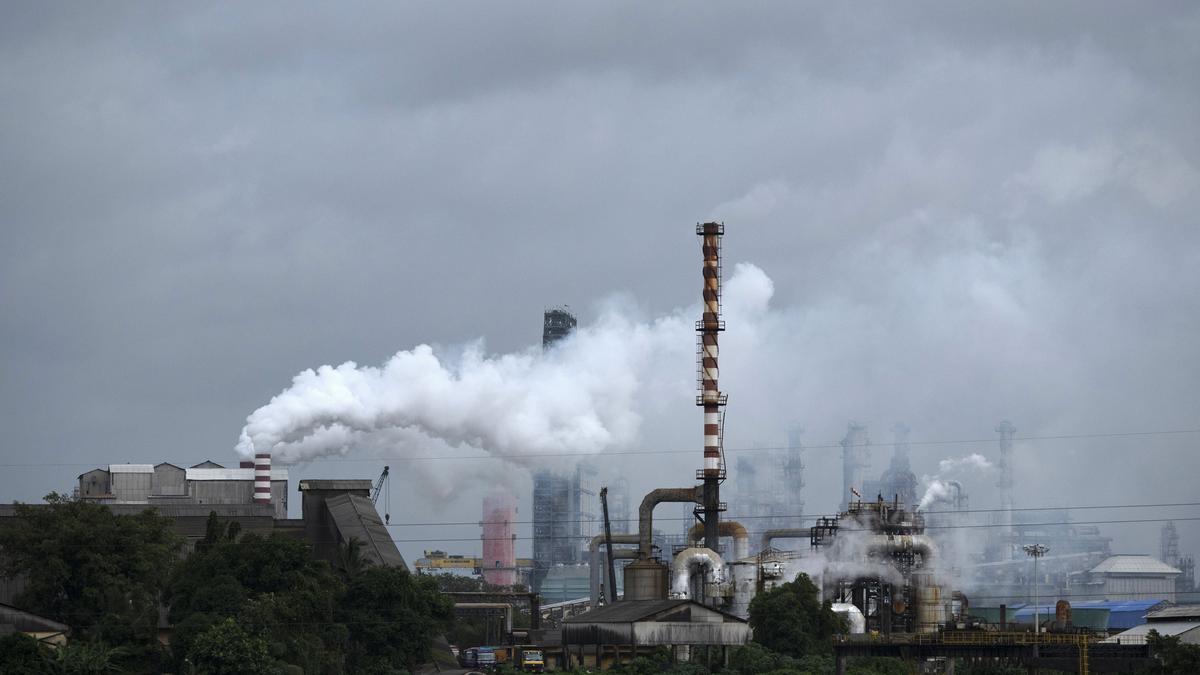
EU carbon border tax will do little to cut emissions: ADB study
The Hindu
ADB report warns EU's Carbon Border Adjustment Mechanism may not reduce emissions, hurting Asian exports and EU manufacturers.
A European Union plan to impose tariffs on high-carbon imports could hurt developing countries in Asia but is unlikely to lead to big reductions in greenhouse gas emissions, the Asian Development Bank (ADB) said in a report published on Monday.
The Carbon Border Adjustment Mechanism (CBAM) was introduced to address concerns that the outsourcing of manufacturing had put large parts of the EU's supply chain beyond the reach of its emissions trading scheme (ETS), a situation described as "carbon leakage".
Also Read | CBAM will kill EU manufacturing, India will have its own carbon taxes: Goyal
It was designed to level the playing field and make foreign suppliers pay the same carbon price as domestic ones, even if they are not subject to an ETS or carbon tax at home.
ADB said CBAM was expected to cut Asian exports to the EU, particularly from western and southwestern Asia, with steel from India also likely to take a hit.
But any small reduction in emissions would quickly be offset by the continuing increase in carbon-intensive production throughout Asia, and mechanisms to share emission reduction technology would be more effective, it said.
"It's actually a relatively limited policy at the moment," said Neil Foster-McGregor, ADB's senior economist. "It only imports into the EU (and) only covers six sectors.


Iran continues to export millions of barrels of oil amid war, with 90 ships crossing the Strait of Hormuz despite sanctions.

Amazon CEO Andy Jassy said during an internal all-hands meeting he expects artificial intelligence could help cloud computing unit Amazon Web Services achieve $600 billion in annual sales, double his own prior estimate.

Government mandates airlines to allocate 60% of seats free, enhancing passenger rights and convenience across Indian aviation.

Microsoft is weighing legal action against Amazon and OpenAI over a $50 billion deal, the Financial Times reported

Stock markets rally with Sensex and Nifty gaining, despite HDFC Bank and others lagging behind amid falling crude prices.

OpenAI has signed a new deal to sell access to its AI models to U.S. defence and government agencies through Amazon’s cloud unit for classified and unclassified work, the ChatGPT maker said

Samsung Electronics said on Wednesday that it expects to start volume production of Tesla’s chips

The Trump administration said in a Tuesday court filing that the Pentagon’s blacklisting of Anthropic was justified and lawful

Mastercard Move aims to simplify cross-border payments for SMEs and students in India, enhancing efficiency and reducing costs.

SBI raises ₹6,051 crore through 10-year bonds, attracting strong investor demand with a 7.05% coupon rate.

In February, as per government data, domestic LPG production was slightly more than 1 million tonne.

Union Government urges States and UTs to expedite approval of gas pipeline projects to promote piped natural gas usage.

Parliamentary panel criticizes Ministry of Planning and Niti Aayog for persistent underutilization and poor financial management practices.