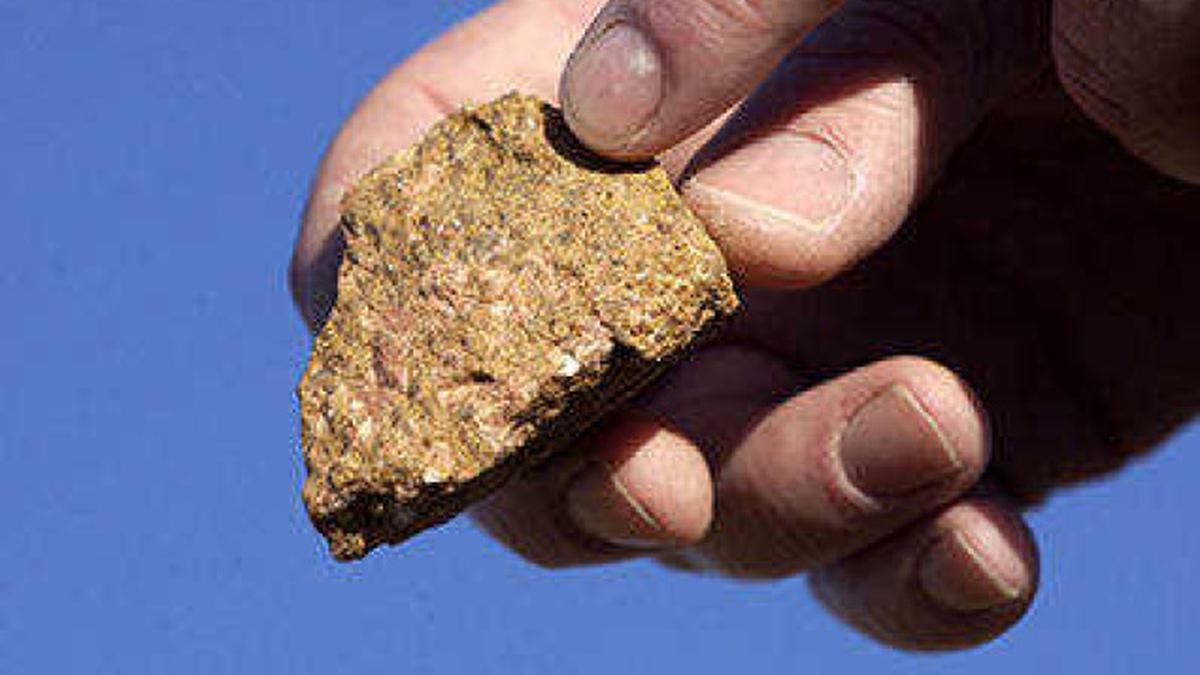
Enough rare earth minerals to fuel green energy shift: study
The Hindu
The world is trying to switch from electricity produced by burning fossil fuels to cleaner wind and solar power, but some people have worried that there aren’t enough rare earth minerals to make the green electricity switch
The world has enough rare earth minerals and other critical raw materials to switch from fossil fuels to renewable energy to produce electricity and limit global warming, according to a new study that counters concerns about the supply of such minerals.
With a push to get more electricity from solar panels, wind turbines, hydroelectric, and nuclear power plants, some people have worried that there won’t be enough key minerals to make the decarbonisation switch.
Rare earth minerals, also called rare earth elements, actually aren’t that rare. The U.S. Geological Survey describes them as “relatively abundant.” They’re essential for the strong magnets necessary for wind turbines; they also show up in smartphones, computer displays, and LED light bulbs. This new study looks at not only those elements but 17 different raw materials required to make electricity that include some downright common resources such as steel, cement and glass.
A team of scientists looked at the materials — many not often mined heavily in the past — and 20 different power sources. They calculated supplies and pollution from mining if green power surged to meet global goals to cut heat-trapping carbon emissions from fossil fuel.
Much more mining is needed, but there are enough minerals to go around, and drilling for them will not significantly worsen warming, the study in Friday’s scientific journal Joule concluded.
“Decarbonisation is going to be big and messy, but at the same time we can do it,” said study co-author Zeke Hausfather, a climate scientist at the tech company Stripe and Berkeley Earth. “I’m not worried we’re going to run out of these materials.”
Much of the global concern about raw materials for decarbonisation has to do with batteries and transportation, especially electric cars that rely on lithium for batteries. This study doesn’t look at that.


CERN's Large Hadron Collider discovers the Xi-cc-plus particle, enhancing understanding of quantum mechanics and baryon behavior.

Vibha Batra’s latest book, Spotless (Hachette India) is a novel in verse for young adults

In its first edition, the Madras Art Salon spotlights the works of journalist and artist Narayan Lakshman at The Botanical Club, a social space in the British Deputy High Commission, Chennai

Cholesterol enhances melanoma cell invasion by making nuclei squishier, revealing a potential treatment target in cancer progression.

The designers reinterpret the Swedish artist’s symbolic forms and colour energy through contemporary resortwear silhouettes

Discover the inspiring legacy of Bibha Chowdhuri, a pioneering woman in physics and a trailblazer in STEM history.

Discover the inspiring legacy of Bibha Chowdhuri, a pioneering woman in physics and a trailblazer in STEM history.

Ashdeen’s Spring 2026 collection features saris inspired by the designer’s Parsi gara archive

Red ochre burials, ritual markings and myths across cultures show that red repeatedly marks liminal thresholds such as puberty, sacrifice and death; anthropologists argue that the colour functions as a technology of collective ritual and value, binding communities through shared symbolic acts

India approves 23 institutions for quantum labs under the National Quantum Mission, aiming to advance quantum technology and research.

India approves 23 institutions for quantum labs under the National Quantum Mission, aiming to advance quantum technology and research.

The Gaza conflict exacerbates environmental damage, emitting millions of tonnes of CO2 and threatening climate stability in West Asia.

Chefs and cookery experts share smart kitchen hacks, hybrid cooking methods and appliance tips to help households reduce LPG use without compromising on food